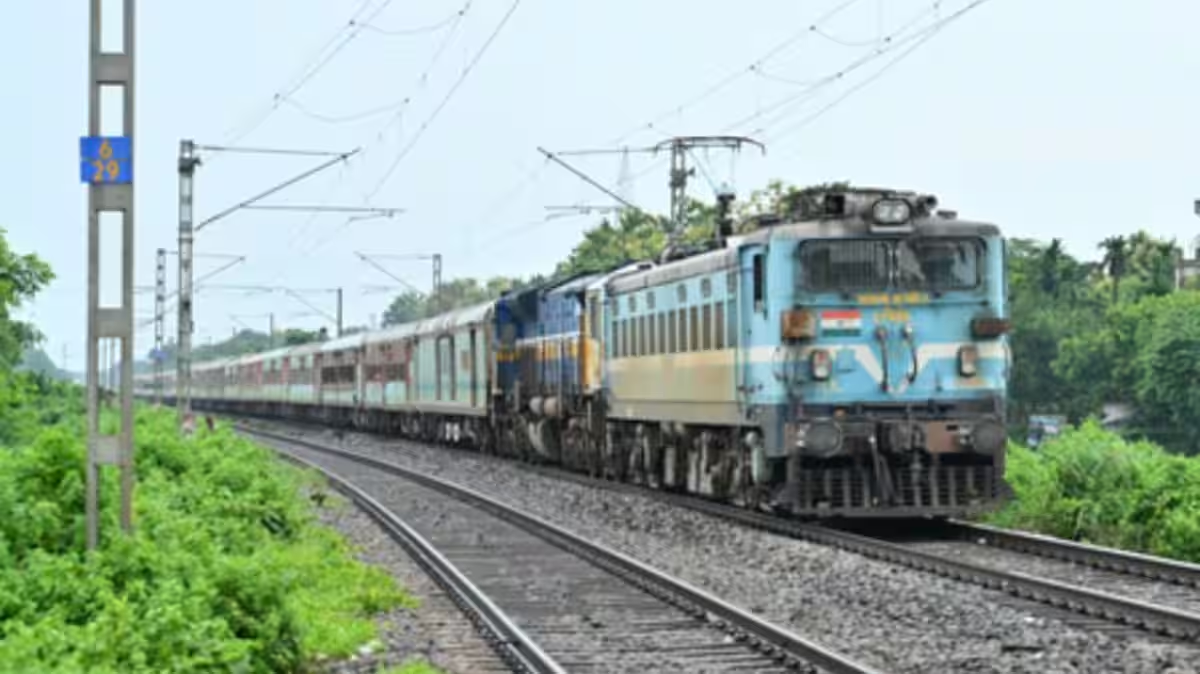
New Delhi has strengthened its intercity rail connectivity ahead of the New Year rush, with Northern Railway announcing special reserved train services to Shri Mata Vaishno Devi Katra. The move is aimed at managing rising passenger demand during the peak holiday period while ensuring smoother, safer travel for pilgrims and tourists heading to Jammu and Kashmir.
Railway officials said the temporary services will operate over the final days of December through early January, a period that traditionally sees a surge in religious tourism and leisure travel. Each train will run with a full 16-coach configuration, allowing higher passenger capacity without increasing congestion on existing scheduled services. Transport planners view the announcement as a practical intervention to reduce overcrowding, unregulated road travel and last-minute ticket shortages. “Seasonal rail augmentation plays a critical role in maintaining mobility without pushing travellers towards private vehicles or long-distance buses,” a senior railway official said, highlighting the environmental and safety benefits of rail-led movement during peak travel windows.
The special services include dedicated departures from New Delhi to Katra on multiple days, with corresponding return journeys scheduled to support return travel after New Year celebrations. Rail authorities noted that carefully staggered departure and arrival timings were planned to optimise track usage while minimising operational disruption on the busy northern corridor. Beyond crowd management, the initiative reflects a broader shift in how Indian Railways is responding to short-term mobility spikes. Industry experts say targeted deployment of special trains is increasingly being used as a flexible alternative to permanent capacity expansion, particularly during festivals and long weekends. This approach allows rail infrastructure to absorb demand efficiently while keeping operational emissions lower than equivalent road-based transport.
Pilgrim routes such as New Delhi–Katra are especially sensitive during holiday periods, given the mix of long-distance travellers, senior citizens and first-time visitors. Improved rail availability reduces dependency on private taxis and buses, helping ease pressure on mountain highways and lowering accident risks during winter travel. Ticketing for the special services has been integrated into standard booking platforms, ensuring transparency and accessibility for passengers. Authorities have advised travellers to confirm schedules in advance, noting that operational adjustments may be required depending on weather conditions and traffic volumes.
Urban mobility analysts also see the move as part of a wider sustainability narrative. Rail-based travel remains one of the lowest-emission modes for long-distance passenger movement, particularly when compared with private vehicles. Strategic use of additional trains during demand peaks can therefore contribute to cleaner regional mobility while supporting tourism-driven local economies.
As cities and transport agencies increasingly align infrastructure planning with climate resilience and passenger welfare, such targeted interventions underline the role of railways in delivering inclusive, low-carbon mobility. For thousands travelling between New Delhi and Katra this New Year, the added services promise not just convenience, but a safer and more sustainable journey.
New Delhi Launches Special Reserved Trains To Katra For New Year Rush