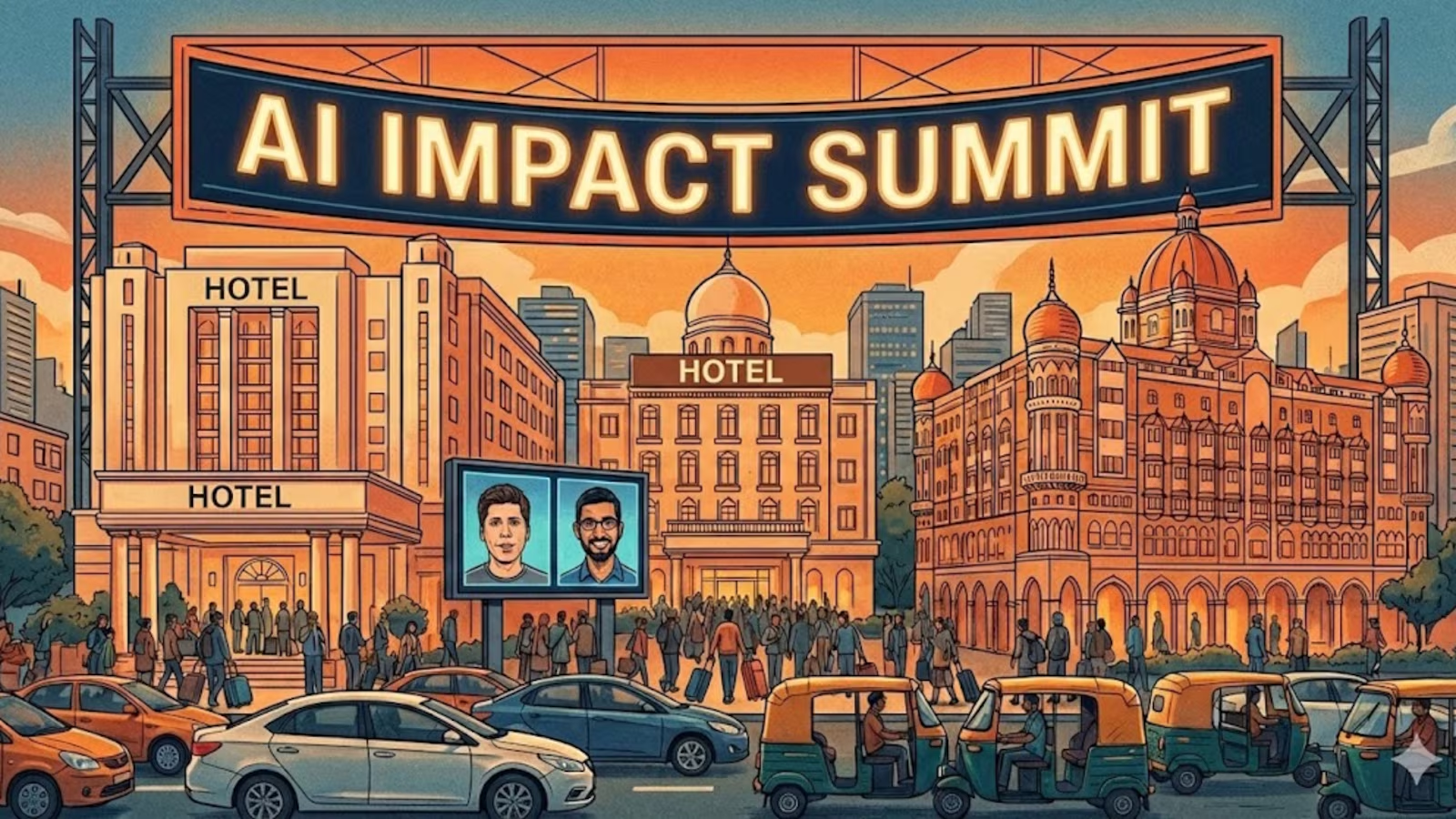
New Delhi’s luxury hospitality market is witnessing an unprecedented pricing spike as the capital prepares to host the India AI Impact Summit 2026 later this month, underscoring how global technology events are reshaping urban economies, real estate utilisation, and short-term accommodation dynamics. With international technology leaders, investors, and policy-makers converging on the city, premium hotel inventory has tightened sharply, driving suite tariffs to record levels.
Industry executives indicate that top-end suites in diplomatic and business districts are being booked months in advance, with nightly tariffs touching levels rarely seen in the Indian market. The surge is not limited to presidential categories alone; even entry-level luxury rooms across five-star properties are commanding multiples of their usual seasonal rates due to demand compression. Hospitality analysts describe the phenomenon as event-driven pricing stress, where high-profile summits temporarily overwhelm a city’s premium accommodation supply. New Delhi, despite having one of the country’s largest luxury hotel inventories, faces structural constraints during global-scale events due to security protocols, delegation clustering, and proximity requirements to summit venues.
The India AI Impact Summit 2026 arrives at a moment when India is positioning itself as a strategic hub for artificial intelligence development and digital infrastructure. The concentration of global technology leadership has had immediate spillover effects beyond hotels. Private aviation terminals, high-end ground transport providers, and luxury service operators are operating at near-full capacity, according to industry insiders. Urban planners note that such spikes reveal deeper questions about city readiness for high-frequency global events. While short-term revenue gains benefit hospitality operators, sustained pressure highlights the need for diversified accommodation formats, including serviced residences and mixed-use developments that can flex between business, diplomatic, and tourism demand.
Real estate consultants point out that global summits increasingly act as stress tests for metropolitan infrastructure. Transport corridors, airport-city connectivity, security logistics, and last-mile mobility all face heightened demand during such periods. For New Delhi, the summit reinforces its status as a global convening city, while also exposing gaps in premium yet sustainable urban capacity. The surge also reflects a broader recalibration of India’s hospitality economics. As the country attracts higher-value international engagements, luxury pricing is beginning to align more closely with global gateway cities, albeit episodically. Market observers caution, however, that long-term resilience depends on balancing exclusivity with accessibility, particularly for domestic business travellers and institutional delegations.
From a climate and sustainability perspective, concentrated demand during mega-events raises concerns around energy use, transport emissions, and resource management. Urban policy experts suggest that future event planning must integrate carbon-conscious hospitality practices and smarter scheduling to mitigate environmental impact. As New Delhi navigates this moment, the India AI Impact Summit 2026 is shaping more than technology discourse. It is redefining how global capital, real estate, and urban systems intersect leaving behind lessons for how Indian cities prepare for the next wave of international engagement.
New Delhi Hotels See AI Summit Price Surge