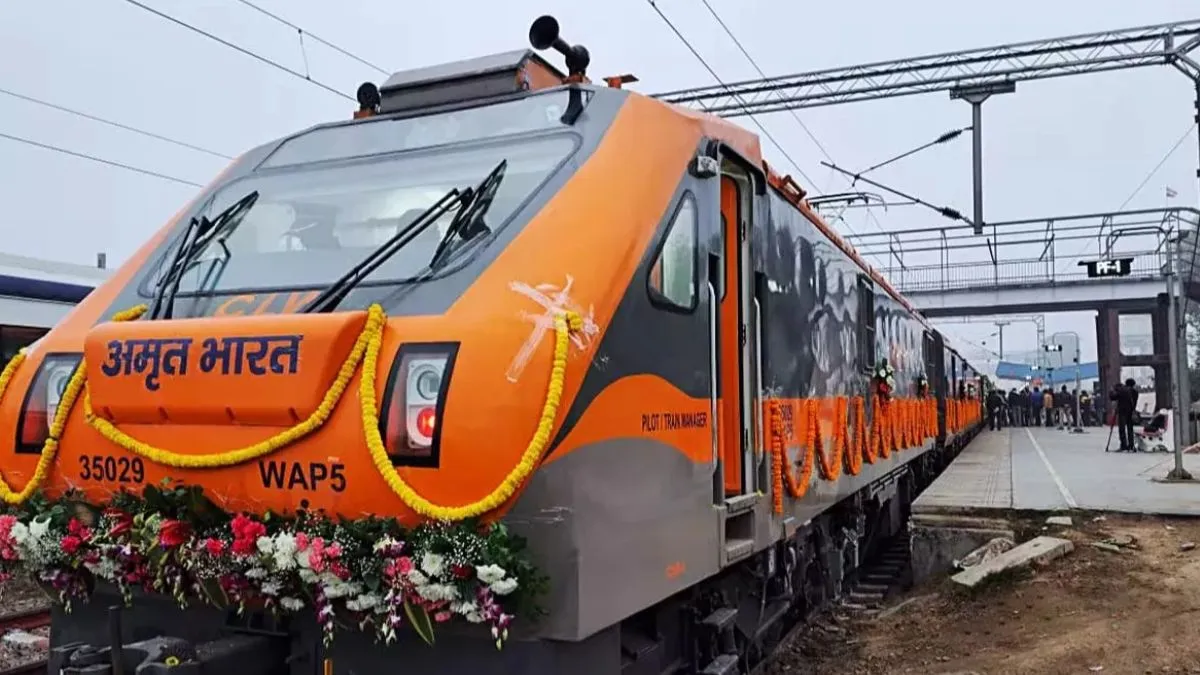
New Delhi Gaya Amrit Bharat Express launched offering faster direct travel
New Delhi: Rail connectivity between the capital and Bihar received a transformative boost this week with the launch of the Amrit Bharat Express connecting Gaya and New Delhi. The direct service is designed to reduce travel time, offer more comfort, and cater to the growing mobility needs of both commuters and tourists, marking a significant step in the government’s agenda to modernise Indian Railways.
The new train, operating under the identifiers 13697 and 13698, eliminates the need for longer indirect routes and brings efficiency to one of the most travelled corridors. Officials emphasise that the service is not merely about faster movement but also about providing affordable, reliable, and inclusive mobility at a time when demand for sustainable transport is rising.The expansion of train services is also a direct response to rising passenger numbers during the festival season. East Central Railway has cleared ten pairs of special trains to run from New Delhi, Anand Vihar, and Delhi stations to different parts of the country. These additional services are intended to reduce congestion, ease the festive rush, and provide smoother journeys.
Beyond the Gaya–New Delhi corridor, several other approvals have been announced to strengthen regional mobility. The Danapur–Udhna Express will soon operate daily instead of weekly, giving passengers consistent access to one of the busiest east–west routes. Similarly, a new Gaya–Surat service will open up direct connectivity between Bihar and Gujarat, a corridor of rising economic and cultural exchange.In addition, rail officials have introduced daily trains on multiple routes to ensure enhanced accessibility. The New Delhi–Darbhanga service, beginning on 29 September, will provide daily connectivity until the end of November. A dedicated Anand Vihar–Sitamarhi daily train will also run during the festive period. Furthermore, a Delhi–Bhagalpur weekly service from late September will connect passengers through major junctions such as Gaya, Sasaram and Prayagraj, offering fresh travel alternatives to underserved regions.
These measures align with India’s wider sustainability goals. Improved and frequent train services act as an eco-friendly substitute to road and air travel, significantly lowering carbon emissions per passenger kilometre. Experts argue that rail expansion not only reduces dependence on fossil fuels but also fosters equitable urban and regional growth by improving accessibility for students, workers and small businesses.
As the network expands, the Indian Railways continues to position itself at the heart of sustainable mobility solutions. With rising passenger expectations and environmental imperatives, the focus is firmly on creating a future-ready, low-emission, and inclusive transport system that links India’s cultural and economic hubs more effectively than ever before.