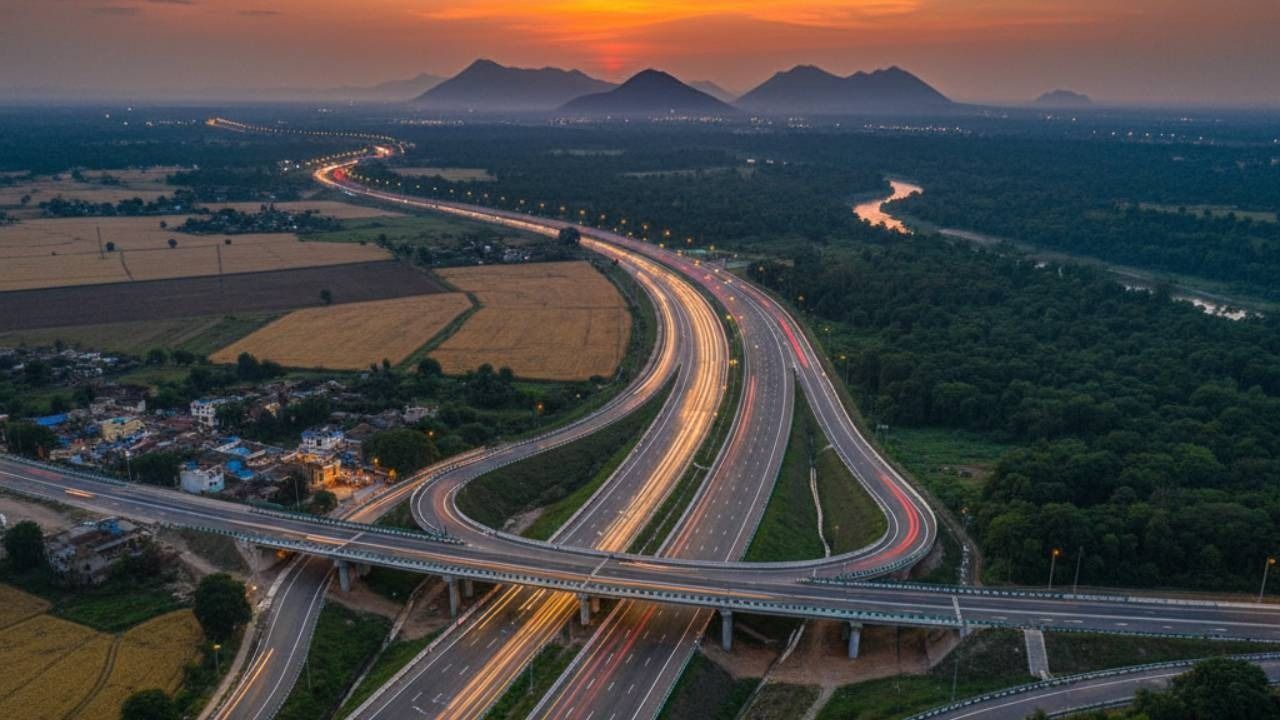
Progress on the Delhi–Mumbai Expressway’s northern access is gathering momentum, with the DND–Jaitpur–Faridabad connector now more than 94% complete. The Union government informed Parliament that the first nine-kilometre segment in Delhi is on track for delivery by June 2026, signalling an important step towards enhancing long-distance mobility and reducing congestion across the National Capital Region (NCR).
The DND–Faridabad–Sohna corridor, which spans 59 kilometres, has been divided into three construction packages to expedite work. Two of these have already been completed and opened to commuters, significantly easing pressure on routes that have long been burdened by rising vehicular volumes. According to officials, the remaining segment linking DND Junction to Jaitpur has reached an advanced stage of construction, though it has faced procedural hurdles due to delayed structural clearances required for crossing the Agra Canal.Once operational, the Delhi link of the expressway is expected to reshape inter-state travel by providing quicker and more predictable connectivity between Delhi, Haryana, Rajasthan, and key western corridors. Urban mobility experts argue that such large-scale infrastructure projects can support more compact and efficient metropolitan development, provided they are complemented with sustainable land-use planning and multimodal public transport integration.
Government representatives noted that more than ₹71,000 crore has already been invested in the wider Delhi–Mumbai Expressway one of India’s most ambitious highway programmes. Conceived to reduce travel time between the two cities from nearly 24 hours to around 12, the corridor is expected to become a backbone for logistics, urban expansion, and economic diversification across several states.
However, planners caution that infrastructure expansion alone will not resolve the NCR’s chronic congestion challenges. They emphasise that future growth must align with climate-resilient principles, including adoption of low-carbon construction materials, noise reduction strategies, and ensuring that adjoining districts do not become hotspots of inequitable or haphazard development. Sustainable mobility advocates add that expressway-led growth should encourage integrated freight movement and reduce pressure on local roads, rather than incentivising more private vehicle use.
Residents of peripheral zones such as Faridabad and parts of South Delhi are likely to see the earliest benefits once the DND–Jaitpur link opens. The improved connectivity may also unlock opportunities for transit-oriented development, potentially encouraging mixed-use, accessible neighbourhoods that reduce commute distances and improve liveability.As the project approaches its next milestone, officials maintain that construction will continue to prioritise safety and environmental safeguards. The timely completion of the remaining stretch will be important not only for regional traffic flow but also for setting a benchmark for sustainable expressway development in rapidly expanding Indian cities.
New Delhi DND–Jaitpur–Faridabad Link Reaches 94% Progress Ahead June 2026 Deadline