


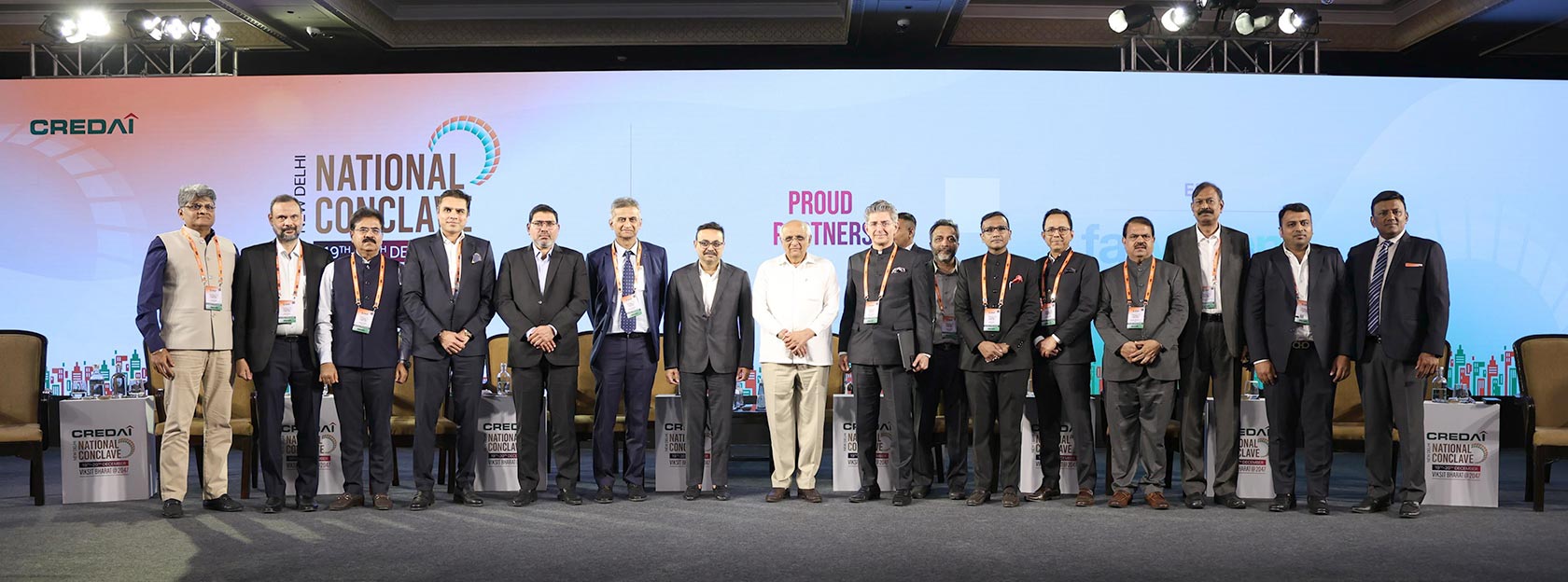
India’s largest real estate industry body has urged the Union government to reassess how affordable housing is defined, arguing that outdated price thresholds are constraining supply in fast-growing cities. At its national conclave in New Delhi, the Confederation of Real Estate Developers’ Associations of India (Credai) said the current Rs 45 lakh cap no longer reflects market realities and needs urgent revision in the Union Budget 2026.
The appeal comes amid rising land prices, construction costs and compliance expenses, particularly in metropolitan regions where housing demand continues to outstrip supply. According to Credai, revisiting the definition of affordable housing is essential if cities are to deliver homes that remain accessible to middle-income households while maintaining financial viability for developers. A senior industry representative said the Rs 45 lakh benchmark, introduced several years ago, has failed to keep pace with inflation in material costs, labour wages and regulatory charges. “Without recalibration, projects that could otherwise serve aspiring homeowners fall outside the affordable category, reducing incentives for developers to build at scale,” the representative noted. Credai has proposed either removing the price ceiling altogether or increasing it to ₹90 lakh, a move it believes would better reflect urban housing economics. Industry analysts say such a change could expand the pool of homes eligible for lower taxation, particularly the concessional one per cent goods and services tax applied to affordable housing.
Beyond redefining price limits, the association has called for targeted tax incentives for developers undertaking affordable housing projects. It has also suggested lowering GST on works contracts used by builders, arguing that cost relief at the construction stage could translate into more competitive pricing for buyers. An urban economist said easing tax pressure could improve supply without relying solely on subsidies, especially in land-scarce cities. The industry body pointed to the broader transformation of the sector under regulatory reforms, noting that improved transparency and consumer protection have stabilised investor confidence. Real estate now contributes steadily to urban employment and economic growth, but Credai cautioned that affordability remains a structural challenge as cities expand outward. Sustainability was also woven into the industry’s budget appeal. Credai reiterated its commitment to achieving net-zero emissions by 2047, encouraging members to integrate energy-efficient design, water management and green materials into housing projects. Afforestation initiatives in peri-urban regions were cited as examples of how development can coexist with ecological restoration.
Urban planners say aligning affordability with sustainability will be critical for India’s future cities. Expanding housing supply without addressing carbon intensity, land efficiency and inclusive access could deepen inequality. As the government prepares Budget 2026, the debate over affordable housing definition is emerging as a litmus test of whether policy can balance fiscal prudence, environmental responsibility and the lived realities of urban households.
Also Read: New Delhi RERA Has Strengthened Real Estate And Safeguarded Homebuyers Says Amit Shah
New Delhi Credai Calls Budget 2026 Reforms Higher Housing Cap And Tax Relief
