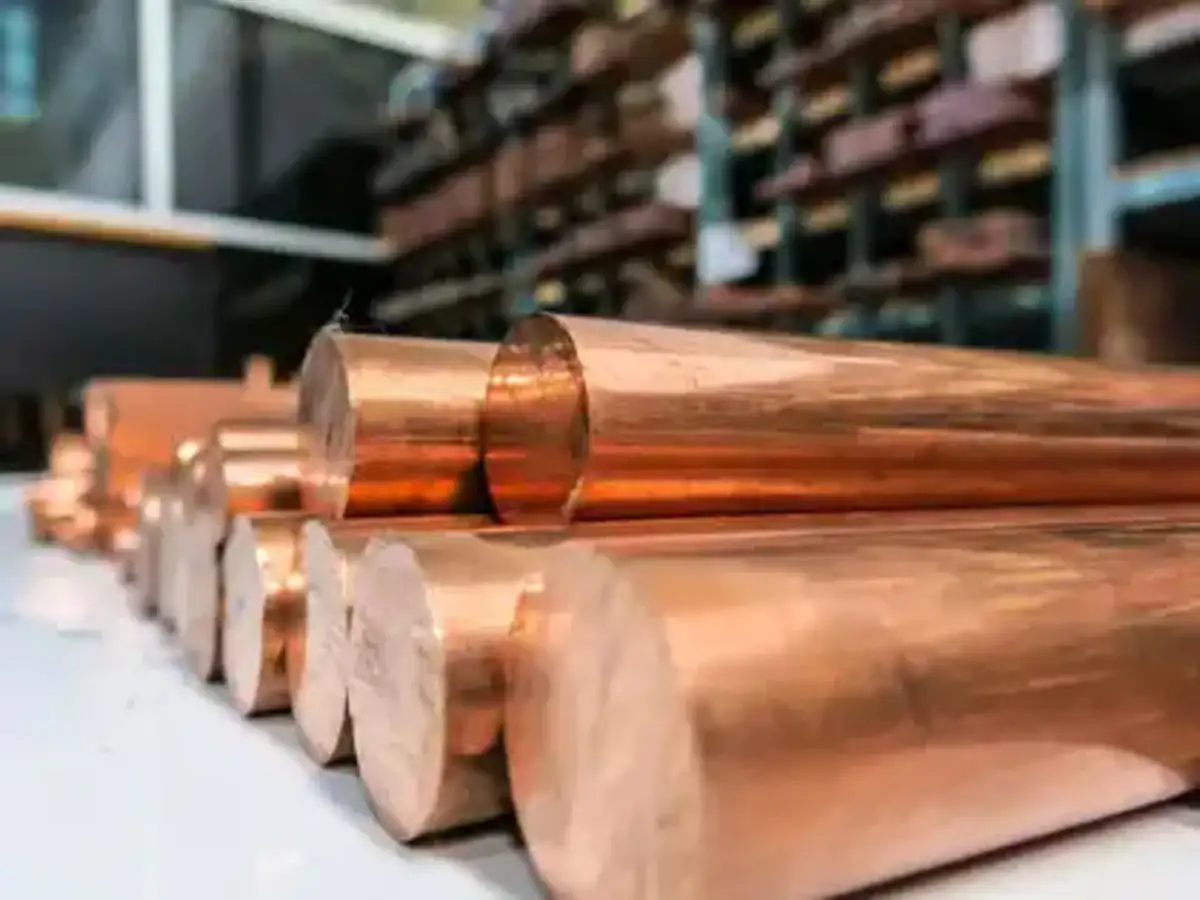
New Delhi’s copper industry has raised alarms over the surge of cheap imports, urging the government to impose safeguard duties and quantitative restrictions to protect domestic production. Industry representatives warn that zero-duty shipments under free trade agreements are threatening the supply of copper critical for homes and building projects, undermining investments exceeding Rs 20,000 crore in local smelting and manufacturing. Officials stress that timely intervention is essential to sustain India’s construction and infrastructure sectors.
The Indian Primary Copper Producers Association (IPCPA) highlighted that imports under the India-UAE Comprehensive Economic Partnership Agreement (CEPA) are particularly challenging. Customs duties on copper wire rods have fallen to just one per cent in FY26, with a full exemption expected by FY27. Exacerbating the issue, an inflated Tariff Rate Quota (TRQ) of 85,000 tonnes per year—far above the intended 29,000 tonnes—has triggered a 340 per cent increase in UAE copper imports between FY22 and FY26.“The TRQ mechanism, while intended to facilitate limited duty benefits, is being exploited, placing domestic smelters under severe stress,” said an industry official. Indian producers argue that this surge is eroding the economic viability of domestic copper production, which underpins electrical wiring, plumbing, and other essential building components.
Complicating matters further, the India-ASEAN CEPA allows Indonesian copper cathodes to undergo minimal processing in countries like Thailand, Malaysia, or Vietnam before entering India duty-free. Between 2020 and 2024, this contributed to a 66 per cent rise in copper wire imports and a 103 per cent increase in copper tube imports, intensifying competition for Indian manufacturers.Global factors are also at play. Indonesia’s rapid expansion of smelting capacity, coupled with Chinese investments in ASEAN copper operations, has strengthened export flows, further pressuring India’s domestic industry. Treatment and Refining Charges (TC/RC)—a crucial revenue source for smelters—have dropped 80 per cent, with projections suggesting a potential collapse to zero by 2026, making smelting operations economically unviable.In response, the IPCPA has urged the government to add copper wires, tubes, and foils to the exclusion list under current FTA reviews and implement a three per cent safeguard duty along with quantitative import limits. Analysts note that such measures could stabilise domestic production, safeguard investments in self-reliant supply chains, and secure the copper necessary for homes, commercial buildings, and infrastructure projects across India.
As New Delhi balances trade liberalisation with industrial sustainability, experts stress that carefully calibrated safeguards may be essential to maintain a resilient and equitable domestic copper ecosystem, ensuring that India’s construction and urban development ambitions are not compromised by external market pressures.