


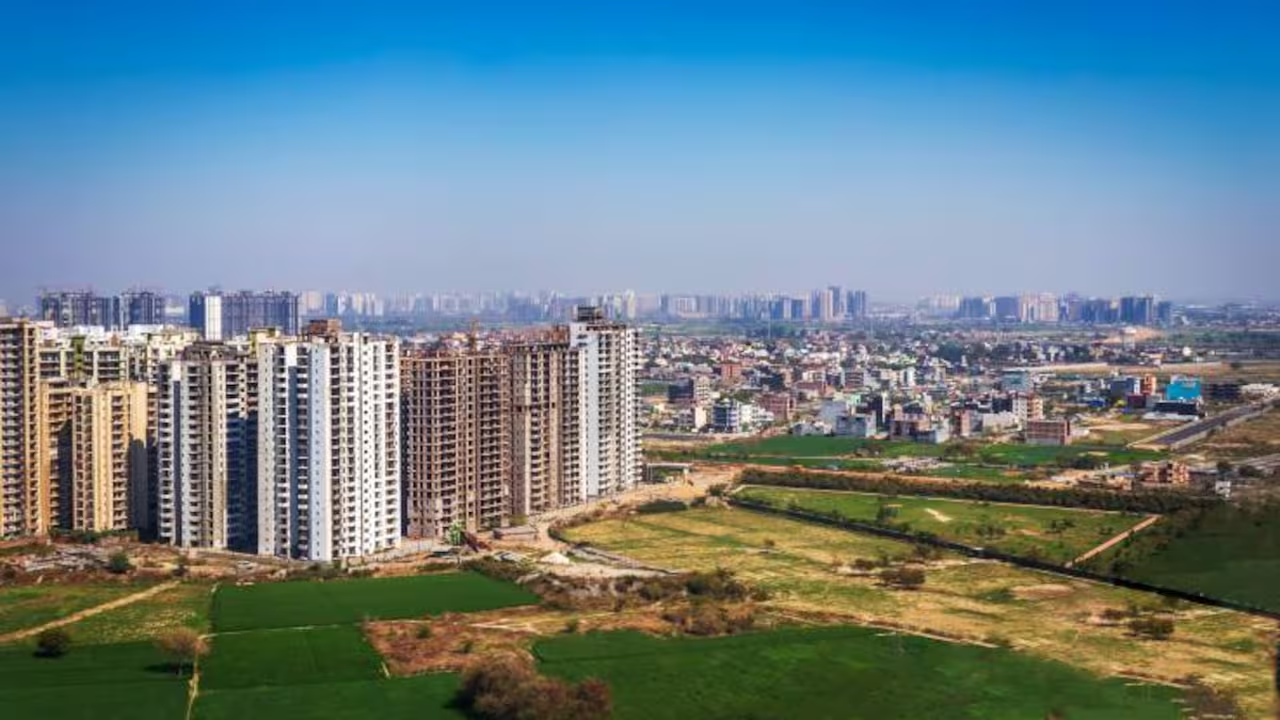
The National Capital Region’s real estate market is witnessing renewed interest from emerging developers as demand shifts towards planned, infrastructure-linked housing and integrated communities. A new real estate firm has entered the NCR landscape with projects spanning Haryana’s peripheral growth corridors, signalling continued confidence in the region’s long-term urban expansion despite ongoing recalibration within the sector.
Industry observers note that NCR’s current development cycle is increasingly shaped by buyer preference for compliance-driven projects, predictable delivery timelines and neighbourhoods that combine residential, commercial and social infrastructure. This shift has prompted newer entrants to focus less on speculative launches and more on phased, master-planned developments anchored in livability and long-term asset value. According to people familiar with the company’s plans, the developer’s initial focus is on mixed-use and residential-led projects across Haryana, including a township development in Panipat and a high-rise residential project along the Dwarka Expressway corridor in Gurugram. Both locations reflect broader regional trends: the decentralisation of housing supply beyond core Delhi and the growing appeal of transit-oriented corridors supported by expressways and arterial road upgrades. Urban planners point out that Panipat’s inclusion highlights the gradual expansion of NCR’s functional boundaries, as satellite cities attract both end-users and investors seeking relatively affordable land, lower density and improved civic planning. Large-format townships in such locations are increasingly expected to shoulder responsibility for internal infrastructure, green spaces and community amenities a model that reduces pressure on municipal systems if executed responsibly.
Meanwhile, the Dwarka Expressway belt has emerged as one of NCR’s most closely watched residential corridors, driven by improved connectivity between Gurugram and west Delhi, airport access and the clustering of office hubs nearby. However, experts caution that high-rise development in these zones must be aligned with drainage planning, energy efficiency standards and last-mile public transport to avoid repeating the congestion challenges seen in earlier growth pockets. The developer’s approach, based on a mix of owned land and joint development partnerships, reflects a broader industry shift towards capital-light expansion models. Such structures allow companies to scale while retaining oversight on design, construction quality and regulatory compliance factors that have become critical for restoring buyer confidence after years of stalled or delayed projects across NCR. From a governance perspective, analysts say the emphasis on institutional processes, technology-led monitoring and transparent customer engagement is increasingly non-negotiable in NCR’s competitive housing market. Buyers today are less swayed by branding and more by track record, legal clarity and operational discipline.
As NCR continues to absorb population growth and economic activity, the entry of new developers underscores the region’s resilience. The true test, however, will lie in whether emerging projects contribute to more inclusive, climate-resilient urban neighbourhoods rather than simply adding to the region’s built footprint.
Also Read: Mumbai Prepares New MHADA Housing Allocation
NCR Real Estate Sees New Developer Entry
