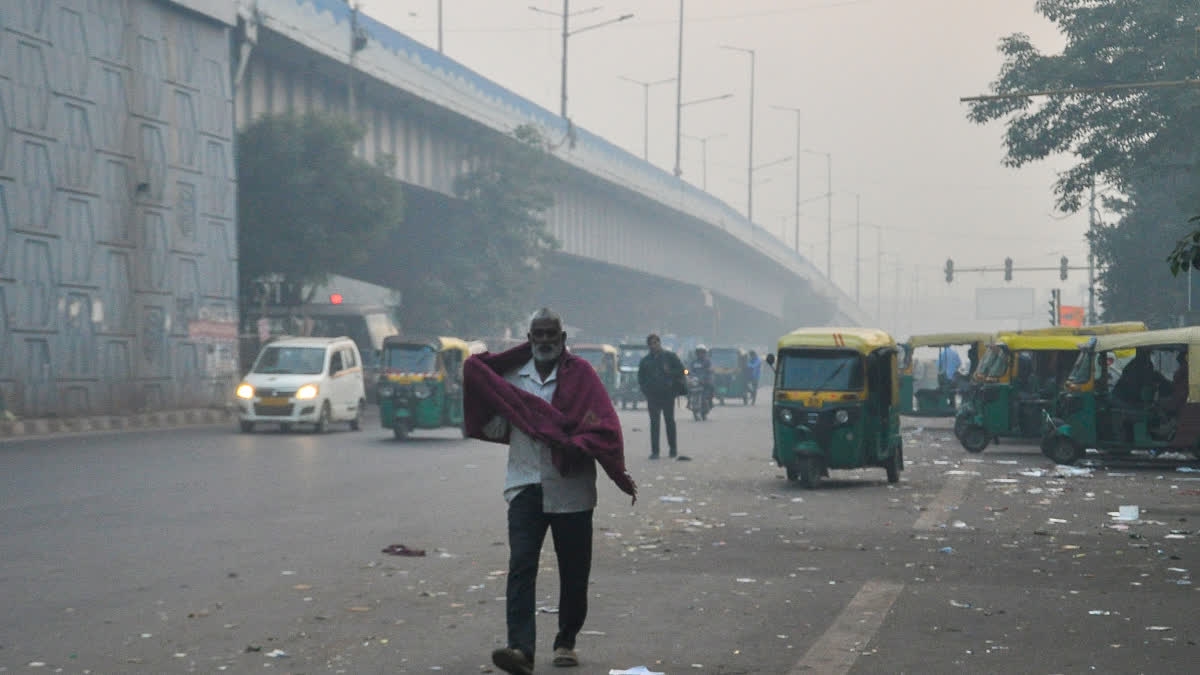
Rising pollution levels across the National Capital Region have once again drawn attention to the fragile state of the Aravalli hills, with senior policymakers warning that continued degradation of the range could sharply worsen air quality and public health outcomes. The remarks come at a time when NCR cities are grappling with prolonged episodes of hazardous air, underscoring the growing link between environmental decline and urban liveability.
During a media interaction in Haryana’s urban fringe, a Union minister highlighted the ecological role of the Aravallis in acting as a natural barrier against dust, regulating microclimates and supporting groundwater recharge. Environmental planners note that the ancient hill system, stretching across Rajasthan, Haryana and Delhi, plays a quiet but critical role in shielding NCR from desertification and particulate inflows from the west. Its steady erosion due to mining, construction and encroachment has weakened this natural defence.
The renewed political focus follows another winter of severe air pollution across NCR, where particulate matter levels have repeatedly crossed health-safe limits. Public health experts warn that prolonged exposure is already translating into higher respiratory illness, lost workdays and rising healthcare costs burdens that disproportionately affect children, older residents and outdoor workers. From an economic perspective, poor air quality also undermines productivity and deters long-term investment in urban regions competing for global capital.
Urban development specialists argue that the Aravalli debate reflects a deeper policy tension between rapid real estate expansion and ecological preservation. Large tracts around Gurugram, Faridabad and southern Delhi have seen intense construction over the past two decades, often at the expense of natural landscapes. While these projects have fuelled short-term growth, planners caution that ignoring environmental thresholds could impose far higher long-term costs on infrastructure, health systems and municipal finances. The discussion has also intersected with local political dynamics, including upcoming civic elections in parts of Haryana. Observers note that environmental issues, once peripheral in municipal campaigns, are increasingly shaping voter sentiment as residents experience the daily consequences of pollution, water stress and heat extremes. Clean air, access to green spaces and climate resilience are fast becoming core urban governance concerns rather than niche environmental topics.
Beyond regional politics, the minister’s comments extended to global instability and its economic fallout, drawing parallels between conflict-driven inflation and environmental neglect. Policy analysts see a common thread: systemic risks whether geopolitical or ecological tend to amplify inequality and strain public resources when left unaddressed. For NCR, the path forward will depend on whether Aravalli protection moves from rhetoric to enforcement. Environmental experts point to the need for clear land-use definitions, restoration of degraded patches, and alignment between state governments on conservation norms. As cities across the region plan further expansion, safeguarding natural buffers like the Aravallis may prove essential not just for cleaner air, but for sustaining long-term urban growth that is resilient, inclusive and economically viable.
NCR pollution debate refocuses on Aravalli protection