


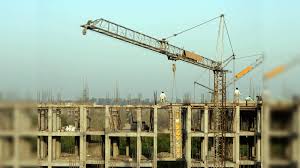
A new institutional platform aimed at unlocking delayed housing supply is taking shape in the National Capital Region, as developers and private capital align to address one of the region’s most persistent urban challenges stalled near-completion residential projects.The initiative brings together a Delhi-NCR based real estate developer and an alternative investment firm to create a structured funding and execution vehicle with a planned corpus of Rs 500 crore.
The platform is designed to intervene in projects that are largely constructed but have remained incomplete due to last-mile funding gaps, governance issues, or execution bottlenecks. Industry observers say such projects continue to cast a long shadow over NCR’s housing market. While demand has recovered across several residential micro-markets, incomplete developments have eroded buyer confidence, locked up household savings, and contributed to uneven urban growth. Resolving these stuck assets is increasingly seen as critical not just for homebuyers, but for restoring the credibility of the region’s real estate ecosystem. Under the platform’s framework, capital deployment will be phased, with an initial tranche earmarked for immediate project identification and execution. The developer partner will assume responsibility for construction management, regulatory coordination, and delivery oversight, while the investment firm will provide structured funding tied to clearly defined milestones. This separation of capital provision and on-ground execution is intended to reduce risk and improve accountability.
Urban planners point out that near-completion projects represent a more sustainable intervention point than greenfield development. Completing existing buildings helps avoid additional land consumption, reduces embodied carbon waste, and enables faster integration of housing into established infrastructure networks such as roads, water supply, and public transport. The NCR has been particularly affected by stalled housing over the past decade, with thousands of units caught in limbo due to over-leveraging, weak governance, and market slowdowns. Although regulatory reforms and improved sales momentum have stabilised parts of the market, last-mile liquidity remains a hurdle for several developments that are otherwise viable. Market analysts note that structured platforms of this nature reflect a broader shift in real estate finance. Rather than speculative land bets, institutional capital is increasingly targeting completion-driven strategies that prioritise delivery, cash-flow visibility, and end-user outcomes. This approach aligns more closely with long-term urban stability and investor risk management. For homebuyers, the success of such platforms could translate into faster possession timelines and reduced uncertainty. For cities, it offers a pathway to absorb existing housing stock more efficiently, easing pressure on peripheral expansion and infrastructure sprawl.
As NCR continues to balance renewed housing demand with the legacy of unfinished projects, execution-focused capital models are likely to play a growing role. Their effectiveness, however, will depend on transparent governance, regulatory coordination, and the ability to deliver homes that meet contemporary standards of safety, efficiency, and liveability.
Also Read: West Delhi micro markets attract first time buyers
NCR homebuyers see push to finish delayed housing
