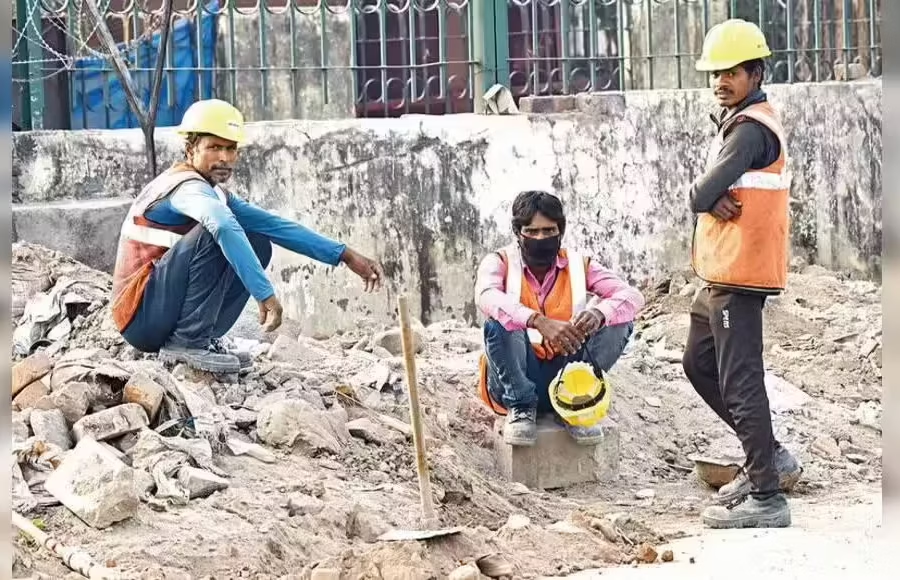
A large residential developer has begun rolling out a structured mental health and wellbeing framework across its construction sites in Delhi NCR, marking a notable shift in how labour welfare is being approached in one of India’s most intense real estate markets. The move follows a pilot phase conducted in the Mumbai Metropolitan Region and is now being extended to projects in Gurugram, Noida, Greater Noida and adjoining NCR citi
Delhi NCR is among the country’s largest construction zones, driven by sustained demand for housing, offices and urban infrastructure. This scale has brought with it a heavy dependence on migrant construction labour, much of it informal, mobile and exposed to economic uncertainty. Industry observers note that while site safety norms have improved over the years, mental health and emotional wellbeing have remained largely unaddressed.
The newly introduced programme is designed to embed psychological support directly into construction sites rather than treating it as an external or temporary measure. Interventions include regular group interactions, access to confidential one-on-one counselling, and continuous remote support through digital and audio-visual platforms. The aim, according to those familiar with the initiative, is to normalise conversations around stress, anxiety and fatigue among workers who often operate under tight deadlines and physically demanding conditions.
Urban economists say the timing is significant for NCR. The region has seen repeated construction slowdowns in recent years due to labour shortages, regulatory pauses and environmental restrictions. Worker absenteeism, high turnover and site-level conflicts have quietly added to project delays. Addressing mental wellbeing, experts argue, can improve workforce stability and productivity outcomes that directly affect housing supply and delivery timelines in the region.
From a city-building perspective, the programme also aligns with a growing recognition that inclusive urban development must extend beyond end users to those who physically build the city. Construction workers in NCR often live in temporary settlements with limited access to healthcare, social networks or counselling services. On-site mental health support reduces reliance on overstretched public systems and brings assistance closer to where workers spend most of their time.
The rollout in NCR is part of a wider expansion across multiple urban markets, covering tens of thousands of workers nationally. However, planners point out that NCR’s diversity of languages, migration patterns and site conditions will test how adaptable and scalable the model is. Continuous monitoring and culturally sensitive engagement will be key to ensuring participation does not taper off after initial adoption. As NCR cities push towards denser, more climate-resilient urban forms, the construction sector’s social foundations are coming under sharper focus. Whether such wellbeing frameworks become standard practice or remain isolated initiatives may shape how responsibly and sustainably the region continues to grow.
NCR Construction Workforce Enters Wellbeing Push