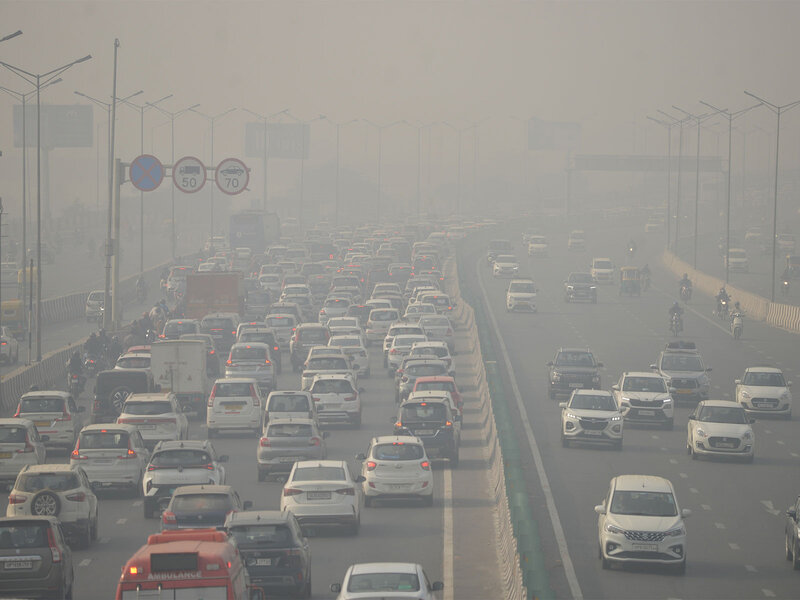
A renewed strategy to curb air pollution across the National Capital Region (NCR) is taking shape, with central and state governments aligning on a target to reduce overall pollution levels by up to 20 per cent by 2027. The approach marks a shift from episodic emergency responses towards data-led, structural interventions across transport, industry, construction and waste management sectors that define everyday urban life in India’s largest metropolitan cluster.
At a high-level coordination meeting in Delhi this week, policymakers reviewed the region’s air quality performance under an annual national framework and agreed to commission a fresh scientific assessment of pollution sources across the NCR airshed. The study, being undertaken by multiple Indian research institutions, aims to map emissions with greater accuracy and resolve long-standing gaps that have weakened policy execution in recent years. Urban planners and environmental economists say updated source attribution is critical for a region where pollution originates far beyond city boundaries. NCR air pollution is shaped by vehicular density, industrial activity, construction cycles, regional weather patterns and land-use practices, making fragmented action ineffective. Previous datasets are now outdated, limiting the ability of city authorities to prioritise investments or enforce accountability.
Transport emerged as a central focus of the review. Officials examined proposals to address congestion at more than 60 high-traffic locations using intelligent traffic systems, enforcement technologies and regulatory reforms. Measures under consideration include automated vehicle monitoring at entry points, tighter scrutiny of high-emission vehicles and policy options such as staggered office timings to flatten peak-hour demand. At the same time, authorities acknowledged that enforcement alone will not deliver durable results. Expanding public transport capacity and improving last-mile connectivity were identified as essential to reduce private vehicle dependence. Plans are underway to integrate electric feeder services at major metro stations and accelerate the induction of electric buses into the urban fleet, aligning mobility goals with climate commitments.
Industrial emissions, another major contributor to NCR air pollution, remain unevenly regulated. While most planned industrial estates have transitioned to cleaner fuel systems, unregulated units operating outside approved zones continue to pose challenges. Regulatory agencies have begun tightening compliance through digital emissions monitoring and targeted closures, signalling a more systematic approach to industrial oversight. Construction activity and road dust often overlooked outside winter months were also addressed. Urban development agencies outlined road redevelopment programmes incorporating dust suppression, mechanised sweeping and green buffers using local plant species.
Construction and demolition waste management is being linked more closely to real estate approvals, with new processing capacity expected to come online.
Progress on legacy landfill remediation was reviewed as part of a broader waste-to-resource strategy, reflecting growing recognition that solid waste management influences both air quality and urban land economics. For residents and businesses, the significance of this coordinated push lies in predictability. Cleaner air improves public health, workforce productivity and investor confidence key ingredients for inclusive, climate-resilient urban growth. The coming months will test whether institutional coordination and scientific planning can finally translate into sustained air quality gains across the NCR.
NCR Air Plan Targets Measurable Pollution Cuts