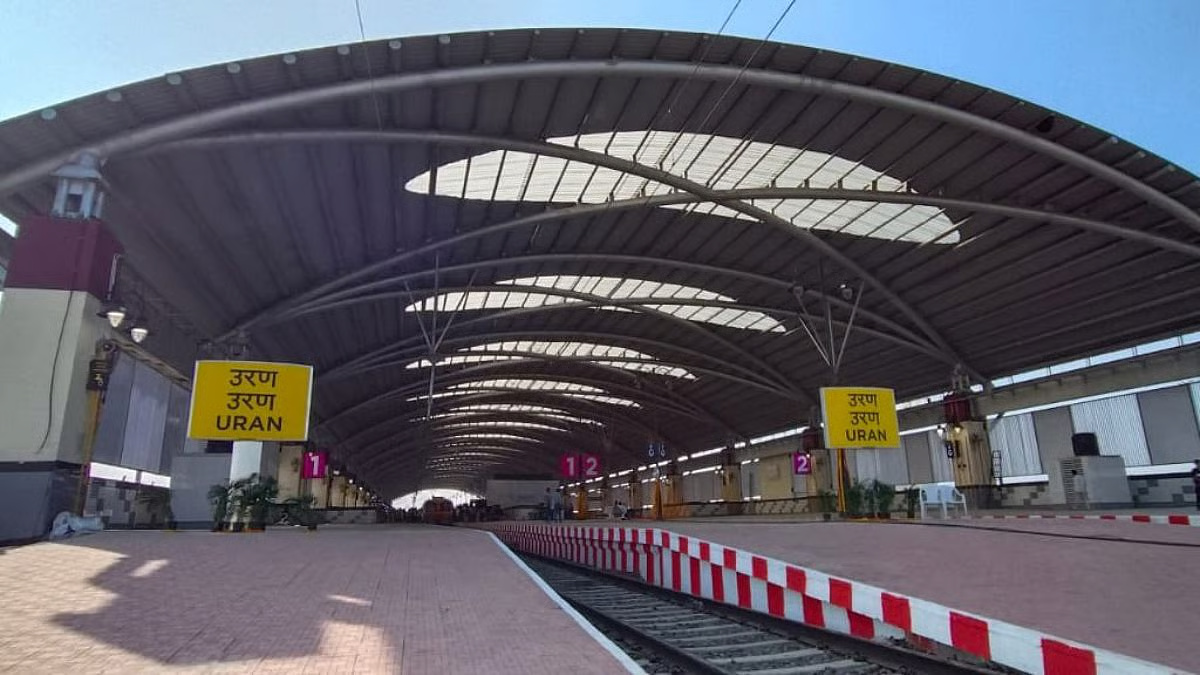
Suburban train operations between Kharkopar and Uran were suspended on Wednesday after a petroleum pipeline leak forced the Central Railway to halt services as a safety precaution. The disruption affected hundreds of daily commuters travelling on the Nerul–Uran suburban corridor, a key link connecting Navi Mumbai’s expanding residential zones to industrial hubs in Raigad district.
Officials confirmed that both up and down train movements were halted after an oil pipeline running parallel to the railway tracks developed a leak. Power supply to the overhead electric wires was immediately cut off to prevent any accidental ignition. Teams from the railway’s technical division and the petroleum company were deployed to identify the leak source and ensure containment before restoration. A senior Central Railway official stated that train operations would remain suspended until a complete safety clearance was received from multiple agencies. “This is a precautionary measure to ensure the safety of passengers and ground staff. Normal operations will resume only after the site is declared safe,” the official said.
The incident underscores the growing urban risk posed by the proximity of transport infrastructure and industrial pipelines in rapidly urbanising regions like Navi Mumbai. Urban planners have long cautioned that overlapping utility corridors—especially where high-density transport networks intersect with industrial assets—require better regulatory zoning and stricter safety audits. Transport experts pointed out that disruptions like this highlight the urgency for improved coordination between civic, industrial, and railway authorities. “Infrastructure corridors in Navi Mumbai have expanded faster than planning frameworks. This incident should prompt a re-evaluation of how industrial and transport systems coexist in high-growth zones,” said a transport planner familiar with the region’s development patterns.
The Nerul–Uran line, developed to improve suburban access to the Navi Mumbai International Airport and the JNPT region, has been instrumental in easing road congestion and supporting transit-oriented growth. However, repeated interruptions due to maintenance and safety incidents underline the need for more resilient design standards and real-time monitoring of critical infrastructure. Officials have assured commuters that emergency response teams will continue to monitor air quality and fuel dispersion levels before restoring electricity and resuming rail services. No injuries or property damage were reported at the site.
As Navi Mumbai continues its transition into a major urban and industrial hub, experts stress that integrated risk management—covering transport, energy, and environmental systems—will be essential to ensure sustainable and safe mobility for its growing population.
Navi Mumbai Train Services Between Kharkopar And Uran Suspended After Petrol Pipeline Leak