


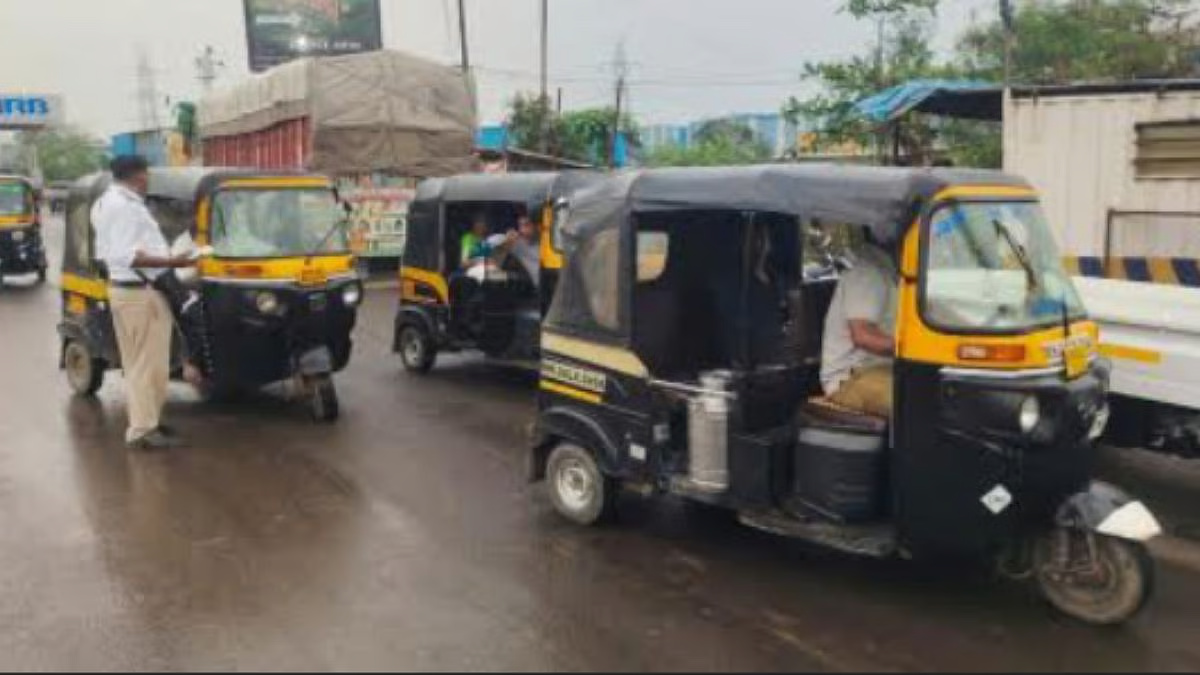
Navi Mumbai has launched a focused enforcement campaign against autorickshaw violations after repeated complaints from commuters about unsafe driving practices and refusal of fares. Over three days of inspections carried out earlier this month, traffic authorities penalised 1,575 drivers across the city’s 16 traffic divisions. Officials say the action aims to restore commuter confidence and create safer public transport conditions, especially in high-density nodes where last-mile mobility is crucial.
According to senior officials, the enforcement drive was initiated following rising concerns from passengers over rash driving, overcharging cases, refusal of short-distance fares, and non-compliance with essential documentation. Public transport experts note that autorickshaws remain a critical component of Navi Mumbai’s mobility network, particularly for low-income commuters and women who rely on quick point-to-point connectivity. Any disruption in service quality, they argue, disproportionately affects those with limited transport options. The traffic department stated that despite several prior meetings with driver unions and vehicle owners, violations continued. This prompted a coordinated crackdown across APMC, Vashi, CBD Belapur, Nerul, Sanpada, Panvel, Kamothe, and other nodes. A senior traffic official said the operation was designed “to improve discipline on roads and strengthen commuter safety,” adding that more targeted checks are being planned over the next few weeks.
Data released by the department shows widespread non-compliance. Of the 1,575 cases recorded, 657 involved refusal of fares, while 547 drivers were booked for carrying excess passengers—a significant safety concern. Authorities also penalised 174 drivers for not wearing the prescribed uniform, 17 for carrying front-seat passengers, and 11 for obstructing traffic at junctions. Other cases included not carrying valid licences, absence of driver badges, and general behavioural violations. Officials highlighted that such lapses undermine the reliability of a transport mode that millions depend on daily. Transport planners suggest that improving last-mile connectivity is integral to sustainable urban mobility and aligns with broader climate goals. Ensuring accountability within para-transit systems like autorickshaws is therefore essential for creating equitable, inclusive, and low-carbon transport ecosystems. They add that enhanced monitoring, digital fare management, and structured driver training programmes could support long-term behavioural change.
Authorities said the enforcement will continue in phases, with regular checks to be integrated into routine policing. “Strict action will continue against unruly drivers,” a senior official said, urging vehicle owners and drivers to follow prescribed rules. The department also plans to engage with unions again to address systemic issues and encourage compliance. With Navi Mumbai aiming to promote cleaner, safer and more efficient mobility choices, officials believe that sustained vigilance and community cooperation will help make the city’s transport system more equitable and environmentally responsible.
Also Read: Maharashtra Approves 34 Acre Kamatipura Redevelopment Ensuring Modern 2BHK Homes For Tenants
