


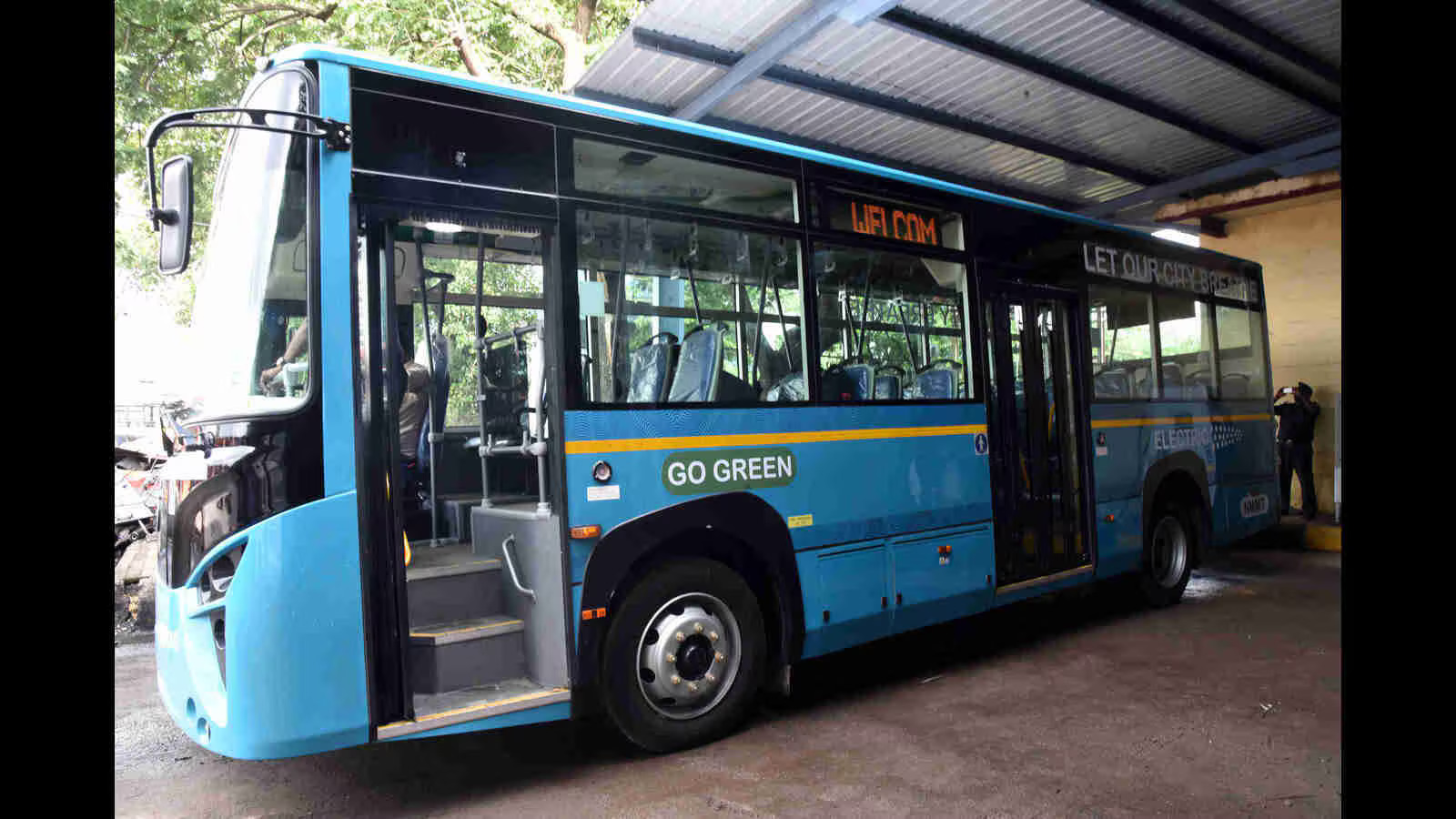
As the Navi Mumbai International Airport (NMIA) edges closer to its long-awaited opening, civic authorities are accelerating measures to ensure the city is prepared to serve as the airport’s support hub. The Navi Mumbai Municipal Corporation (NMMC) has announced plans to introduce more than 50 electric buses to provide connectivity between the airport and the city, strengthening sustainable transport options ahead of the metro becoming operational.
Officials emphasised that while NMIA falls technically outside the municipal boundary, Navi Mumbai will remain the “service backbone” for the airport. The electric bus fleet is designed to transport both passengers and staff, easing dependency on private vehicles and contributing to the city’s broader low-carbon mobility ambitions. In addition, treated water is being allocated for non-potable purposes, while civic teams are upgrading road markings and signage to ensure seamless access. Connectivity to the airport will rely on multiple key corridors. South Mumbai travellers will use the Mumbai Trans Harbour Link, while Central Mumbai and eastern suburbs will depend on upgraded NMMC roads. North Mumbai, Thane and Mira-Bhayandar commuters will rely on the widened Thane-Belapur Road until the multimodal corridor is completed over the next four to five years. Enhancements on Palm Beach Road and other arterial stretches are also under way to manage anticipated traffic surges once the airport opens.
Authorities are synchronising infrastructure development with the airport’s operational timeline. Projects in the pipeline include road widening, expansion of water networks, higher Floor Space Index (FSI) for redevelopment, and new facilities for the hospitality sector to meet the expected growth in real estate and tourism once NMIA becomes functional. In Panvel, the municipal corporation is improving approach roads, installing additional streetlights and expanding directional signage to aid passenger movement. Safety measures are also being tightened, with a special focus on preventing bird strikes. Officials are working to regulate open markets that sell fish and meat, which can attract birds and pose risks to flight operations.
Reliable power supply remains a key priority for the project. The Maharashtra State Electricity Distribution Company Limited (MSEDCL) has increased sanctioned supply from 7 MVA to 10 MVA for construction purposes and confirmed its capacity to provide up to 20 MVA once commercial operations commence. Officials stated that adequate power will be critical for maintaining both the airport’s core functions and Navi Mumbai’s economic momentum. With its focus on green mobility, safety, and integrated urban planning, Navi Mumbai is positioning itself not just as a host city but as a critical partner in shaping India’s next major aviation hub.
Also Read: Navi Mumbai CIDCO Earns Nearly 900 Crore From Auction Of Ten Plots
