Navi Mumbai Struggles To Improve Air Quality Despite Measures
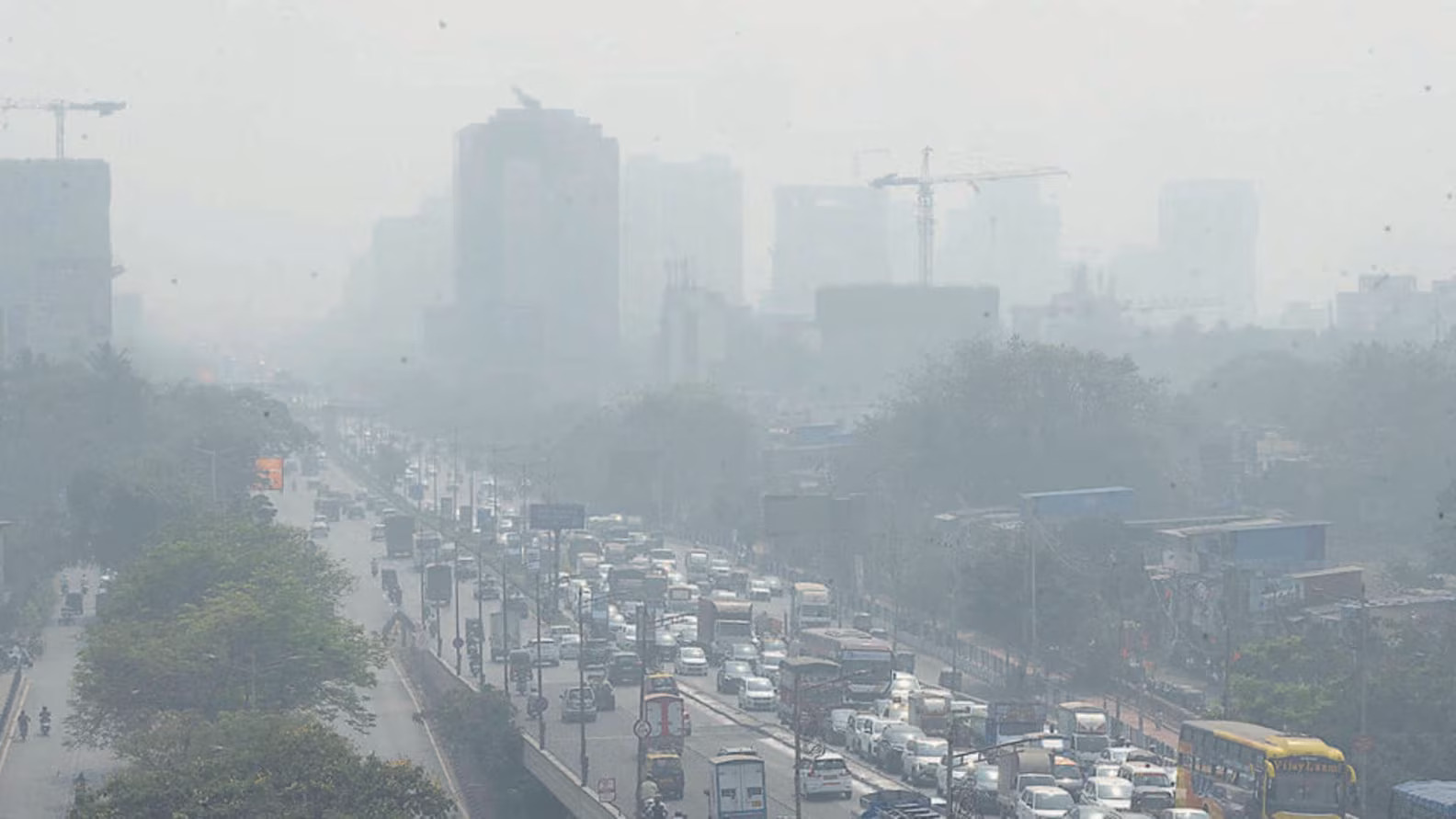
Despite a series of regulatory and technological measures aimed at curbing air pollution, Navi Mumbai continues to record elevated AQI (Air Quality Index) readings, pointing to persistent challenges in controlling emissions from industrial, construction and transport sectors. Local authorities acknowledge that existing strategies have fallen short of delivering measurable improvements, prompting calls from urban planners and health advocates for a more integrated approach to air quality governance.
Navi Mumbai — a planned satellite city adjacent to Mumbai — has grown rapidly as a residential and commercial hub. The confluence of heavy vehicular traffic, ongoing construction activity, port operations and industrial emissions has contributed to periodic spikes in particulate matter (PM2.5 and PM10) and other pollutants. AQI data from monitoring stations shows that air quality frequently oscillates in the “moderate” to “poor” categories, particularly during seasonal transitions, raising concerns among health professionals about long-term exposure risks for vulnerable groups.Local authorities have rolled out various interventions over the past year, including stricter enforcement of vehicle emissions standards, restrictions on dust-generating construction activities, deployment of mobile air monitoring units, and coordination with neighbouring civic bodies. The Navi Mumbai Municipal Corporation (NMMC) has also intensified plantation drives and public awareness campaigns, aiming to promote behavioural shifts such as reduced open burning of waste and better compliance with industrial emission norms.
However, environmental analysts say the impact of these efforts remains limited and uneven. One challenge is that many measures are reactive rather than systemic — for example, construction site inspections tend to focus on compliance at the moment of review rather than continuous dust suppression practices. Similarly, while vehicle emission testing has become more frequent, the rising total number of vehicles in the region offsets gains made through regulation alone. Transport infrastructure plays a central role in the pollution picture. Navi Mumbai’s expanding road network and limited high-capacity public transit options continue to funnel commuters into private cars and two-wheelers, increasing tailpipe emissions. Urban mobility planners argue that without significant investment in high-frequency mass transit, such as metro extensions and last-mile connectivity enhancements, modal shift away from private vehicles will remain slow — and urban air quality gains elusive.
A second dimension is emissions from construction and industrial processes. While restrictions have been imposed on dust at work sites, compliance monitoring is fragmented across departments and often lacks real-time tracking capabilities. Experts suggest adopting IoT-based sensors and AI-powered analytics to continuously monitor dust and airborne pollutants at construction clusters, enabling swift enforcement rather than periodic notices that may miss peak emission periods. Public health stakeholders caution that sustained high AQI levels — even within the moderate range — have cumulative effects on respiratory and cardiovascular wellbeing, especially for children, elderly residents and outdoor labourers. They emphasise that quantifiable environmental targets and transparent reporting mechanisms are essential to maintain pressure on development and transport sectors to reduce emissions over time.
Looking ahead, planners and environmental advocates propose a more integrated governance framework — one that synchronises urban land-use planning, mobility investments and industrial regulation with real-time air quality data streams and predictive modelling. Only by aligning transport planning, construction oversight and community engagement around measurable air quality goals can Navi Mumbai make tangible progress against persistent pollution pressures.