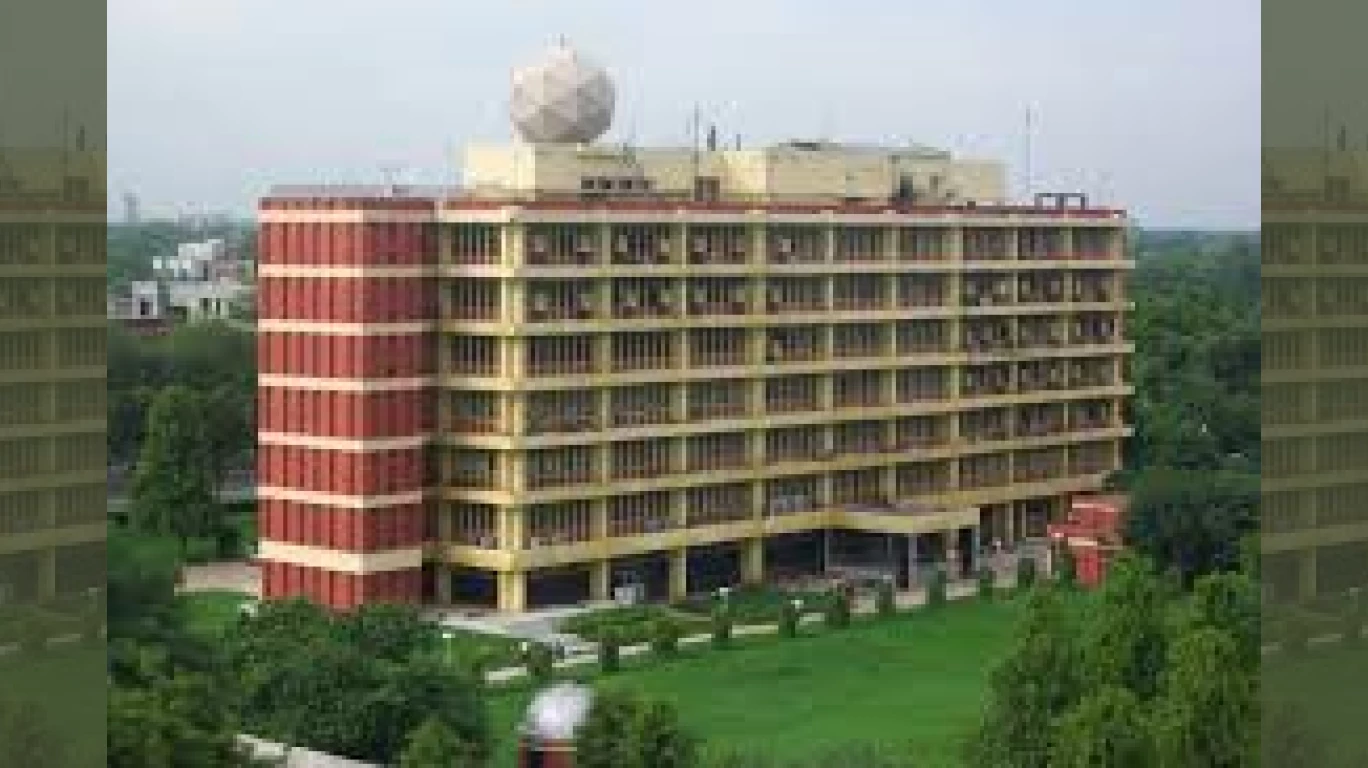
Navi Mumbai is set to join India’s core meteorological observation network with the establishment of its first full-fledged weather observatory, marking a significant upgrade in climate monitoring for the rapidly urbanising city and the wider Raigad district. The facility will be located within the precincts of the Navi Mumbai International Airport, integrating regional weather intelligence with critical transport infrastructure.
The observatory, being developed by the India Meteorological Department, represents a shift from Mumbai’s historically centralised weather data system towards a more decentralised, city-specific forecasting framework. Until now, weather advisories for Navi Mumbai were largely extrapolated from observations recorded in south Mumbai and Santacruz, often failing to reflect localised heat, rainfall, and wind variations experienced across the eastern metropolitan corridor. According to officials associated with the project, the new observatory will operate independently of aviation-specific systems, focusing on broader atmospheric monitoring for urban planning, disaster preparedness, and public safety. It will house conventional meteorological instruments, including automatic weather stations and wind measurement equipment, enabling continuous data collection across seasonal cycles.
The facility will function alongside the airport’s recently operational aerodrome meteorological station, which supports flight operations through real-time runway and visibility monitoring. While aviation systems generate highly precise micro-weather data, their scope is limited to aircraft safety. The new observatory is designed to bridge that gap by producing district-level forecasts relevant to residents, civic agencies, and emergency services. Urban climate experts point out that the timing of the development is critical. Navi Mumbai has witnessed rapid residential and commercial expansion over the past decade, accompanied by rising surface temperatures, shrinking open land, and increasing exposure to extreme weather. Without dedicated local data, planners and disaster response agencies have struggled to anticipate and manage heat stress, intense rainfall, and wind-related risks.
The absence of an observatory in Navi Mumbai has previously drawn public criticism, particularly after extreme heat incidents highlighted gaps in early warning systems. While stop-gap measures such as automatic weather stations were introduced in select nodes, experts maintained that these could not substitute for a comprehensive observatory capable of long-term climate trend analysis. By situating the observatory within airport premises, authorities are also leveraging secured land, uninterrupted power supply, and high-grade communication infrastructure—factors that improve data reliability and continuity. Industry observers say this model could be replicated in other fast-growing urban regions where land constraints have delayed meteorological investments.
Beyond daily forecasts, the data generated is expected to support flood modelling, heat action planning, and infrastructure resilience assessments across Navi Mumbai and Raigad. For a coastal, low-lying urban region facing intensifying climate risks, the observatory signals a move towards evidence-led governance. As the metropolitan region prepares for further population growth and infrastructure expansion, access to precise local weather intelligence may prove as essential as roads, transit, and housing—quietly shaping safer, more climate-ready cities.
Navi Mumbai Strengthens Climate Forecasting Infrastructure