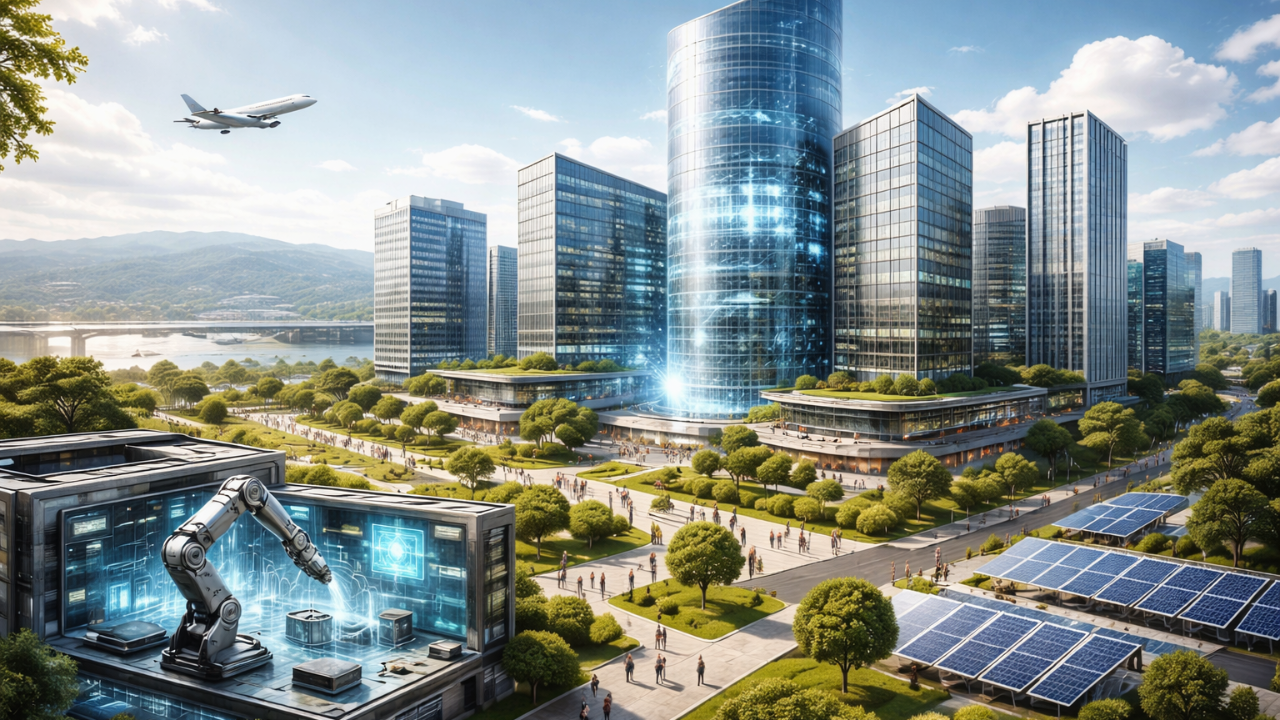
A Navi Mumbai-based real estate developer is preparing to introduce a new residential concept in Kharghar that integrates automation and adaptive digital infrastructure into housing design. The planned project, centred on AI homes, signals how developers in India’s rapidly expanding urban corridors are experimenting with technology-led housing as cities confront climate pressures, shifting work patterns and evolving lifestyle demands.
The proposed development, backed by an investment estimated at about ₹300 crore and targeting a gross development value of roughly ₹500 crore, is expected to come up in Kharghar, a node gaining strategic importance due to its proximity to the upcoming Navi Mumbai International Airport. Urban planners say airport-driven corridors often become magnets for new commercial districts, housing demand and infrastructure upgrades. Industry observers note that AI homes represent a shift from the earlier generation of “smart homes” that typically relied on device-based automation such as lighting or security systems. Instead, the emerging model focuses on housing infrastructure that can adapt over time to changing technologies and household requirements without major structural modifications. Real estate analysts tracking the Mumbai Metropolitan Region say the idea reflects a broader rethink in residential development. Homes built during earlier real estate cycles were largely designed around fixed layouts and single-use spaces.
However, the pandemic-era shift to hybrid work, rising climate risks and growing digital dependency have accelerated interest in more flexible residential formats. Urban designers suggest that homes capable of integrating automation, energy management tools and responsive environmental controls could become increasingly relevant in dense metropolitan regions. Systems that optimise power consumption, regulate indoor environments during heat waves and monitor air quality are being explored globally as cities adapt to climate volatility. Kharghar’s selection as the location for the project highlights the influence of infrastructure-led urban expansion in the Mumbai Metropolitan Region. With the new airport expected to reshape regional connectivity, the surrounding micro-markets are attracting developers seeking to position projects around future employment centres and transit networks.
Housing demand in such areas is also being shaped by demographic shifts. Younger buyers and technology professionals entering the housing market are showing greater interest in digitally enabled homes that allow remote monitoring, automation and modular upgrades over time. Experts caution, however, that the long-term viability of AI homes will depend on how seamlessly technology integrates with building design and whether such systems remain accessible and maintainable for residents over decades. Questions around data privacy, lifecycle costs and technology upgrades are likely to shape adoption.Within Navi Mumbai’s evolving urban landscape, projects that combine technology readiness with resilient infrastructure could influence how future housing is planned. If implemented effectively, such developments may signal a transition in Indian residential design from static apartments toward adaptable living environments capable of responding to changing urban realities.