


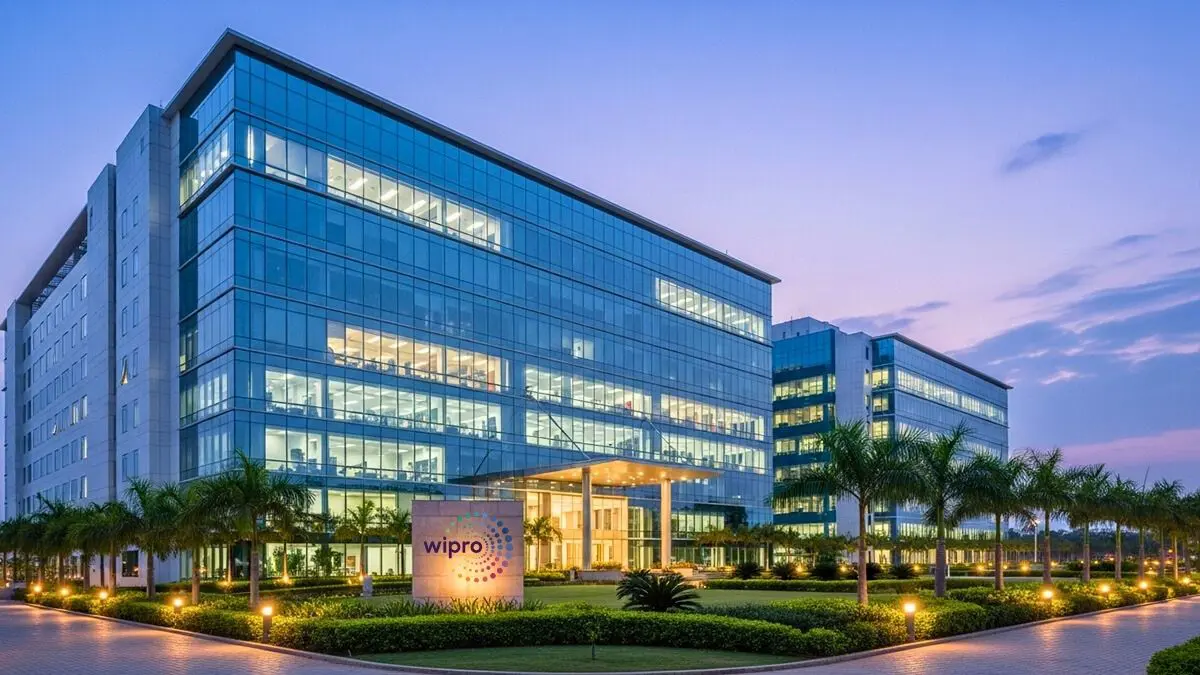
Navi Mumbai’s commercial office market has recorded another large enterprise-grade leasing transaction, underlining the city’s growing role as a cost-efficient and scalable alternative to Mumbai’s traditional business districts. A global media and entertainment services company has taken up approximately 46,000 sq ft of fully managed workspace at a large office campus in Airoli, marking one of the larger single-tenant managed office deals in the micro-market this year.
The facility is expected to accommodate more than 650 employees and will operate from a customised, ready-to-use office environment rather than a conventional bare-shell lease. Industry experts say such transactions reflect a structural change in how large occupiers are planning workplace strategies, particularly for support functions, digital operations and content services that require rapid scale-up without heavy capital expenditure. Airoli and the wider Thane–Belapur corridor have steadily emerged as preferred destinations for managed and flexible offices. Compared with South and Central Mumbai, these locations offer larger floor plates, integrated infrastructure, and comparatively lower occupancy costs, while remaining well connected through suburban rail, road networks and upcoming metro links. For enterprises, this combination allows consolidation of teams without compromising access to talent. Market data indicates that managed office operators are increasingly catering to large, long-term occupiers rather than short-stay startups. Over the past two years, enterprise clients have accounted for a rising share of total absorption in the flex office segment, driven by demand for customised layouts, branded interiors and predictable operating costs. In Navi Mumbai, this trend has been amplified by the availability of Grade A commercial stock and the proximity to residential catchments in Thane, Ghansoli and Kharghar.
From an urban planning perspective, the expansion of managed offices in secondary business districts is helping to rebalance employment density across the Mumbai Metropolitan Region. Urban planners point out that decentralised office growth reduces daily commute pressure on island city infrastructure while supporting more distributed economic activity. When paired with public transport investments and mixed-use zoning, such hubs can contribute to lower per-capita emissions linked to commuting. The managed office operator involved in the transaction has rapidly expanded its enterprise portfolio over the past few years, scaling capacity across multiple Indian cities. Analysts note that revenue growth in this segment is being driven not only by new demand but also by companies transitioning from traditional leases to service-led office models that bundle operations, technology and facility management. For Navi Mumbai, deals of this scale reinforce its positioning as a long-term commercial destination rather than a spillover market. With upcoming infrastructure such as the international airport, improved metro connectivity and road upgrades, the city is expected to attract a broader mix of occupiers across media, technology, financial services and global capability centres.
As enterprises continue to reassess how and where work happens, the rise of large-format managed offices in locations like Airoli signals a shift toward flexible, people-centric workplaces that align operational efficiency with evolving urban realities.
Also Read: Shriram Properties restructures portfolio with new subsidiary
Navi Mumbai sees major managed office expansion
