


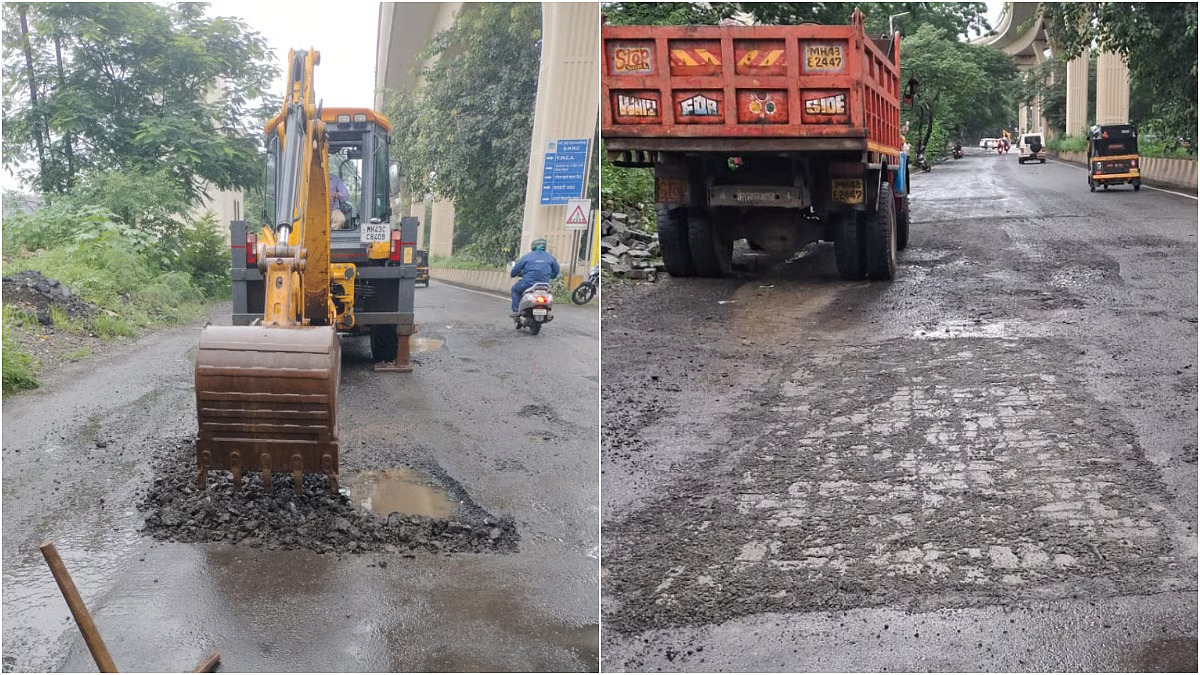
Navi Mumbai’s civic body is facing criticism from residents after initiating asphalt road repairs in the middle of persistent rainfall, a move many say undermines both public money and road quality. Citizens’ groups allege that such works, carried out during adverse weather, are unlikely to last and reflect poor planning on part of municipal authorities.
The repair drive was ordered to ensure smoother traffic during Ganeshotsav, when the city experiences an influx of visitors and heightened mobility. However, citizen forums argue that urgency cannot justify short-sighted execution. Videos and photographs of workers asphalting stretches near key city junctions, even as rain poured, were submitted by residents as evidence of flawed practices. Urban experts point out that asphalt laid on wet surfaces rarely bonds properly, causing repaired patches to crumble within weeks. This, they say, not only endangers motorists but also leads to wasteful spending. Concerns have been raised that once the rains subside, the same stretches may require fresh repairs, escalating both cost and inconvenience.
Citizens have called for accountability, insisting that officials and contractors responsible for premature repairs should bear the cost of rework. They argue that taxpayer funds cannot be treated casually and demand transparent reporting of expenditure, especially on routine civic issues like pothole filling. According to residents, repeated resurfacing under questionable conditions has created suspicion that such exercises serve financial interests rather than genuine road safety. Urban planners caution that reactive measures in road maintenance contribute to a cycle of inefficiency. Instead of resorting to patchwork during monsoon, they recommend adopting sustainable models such as cold-mix technology or eco-friendly road materials that withstand heavy rains. These alternatives, while initially more expensive, have proven effective in cities with similar monsoon climates and align with the broader goal of building resilient, low-carbon urban infrastructure.
The episode has reignited debate on how Indian cities manage infrastructure under pressure from extreme weather events. Navi Mumbai, often celebrated for its planned design, risks undermining its urban reputation if civic works are executed without scientific rigour. The demand from citizens is not just for better roads, but for transparent governance where public funds are channelled into durable and sustainable solutions rather than repetitive fixes. For now, the municipal administration maintains that emergency repairs were necessary to prevent accidents and ensure safe passage during the festival. But with growing public scepticism, the larger question remains: should urgency override sustainability in city infrastructure planning? The answer could determine not just the future of Navi Mumbai’s roads, but the trust between citizens and civic authorities.
Also Read : India To Approve Rs 1 Lakh Crore Submarine Purchases For Naval Power Expansion
