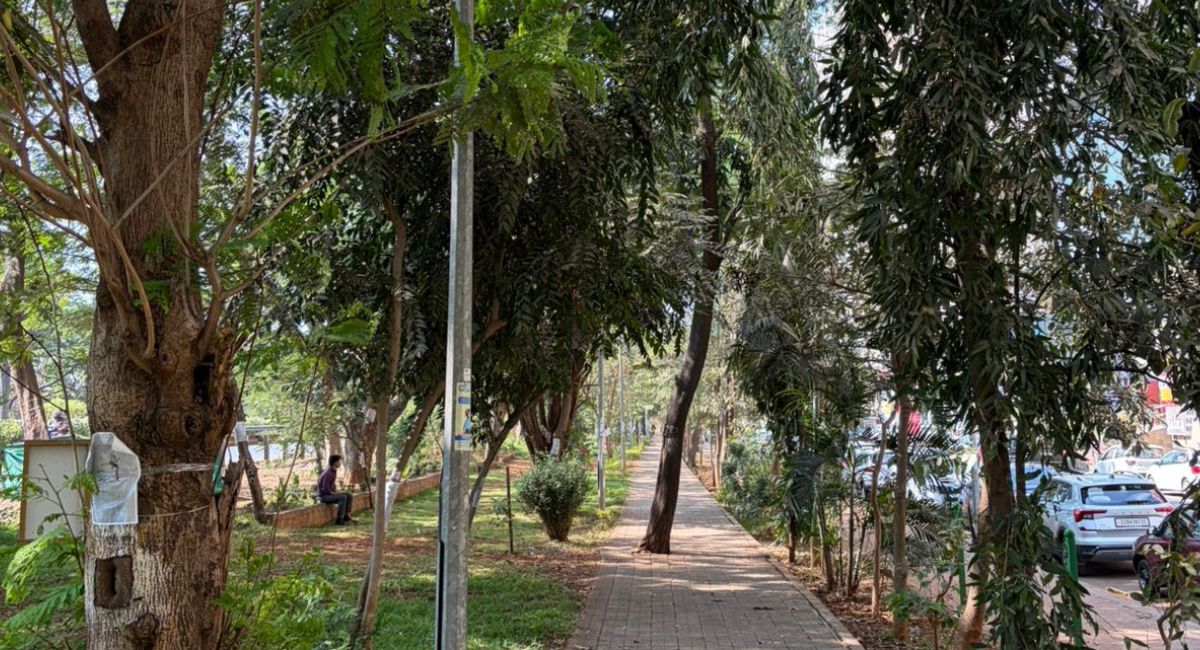
A quiet but determined civic demonstration unfolded along Palm Beach Road in Navi Mumbai as residents formed a human chain to oppose the proposed removal and transplantation of hundreds of mature roadside trees for a planned tunnel project. The protest highlights a growing urban dilemma: how rapidly expanding cities balance mobility infrastructure with environmental resilience and public health.
The demonstration, held near a residential stretch in Sanpada, brought together families, senior citizens, and children for over an hour without speeches or disruption to traffic. Participants relied on visual messages to convey concern, reflecting a shift towards non-confrontational civic engagement in urban India. Observers noted that the protest did not impede vehicular movement, underscoring an attempt to assert environmental priorities without challenging daily city functioning. At the heart of the issue is a civic infrastructure proposal aimed at easing congestion on one of Navi Mumbai’s busiest corridors. However, the plan involves the removal or relocation of approximately 440 trees forming a critical green buffer along the road. Urban planners point out that such tree-lined corridors play a vital role in moderating heat, absorbing pollutants, and improving liveability—particularly in areas already recording elevated air pollution levels.
Officials from Navi Mumbai Municipal Corporation have maintained that the project follows statutory permissions and that compensatory measures, including transplantation and new plantations, are part of the plan. Civic authorities argue that transport infrastructure is essential for economic productivity and long-term urban growth, especially as Navi Mumbai continues to attract real estate and commercial investment. Residents and environmental specialists, however, remain sceptical. They argue that tree transplantation has mixed survival outcomes and often fails to replicate the ecological value of mature canopies for years. “In high-density urban corridors, trees are not decorative assets but functional infrastructure,” an urban environmental expert said, noting their role in climate adaptation and public health.
The episode reflects a broader national conversation on sustainable urban development. As Indian cities invest heavily in tunnels, flyovers, and transit corridors, citizen groups are increasingly demanding that environmental costs be transparently assessed and minimised. For developers and policymakers alike, such disputes signal rising expectations for inclusive planning processes that account for community well-being alongside economic efficiency. Going forward, experts suggest that early-stage public consultation, alternative design alignments, and stronger environmental impact assessments could reduce conflict. As Navi Mumbai positions itself as a model satellite city, how it resolves the Palm Beach Road tree debate may shape public trust in future infrastructure decisions and set a precedent for people-first, climate-resilient urban growth
Navi Mumbai Residents Mobilise To Protect Urban Trees