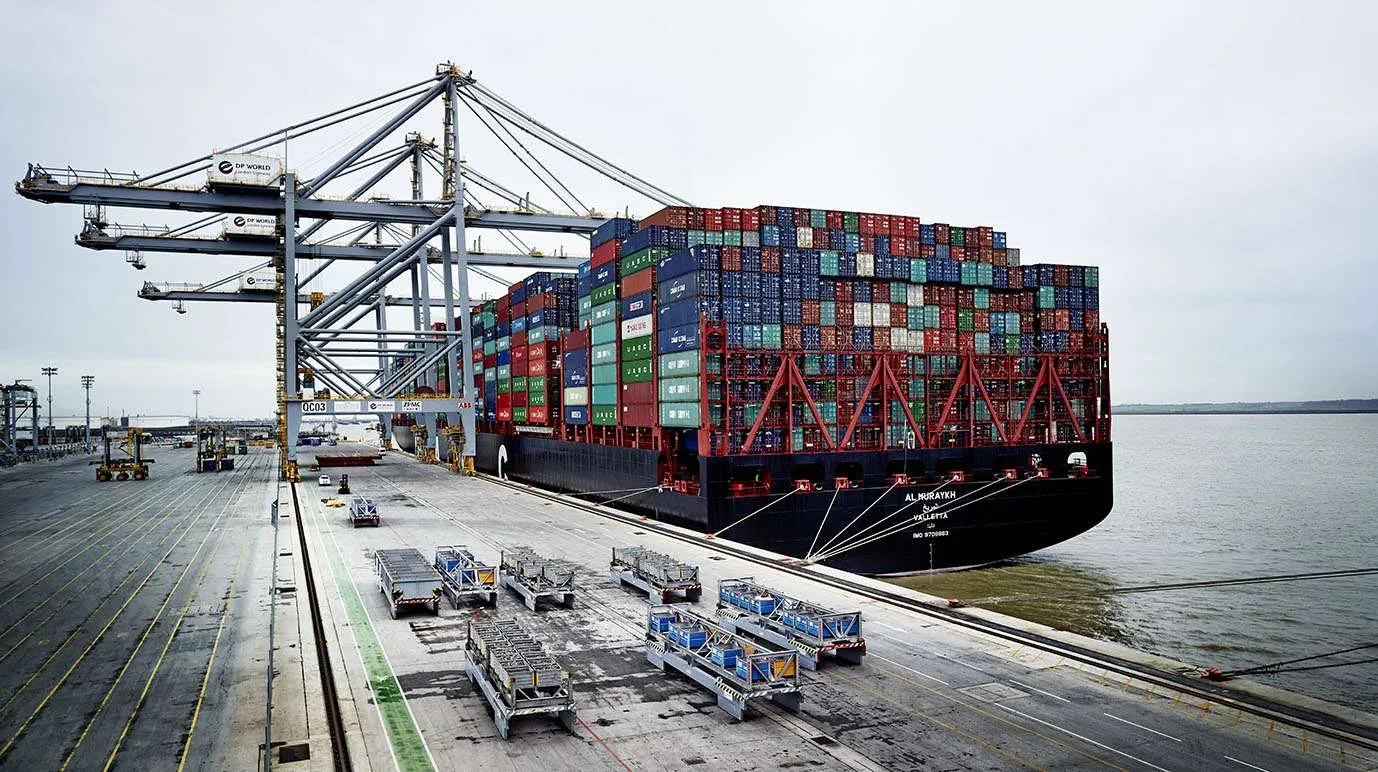
Navi Mumbai Port Breaks Record, Crosses 10 Million TEU Container Capacity
In a landmark achievement for India’s maritime logistics sector, the Jawaharlal Nehru Port Authority (JNPA) in Navi Mumbai has become the first port in the country to cross the 10 million twenty-foot equivalent unit (TEU) threshold in container handling capacity. This milestone solidifies JNPA’s position as the nation’s premier container port and highlights its growing importance in international trade and multimodal freight connectivity.
Located in Uran, JNPA’s achievement underscores the port’s strategic advancements in infrastructure, operations, and digital efficiency. By crossing the 10 million TEU benchmark, the port has cemented its role as a central logistics hub not only for Maharashtra but for India’s broader EXIM (export-import) ecosystem. Industry experts attribute this record-breaking performance to capacity expansion at key terminals, streamlined intermodal services, and improved hinterland connectivity through rail and road linkages. The port’s adoption of automation and paperless operations has also contributed significantly to reducing turnaround time and enhancing throughput. With over 60% of India’s container cargo passing through its berths, JNPA has effectively become the backbone of India’s maritime trade. Its performance is also closely aligned with national logistics targets under the PM Gati Shakti initiative, reinforcing the port’s role in enabling seamless multimodal transport and accelerating industrial development in the Mumbai Metropolitan Region and beyond.
The port’s expansion to over 10 million TEUs reflects more than just volume—it signifies a broader shift in Indian port competitiveness on the global stage. Compared to its international counterparts in Southeast Asia and the Middle East, JNPA is rapidly evolving into a logistics powerhouse capable of rivaling regional leaders. The increased cargo handling capacity is a result of collaborative efforts between stakeholders, private terminal operators, and policy reforms focused on infrastructure modernisation and public-private partnerships. Additionally, new projects such as the Bharat Mumbai Container Terminals (BMCT) and the port’s deep-draft berthing capabilities have enabled accommodation of larger vessels and improved efficiency in cargo discharge and loading. Authorities are now focusing on the next phase of growth, including dedicated freight corridors, warehousing clusters, and digital tracking systems to further reduce logistics costs. As cargo volumes increase, experts say that JNPA’s model could become a template for future port development across India.
JNPA’s 10 million TEU milestone marks a transformative moment in India’s maritime landscape. It not only reflects operational excellence and sustained cargo growth but also signals a shift toward integrated, multimodal logistics that are vital for India’s economic competitiveness. As the port scales up capacity and adopts global best practices, it is poised to further bolster India’s export potential and attract investment into coastal infrastructure. With strategic initiatives already underway, JNPA’s achievement is more than a statistical triumph—it is a symbol of India’s ambition to become a global logistics and shipping hub in the coming decades.