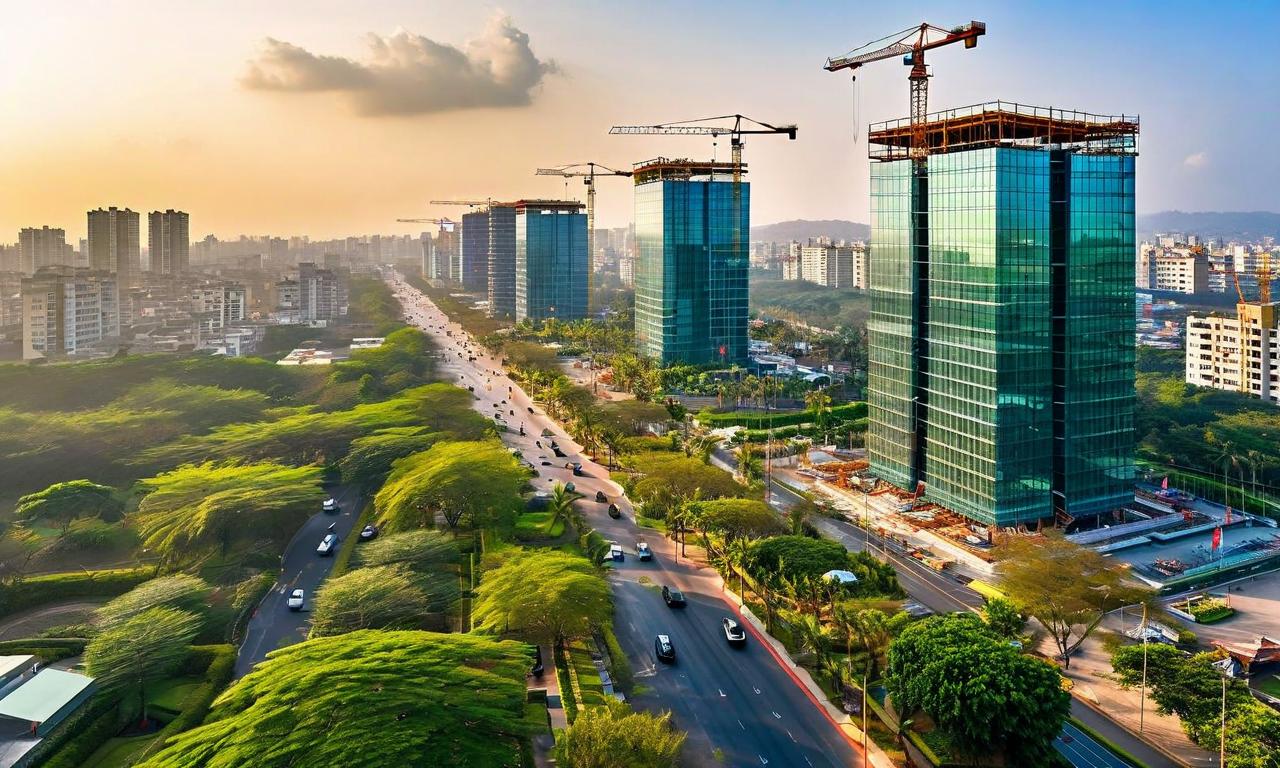
The outer corridors of Navi Mumbai are beginning to attract serious attention from large office occupiers, with emerging business districts around Kharghar, Panvel and the airport influence zone positioning themselves as cost-effective alternatives to Mumbai’s traditional commercial centres. The shift signals a broader rebalancing of the metropolitan office market, driven by infrastructure upgrades and widening cost differentials.
Industry assessments indicate that close to 12 million square feet of office space is currently under development across these peripheral nodes. This pipeline is being closely tracked by enterprises seeking to optimise real estate costs while maintaining access to the Mumbai Metropolitan Region’s labour pool. Rentals in these areas remain significantly lower than established business districts, creating a compelling case for expansion, particularly for large-format occupiers.
The evolving Navi Mumbai office market is being shaped by a combination of connectivity improvements and land availability. The upcoming international airport, alongside road and rail link upgrades, is expected to reduce travel times and enhance regional accessibility. Urban planners note that such infrastructure-led growth corridors often trigger decentralisation of office demand, easing pressure on saturated city cores while creating new employment clusters. Affordability is emerging as a decisive factor. Both commercial rents and residential prices in these locations are substantially lower than in central Mumbai. This dual advantage is influencing corporate location strategies, as companies increasingly weigh employee commute times and living costs alongside operational expenses. Experts suggest that proximity between workplaces and relatively affordable housing can improve workforce retention and productivity, particularly in sectors with large employee bases.
At the same time, the Navi Mumbai office market is drawing interest from a diverse mix of occupiers, including financial services, technology firms, logistics operators and back-office functions. The availability of larger contiguous land parcels allows for campus-style developments, which are difficult to replicate in dense urban districts. This flexibility is particularly relevant for companies adopting hybrid work models that require adaptable, scalable office environments. However, urban development specialists caution that sustained growth in these fringe areas will depend on balanced planning. Social infrastructure such as healthcare, education and public spaces will need to keep pace with commercial expansion. Additionally, integrating climate-resilient design and transit-oriented development will be critical to avoid replicating congestion and environmental stress seen in older business districts.
The next phase of the Navi Mumbai office market will likely hinge on execution timely infrastructure delivery, regulatory clarity and coordinated urban planning. If these elements align, the region could evolve into a distributed network of business hubs, offering a more inclusive and efficient alternative to Mumbai’s historically centralised commercial landscape.