


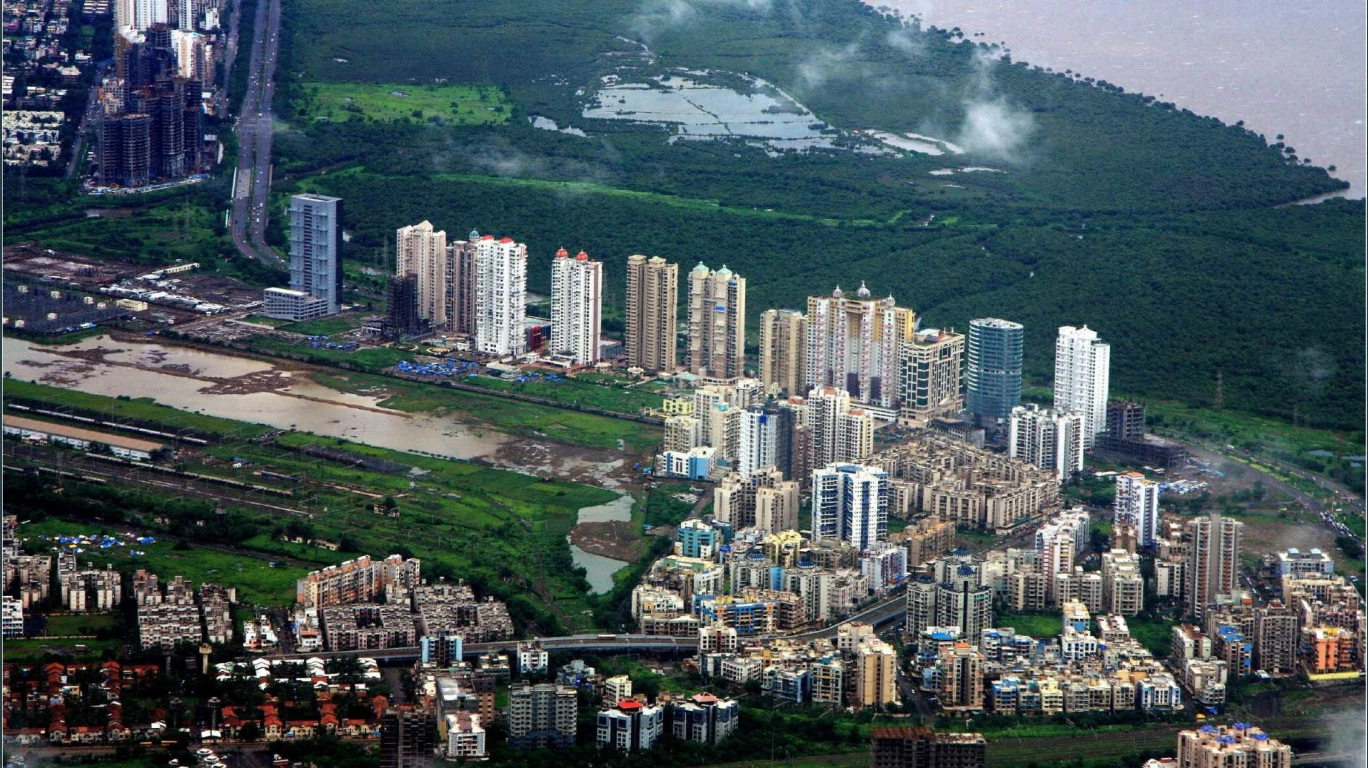
A renewed wave of developer interest is reshaping Navi Mumbai as large-scale public infrastructure around the upcoming international airport begins to unlock one of the most closely watched urban corridors in the Mumbai Metropolitan Region. A South India based real estate group with a multi-decade track record has outlined a long-term development strategy centred on the Navi Mumbai Airport Influence Notified Area (NAINA), signalling growing confidence in infrastructure-led urban expansion rather than speculative growth.
The developer’s re-entry into MMR comes as town planning schemes across NAINA move from concept to execution. These schemes provide clarity on land use, transport grids, utilities and social infrastructure elements often retrofitted in Indian cities after density has already taken hold. Urban planners say this coordinated approach has the potential to reduce congestion, improve liveability and support more climate-resilient growth patterns from the outset. Industry experts tracking the corridor note that the airport zone is distinct from earlier suburban growth cycles in MMR. The international airport, metro rail extensions, expressways and arterial road networks are being rolled out in parallel, creating a foundation for employment clusters, logistics hubs and residential neighbourhoods to evolve together. Such alignment, they argue, lowers long-term infrastructure stress and improves economic productivity across the region. The developer has indicated a pipeline of roughly 50 lakh sq ft in the airport influence zone over the next five years, to be delivered in phases aligned with infrastructure readiness and market absorption. Rather than isolated projects, the focus is on larger, contiguous developments that can integrate housing, mobility access, open spaces and community infrastructure. This approach reflects a broader shift among established developers towards district-scale planning as Indian cities confront land scarcity and climate pressures.
From a civic standpoint, the NAINA framework is being viewed as a test case for how metropolitan regions can grow without repeating legacy mistakes. Transport-oriented development, defined road hierarchies and advance provisioning of utilities offer the opportunity to lower per-capita emissions while improving access to jobs and services. Economists point out that such planning also enables more equitable growth by spreading employment beyond traditional city cores. The renewed developer interest also reflects changing capital behaviour in real estate. Rather than short-cycle launches, firms are increasingly committing to longer horizons, betting on infrastructure certainty and regulatory transparency to sustain value over time. Analysts say this could help stabilise housing supply and pricing in the long run, particularly in high-growth regions like Navi Mumbai. As Navi Mumbai prepares for phased airport operations, the next few years will be critical in determining whether planned intent translates into inclusive urban form.
For residents, the success of the corridor will depend not just on new buildings, but on how effectively transport, public spaces and services are delivered alongside them. If executed as envisioned, the airport influence zone could redefine how large Indian metros expand deliberately, sustainably and ahead of demand rather than in reaction to it.
Also Read: Mumbai Commercial Market Attracts Large Financial Occupier
Navi Mumbai NAINA Emerges As Planned Growth Zone
