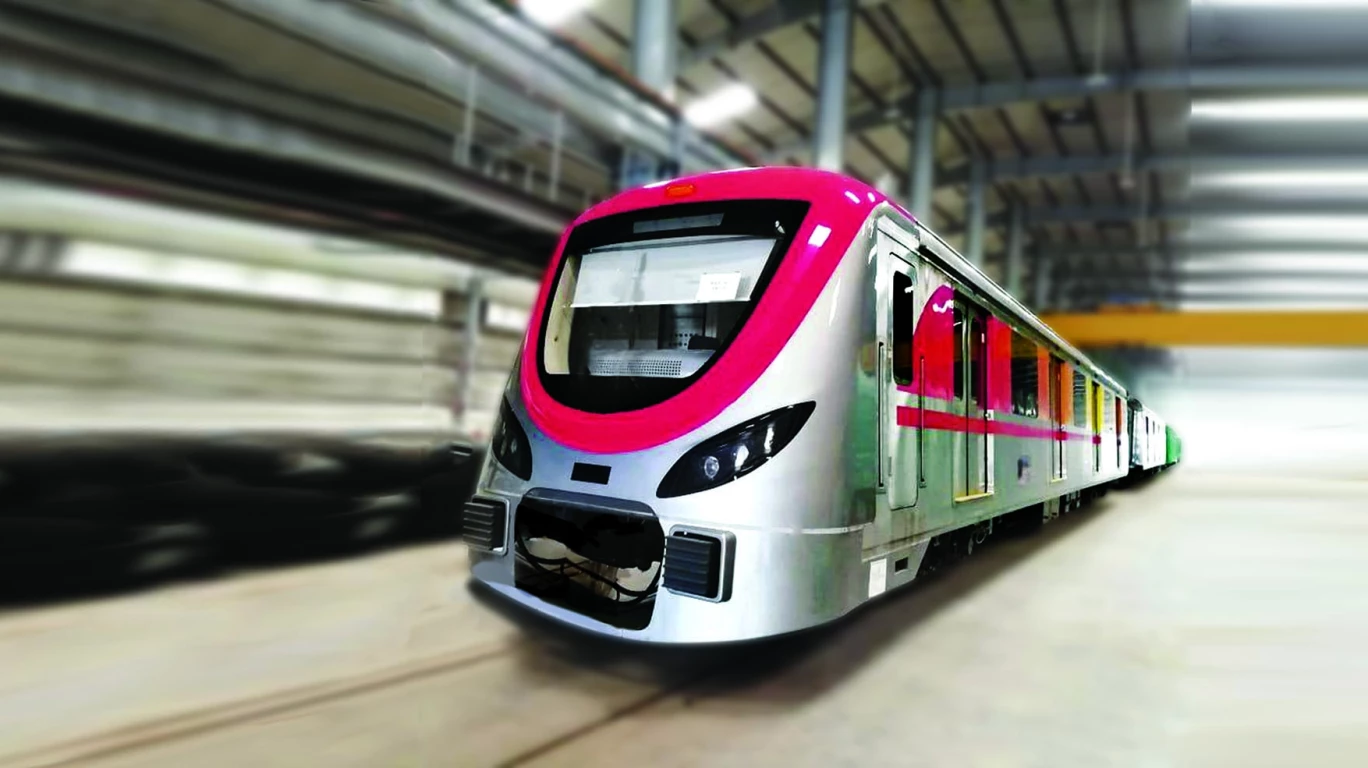
Navi Mumbai’s first metro service has crossed a significant milestone, with ridership exceeding one crore commuters in just two years, according to the city’s planning authority. The surge underscores the growing reliance on rapid urban transit as a sustainable, affordable, and efficient alternative for daily travel. Officials confirmed that Metro Line 1, which currently links Belapur to Pendhar, will soon be extended to the upcoming Navi Mumbai International Airport (NMIA), slated to begin operations on 25 December 2025.
Launched in November 2023, the 12-kilometre Line 1 has transformed connectivity across Belapur, Kharghar, and Taloja, reducing commute times for office workers, students, and residents in the rapidly developing satellite city. “The remarkable ridership reflects strong public confidence in the metro as a reliable and accessible transport mode,” an official from the city planning authority said. Measures such as 10-minute headways during peak hours and 15-minute intervals during off-peak times, along with fare adjustments between Rs 10 and Rs 30, have further incentivised usage. Urban mobility analysts note that the metro’s success has wider social and economic implications. By reducing dependency on private vehicles, the system mitigates traffic congestion, lowers carbon emissions, and supports the city’s vision of inclusive, zero-carbon urban growth. “Expanding the metro to NMIA will not only connect residents to the new airport but also stimulate economic activity along the corridor, including commercial and residential developments,” said a senior urban transport expert.
The forthcoming Metro Line 2, connecting Pendhar with Taloja MIDC and extending to NMIA via Kalamboli and Kamothe, will add approximately 16 kilometres of service, enhancing the city’s integrated transport network. Authorities emphasise that strategic expansion aligns with long-term sustainable mobility objectives, supporting transit-oriented development while ensuring equitable access to public transport across different neighbourhoods. As Navi Mumbai continues to evolve into a hub for business, industry, and residential growth, the metro system is poised to play a central role in shaping travel patterns and reducing the city’s environmental footprint. Officials indicate that ongoing infrastructure upgrades, coupled with service optimisation, will strengthen commuter experience and accessibility.
The metro’s success demonstrates the potential for thoughtfully planned mass transit systems to transform secondary cities into sustainable urban centres, offering a model for inclusive, low-carbon mobility solutions in India’s rapidly urbanising regions.
Navi Mumbai Metro Ridership Surpasses One Crore As Line Extends Airport