


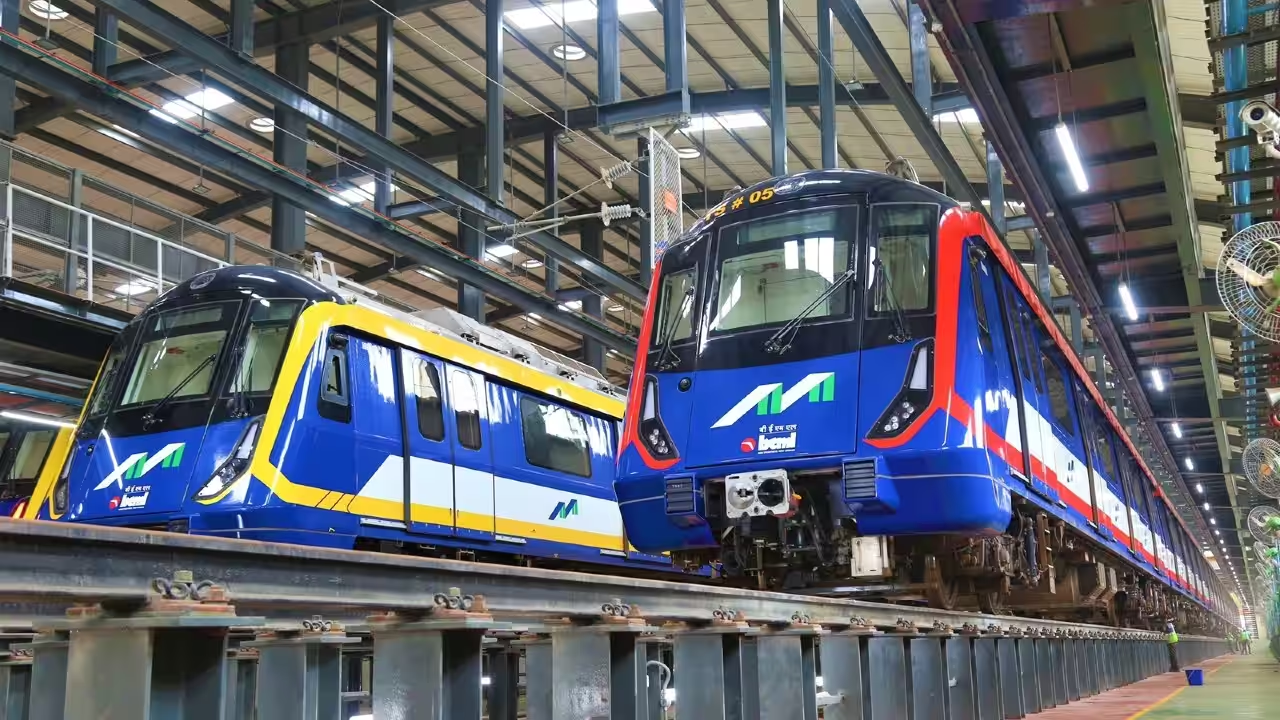
Navi Mumbai Metro has emerged as one of the most significant urban infrastructure projects in Maharashtra, reshaping public mobility and reinforcing the city’s smart growth credentials. Since its launch, the system has carried more than 4.3 million passengers, marking a decisive shift from private vehicles to public transit in a city designed to ease Mumbai’s mounting urban pressure.
Planned in the early 1970s, Navi Mumbai was envisaged as a satellite city to accommodate growing residential and industrial demand while maintaining an emphasis on sustainability. Decades later, the metro system has become the backbone of that vision, addressing congestion, reducing emissions, and supporting equitable urban expansion. With a population of 1.63 million and a consistent record as one of India’s cleanest cities, Navi Mumbai is positioned as a model for eco-friendly urbanisation. The operational Line 1 of Navi Mumbai Metro, stretching 11.1 kilometres from CBD Belapur to Pendhar with 11 stations, provides a fast and efficient alternative to road transport. Officials highlight that this mass rapid transit system not only improves daily commutes but also underpins the city’s green credentials by curbing dependency on private vehicles and cutting vehicular pollution. The shift is crucial for a metropolitan region where rising car registrations had begun to strain road infrastructure despite Navi Mumbai’s planned urban grid.
The metro project was initially spearheaded by the City and Industrial Development Corporation of Maharashtra (CIDCO). In 2021, Maha Metro was tasked with completing pending work on Line 1 and operating the system for ten years from its commercial debut in November 2023. By mid-2024, operational responsibilities were transitioned to Konkan Railway Corporation Limited, ensuring continuity in service while boosting institutional efficiency. Urban transport experts note that such integration of agencies reflects a growing recognition of metro systems as critical to India’s low-carbon transition. For Navi Mumbai, it offers not just a mobility upgrade but also a social equaliser, giving affordable and reliable access to students, workers, and businesses across the region.
The project also aligns with India’s broader climate commitments, particularly the drive to reduce transport-related carbon emissions. Officials emphasise that the metro complements Navi Mumbai’s record of high cleanliness rankings and its performance in the Ease of Living Index, where it stands sixth nationally. Together, these achievements reinforce the city’s identity as a sustainable and future-ready hub. For residents, the metro represents more than a transport service. It symbolises a decisive step towards equitable, green, and people-centric urban living, where efficiency, sustainability, and accessibility converge to shape the next phase of Navi Mumbai’s growth.
Also Read : Surat Launches Gujarat’s First Bullet Train Linked Town Planning Scheme
