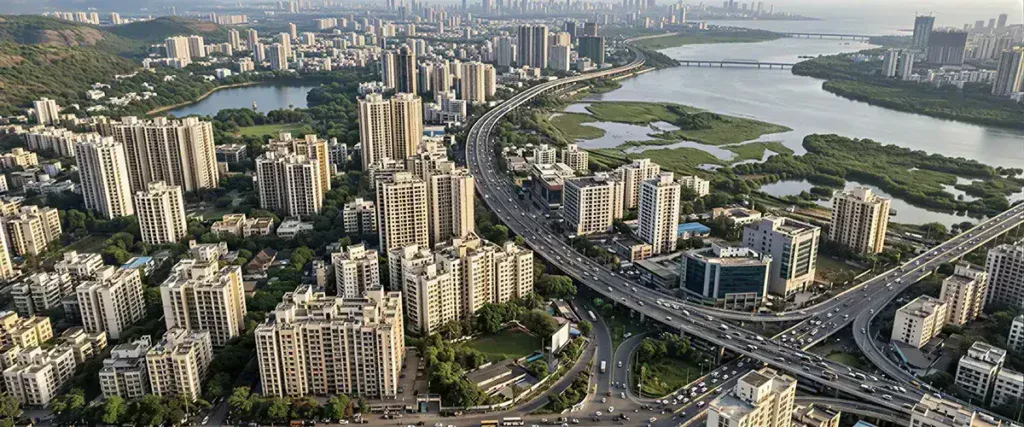
Navi Mumbai’s high-end housing market is entering a new phase of expansion, with several micro-markets emerging as preferred addresses for affluent buyers. The shift is being driven by major infrastructure upgrades, including the upcoming international airport, enhanced metro connectivity, and improved arterial road networks, which are reshaping how wealthier residents evaluate urban living across the Mumbai Metropolitan Region.
Industry experts note that Navi Mumbai luxury real estate is no longer a spillover market from Mumbai but a self-sustaining ecosystem. Improved accessibility, lower congestion, and relatively planned layouts are drawing high-net-worth individuals, professionals, and non-resident Indians seeking larger homes and better environmental conditions. Kharghar has evolved into a prime residential cluster, supported by proximity to green landscapes and expanding civic infrastructure. Urban planners point out that the area’s integration with open spaces and educational institutions is helping it balance density with liveability an increasingly important factor in climate-sensitive urban planning.
CBD Belapur, meanwhile, continues to function as an administrative and premium residential hub. Its grid-based planning and established social infrastructure have enabled a steady rise in upscale developments, including low-density housing formats such as villas. Analysts suggest that such neighbourhoods offer long-term value due to their governance importance and mature urban framework. Stretching along the coastline, the Palm Beach Road corridor covering Nerul, Sanpada and Vashi has seen some of the highest price appreciation in Navi Mumbai luxury real estate. The appeal lies in its waterfront views and relatively wider road networks. However, environmental experts caution that future growth here must carefully address coastal ecosystem preservation, particularly mangroves, which act as natural buffers against flooding.
Seawoods has gained traction as an integrated township model, combining residential, commercial and transit-oriented development. Its connectivity through suburban rail and upcoming metro links positions it as a transit-efficient zone, aligning with broader goals of reducing commute-related emissions. Vashi, one of the earliest developed nodes, is witnessing renewed demand due to its established commercial base and proximity to employment centres. Real estate consultants highlight that such legacy markets often benefit from infrastructure stability, even as newer areas attract speculative investments.
Across these locations, developers are increasingly incorporating gated communities, energy-efficient designs and smart home technologies. While this reflects changing consumer expectations, urban policy specialists emphasise the need for inclusive planning to ensure that infrastructure growth benefits a wider demographic, not just premium segments. As Navi Mumbai luxury real estate continues to expand, the challenge for policymakers will be to balance rapid capital inflows with sustainable land use, equitable access to services, and climate resilience. The next phase of growth will likely depend not just on connectivity, but on how well these emerging neighbourhoods integrate environmental safeguards and social infrastructure into their development trajectory.