


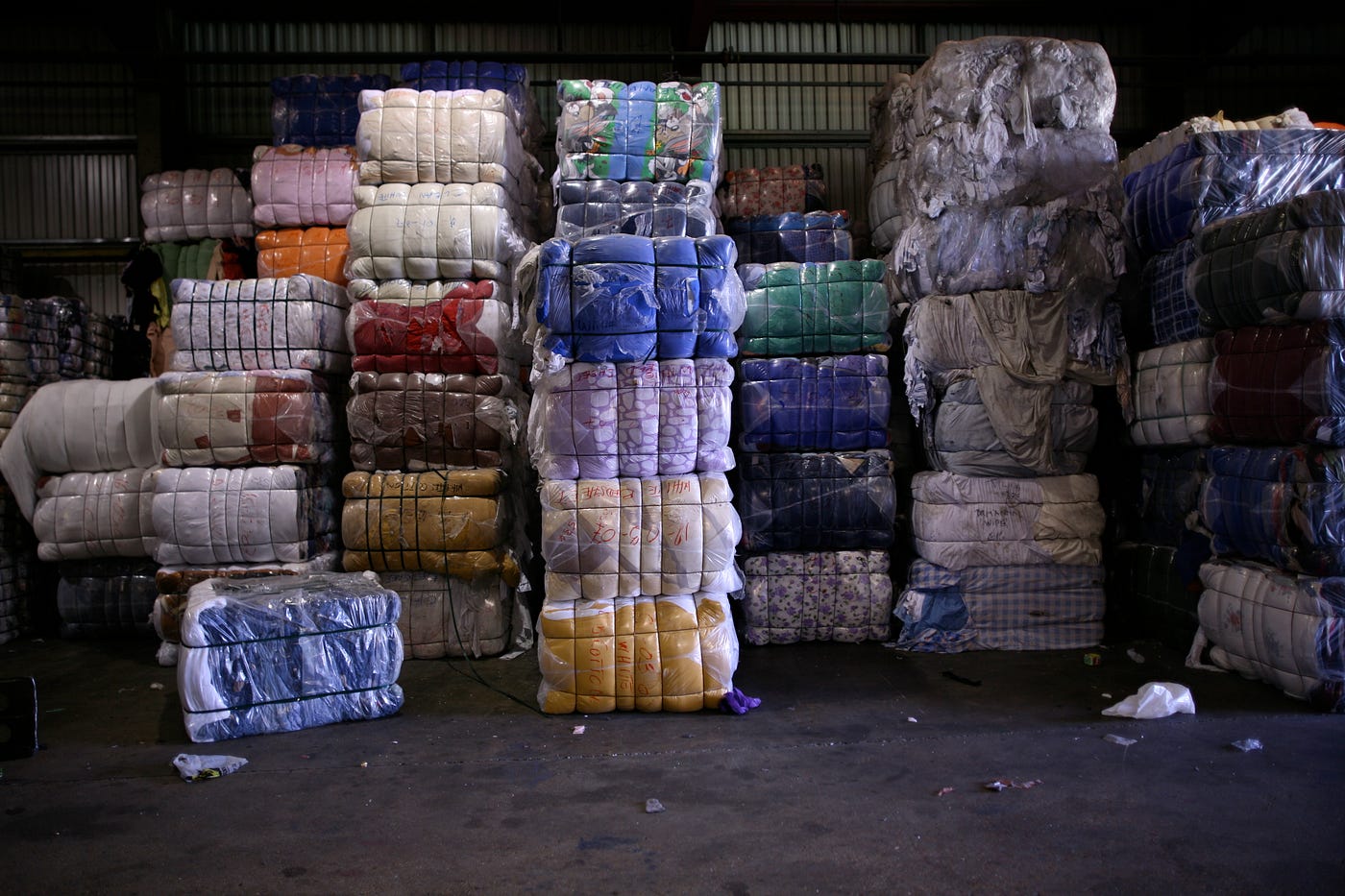
Navi Mumbai’s municipal textile waste processing centre received strong endorsement from the Union Textile Ministry this week, signalling growing national interest in urban circularity models that reduce landfill burden and create green livelihoods. The visit highlighted the city’s attempt to mainstream textile recovery at a time when Indian cities are grappling with rising waste volumes and limited recycling infrastructure.
During her visit to the CBD Belapur facility, the Union Textile Secretary reviewed the centre’s operations and examined how discarded garments are sorted, tested and repurposed into new products. Officials accompanying her said the six-stage segregation line—covering fabric categorisation, fibre assessment and quality verification—demonstrated a level of technical detail rarely seen in municipal waste systems. The centre, supported by the Navi Mumbai Municipal Corporation (NMMC), is among the country’s earliest urban attempts to divert textile waste away from dumpsites. A senior civic official noted that the initiative evolved from the city’s broader push to strengthen decentralised waste management and reduce the pressure on overextended landfills.
“Textile waste was a missing piece in most municipal frameworks,” the official said. “The infrastructure here shows how cities can move towards more circular and inclusive systems.” The project is operated from a multi-purpose municipal building in CBD Belapur and depends heavily on citywide participation. Large collection bins placed at housing societies, commercial complexes and office districts have helped create a steady stream of recoverable textiles. A dedicated vehicle gathers the waste, which is then catalogued and processed at the centre. According to officials, this city-networked model is critical to scaling circular economy interventions in dense urban regions.
One of the strongest elements of the initiative is its community impact. A group of women employed at the centre manage upcycling through handloom and stitching techniques, producing bags, accessories and household items from recovered fabrics. The Textile Secretary interacted with several of them during her tour, acknowledging that the programme not only diverts waste but strengthens women’s economic participation in the green economy. Industry experts say such projects demonstrate how environmental and social goals can reinforce each other when embedded within municipal systems. Local institutions that contributed significant volumes of textile waste for recycling were also recognised during the event. Civic officers described this public participation as essential for sustaining supply chains for upcycling models—particularly in cities where consumption levels are high and fabric waste often ends up in mixed garbage streams.
The Union Secretary suggested that the initiative could serve as a blueprint for other cities that are seeking solutions to the growing textile waste challenge, and proposed holding a national workshop in Navi Mumbai to facilitate cross-learning. Civic leaders welcomed the recommendation, stating that wider adoption of such models could help India build low-carbon, resource-efficient urban systems over the long term.
Also Read: Maharashtra Chief Minister Unveils Nashiks Rs 370 Crore Water Treatment Plant Upgrade
