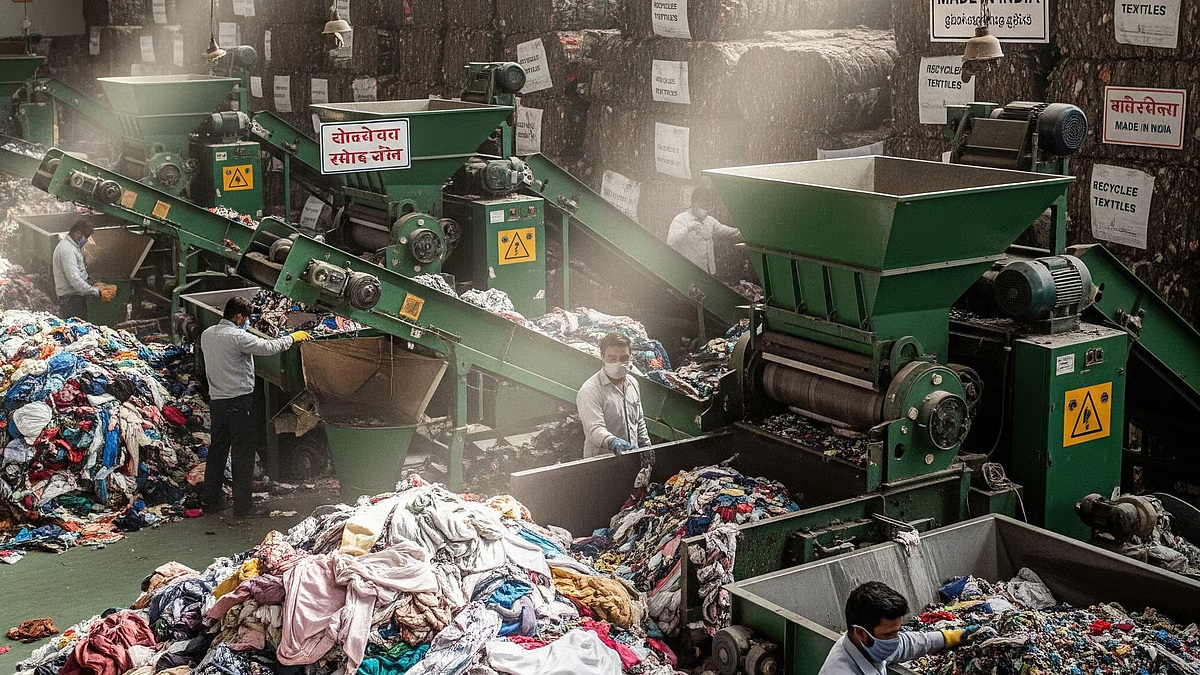
Navi Mumbai has witnessed a new push towards sustainable urban waste management with the launch of a city-wide cloth waste collection drive by the social enterprise Full Circle. The initiative, undertaken in collaboration with a textile recycling facility, aims to reduce textile waste while creating income opportunities for rural women and artisans.
The programme allows residents to contribute old clothing, fabric scraps, and other textile materials directly from their homes. Participants can register their addresses via online or direct messaging channels, after which a scheduled collection is organised at the society gate. A dedicated recycling truck then retrieves the materials for processing. Officials note that the service accommodates all types of cloth waste, including items no longer wearable, to encourage maximum public participation. Urban development experts highlight that such citizen-centric collection mechanisms are increasingly vital in densely populated cities like Navi Mumbai, where conventional municipal waste infrastructure often struggles to manage textile disposal. “Textile waste constitutes a significant fraction of urban refuse, yet few households have convenient avenues for responsible disposal. Doorstep collection addresses both convenience and environmental accountability,” said a senior urban planner familiar with the initiative.
Once collected, the textiles are directed to rural centres where women and artisans are engaged in recycling or upcycling activities. By converting discarded fabrics into new products, the initiative not only reduces environmental burden but also strengthens local rural economies through skill-based employment. Policy analysts point out that integrating urban waste streams with rural livelihoods represents a dual benefit model: sustainable material management and inclusive economic opportunity. The initiative has received encouraging traction among environmentally conscious residents, reflecting growing public awareness of circular economy principles. A civic official noted that initial response levels exceeded expectations, with multiple households scheduling collections within the first week of launch. Experts suggest that replicating this model in other urban clusters could help formalise textile recycling, reduce landfill dependency, and support women-led microenterprises.
While the programme is currently limited to selected sectors of Navi Mumbai, Full Circle officials indicate plans to gradually scale coverage across additional neighbourhoods. They emphasise that consistent citizen participation is crucial to maintaining momentum and achieving measurable environmental outcomes. Urban analysts also stress that such interventions, combined with public education campaigns, can strengthen sustainable behavioural practices, a key component of climate-resilient city planning. By linking textile recycling with rural employment and inclusive economic growth, Navi Mumbai’s cloth collection drive represents a convergence of sustainability, social responsibility, and citizen engagement. If successfully scaled, it may serve as a model for other Indian cities seeking to address urban waste challenges while promoting equitable development.
Navi Mumbai Launches Cloth Waste Drive Recycling Livelihoods