


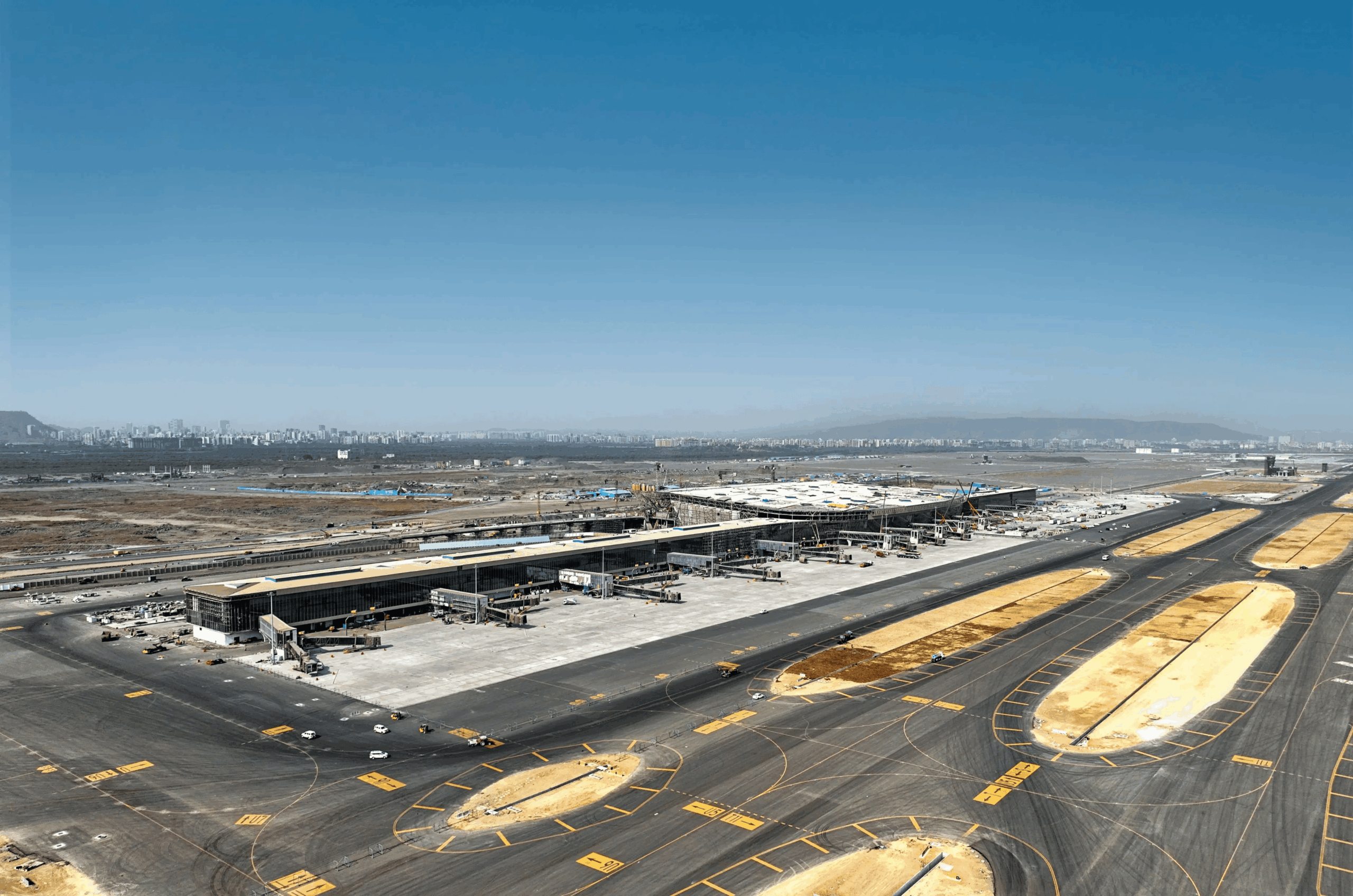
Mumbai’s new international airport in Ulwe is inching towards operational readiness, with a viral video offering the first look at its polished, eco-friendly interiors ahead of a projected inauguration later this year. A recently circulating Instagram clip captures the final stages of construction inside the main terminal, with workers installing advanced baggage conveyor systems and completing sleek stone flooring.
The visuals underscore swift progress and suggest that this mega-project is poised to begin welcoming passengers imminently . Spanning 1,160 hectares near Panvel, the airport—designed in phases—draws architectural inspiration from the lotus, symbolising both aesthetic elegance and functional innovation. Initial capacity targets include handling 20 million passengers and 0.8 million tonnes of cargo in the first phase, with later expansions envisaged to reach 90 million passengers annually. Its infrastructure comprises two parallel 3,700-metre runways and three interconnected terminals, integrated with regional transport networks.
More than just cosmetic appeal, the airport embeds sustainability into its fabric: a massive sun‑shade roof manages monsoon impacts, while steep drainage angles direct runoff into subterranean storage—reclaimed during drier months. Connectivity is being future-proofed through highways, the new Gold Line airport metro, suburban rail, and even e‑water taxis via a planned marina—offering seamless access across multiple modes. Behind the scenes, NMIA is also technologically ambitious. The terminal will feature biometric check‑ins, AI‑driven baggage systems, and predictive maintenance powered by IoT—part of India’s broader move from DigiYatra to smart airport ecosystems. These systems promise to minimise delays and errors, while gender‑neutral layouts and accessible design reaffirm a commitment to equity.
The project’s public–private delivery model—led by a joint venture between Adani Airports (74%) and CIDCO (26%)—has marshalled more than 13,000 workers to meet tight deadlines. While earlier timelines anticipated a summer opening, technical, regulatory, and monsoon-related delays have postponed the likely launch to the latter half of the year . Once live, passenger costs will be regulated: AERA has set provisional user development fees at ₹620 for domestic and ₹1,225 for international departures (arrivals carry lower fees), ensuring initial affordability. Airlines are already gearing up: IndiGo plans to operate from launch, and Akasa Air confirms it will commence 15 domestic flights daily from day one, scaling up to 40 domestic and up to ten international flights by next summer.
The projected opening marks a milestone not only for aviation but also for urban planning in Mumbai. This airport could alleviate pressure on the existing city hub, while its green infrastructure could set new standards for sustainable urban development. Innovative elements like e‑water taxis further reflect a vision of equitable, low‑carbon urban integration. However, critical infrastructure like the runways, metro link, and marine corridor must still come online to realise this integrated vision. If executed flawlessly, Mumbai’s second airport may well become a model of future-forward development in India—where green design, transport equity, and technological innovation coalesce.
Also Read :Pune Runway Expansion to Enable Direct Europe Flights by 2026
