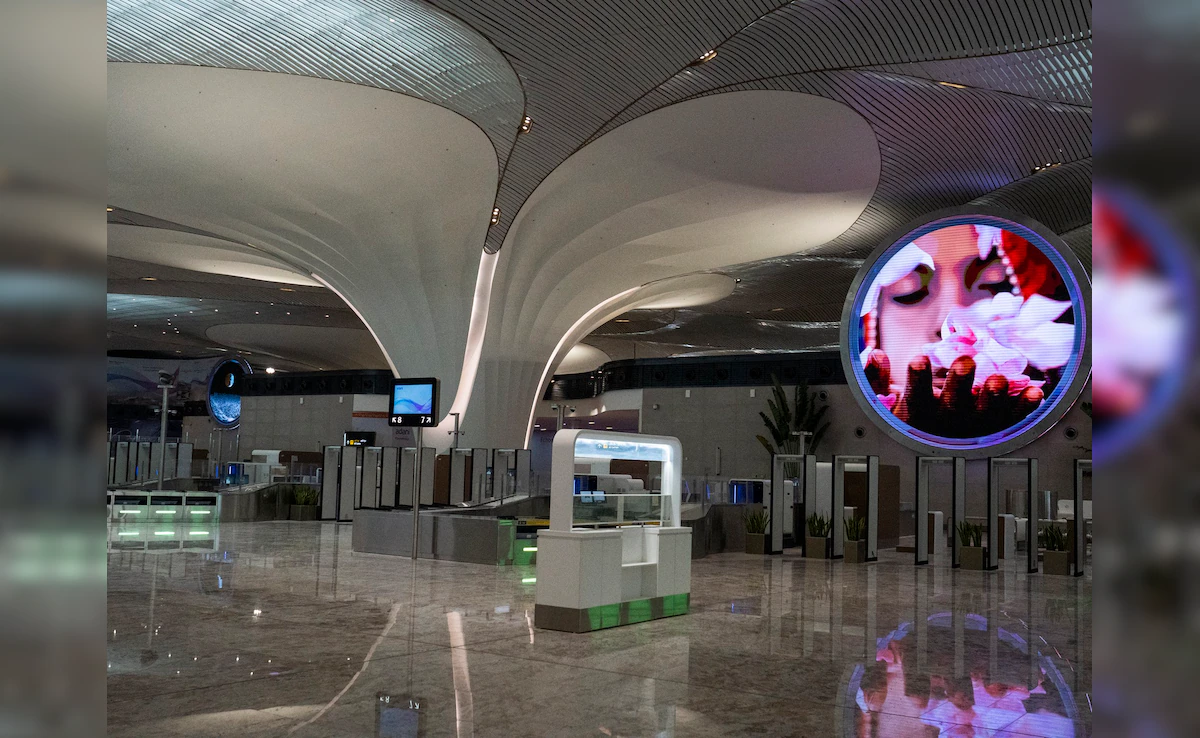
Navi Mumbai International Airport has been inaugurated today, marking a new era in India’s infrastructure story. Built at a cost of ₹19,650 crore under a public-private partnership between Adani Airports and CIDCO, the airport establishes a second international gateway for the Mumbai Metropolitan Region, easing congestion and enhancing connectivity while setting new benchmarks in sustainable design.
During the inaugural event, the Prime Minister conducted a walk-through inspection before declaring the first phase open. The airport is expected to handle up to two crore passengers annually in its initial phase, serving as a key hub to decongest the Chhatrapati Shivaji Maharaj International Airport and strengthen Mumbai’s standing among global multi-airport cities. Spanning 1,160 hectares in Ulwe, the airport’s first phase features one terminal building and a 3,700-metre runway. Future phases will expand capacity to four terminals, catering to nearly 90 million passengers and over three million tonnes of cargo annually. The master plan integrates airside efficiency, multimodal connectivity, and energy resilience.
From inception, the project has emphasised environmental sustainability. The facility will generate up to 47 MW of solar power to meet its energy needs, employ electric buses for airside mobility, and integrate infrastructure for sustainable aviation fuel. An Automated People Mover system will connect passenger terminals, while a proposed water taxi network will link the airport with Mumbai’s eastern coastline. These features are designed to advance India’s commitment to achieving net-zero carbon aviation and to mitigate the ecological footprint of large-scale infrastructure projects in coastal regions. Officials highlight that the airport is set to transform the economic geography of the Mumbai–Pune–Konkan corridor by strengthening trade, tourism, and logistics linkages. It will facilitate direct international routes for industries across Maharashtra, reducing dependency on foreign transit hubs and lowering logistics costs for exporters. In parallel, CIDCO’s urban planning team is preparing a blueprint for an adjoining aerocity, envisioned as a mixed-use smart district combining business parks, residential clusters, and hospitality spaces. This new urban ecosystem aims to attract global investors and align with the broader vision of creating equitable, inclusive, and climate-responsive cities.
While the inauguration represents a milestone, critical challenges remain. Ensuring seamless last-mile connectivity through roads, metro corridors, and suburban rail links will determine the airport’s operational efficiency. The proposed Gold Line metro, connecting the existing Mumbai airport to Navi Mumbai, is expected to play a vital role once completed. Environmental vigilance is equally vital. The site’s proximity to mangroves and wetlands demands strict monitoring of ecological safeguards to ensure compliance with coastal regulation norms and resilience against climate risks. The inauguration of Navi Mumbai International Airport marks more than the opening of a new terminal—it symbolises India’s aspiration to build future-ready, sustainable cities anchored in equity and innovation. As operations scale up, the challenge will be to balance growth with responsibility, ensuring that this milestone becomes a model for green infrastructure that truly serves the people and the planet.
Navi Mumbai International Airport Inaugurated Today By PM Modi As Rs 19650 Crore Mega Project Opens