


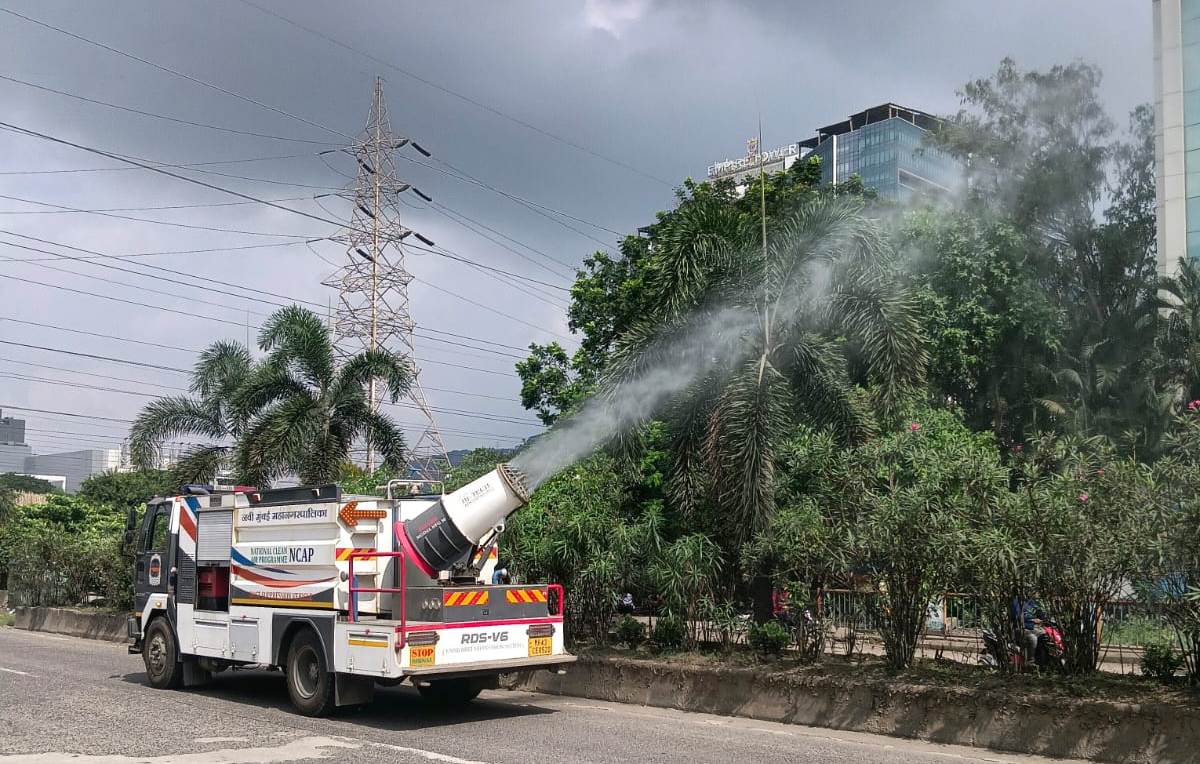
Navi Mumbai undertook a large-scale road sanitation operation over the weekend, targeting dust pollution along one of its busiest transport corridors as part of a broader strategy to improve air quality and urban liveability. The focused intervention along the Sion-Panvel Highway reflects growing civic concern around particulate pollution caused by vehicular movement, construction activity and degraded road shoulders across rapidly urbanising regions.
The highway stretch linking Vashi and Belapur serves as a critical arterial route connecting residential zones, employment hubs and logistics corridors. Urban planners note that dust accumulation along such roads is not only an environmental concern but also a public health issue, contributing to respiratory illnesses and reduced pedestrian comfort in dense metropolitan areas. By addressing surface dust at source, municipal authorities aim to limit secondary pollution that often intensifies during dry weather and peak traffic hours. The operation involved mechanised removal of compacted soil from road margins, pavements and medians, followed by high-pressure washing using treated water. According to civic officials familiar with the exercise, this two-step process is intended to prevent loose particles from re-entering the air and to improve road surface longevity. The use of treated water also signals a shift towards more resource-efficient maintenance practices in a region facing mounting climate stress. Importantly, the drive extended beyond the main highway to cover internal roads in residential and mixed-use neighbourhoods such as Koparkhairane, Airoli, Sanpada, Juhugaon and Ghansoli. Urban governance experts say this approach reflects a more equitable model of city management, recognising that air quality challenges are not confined to prominent corridors alone.
Interior roads, often overlooked, experience similar dust loads due to last-mile construction, informal parking and uneven paving. The initiative is part of Navi Mumbai’s alignment with national clean air objectives, including the deployment of specialised mist-spraying vehicles designed to suppress particulate matter. Environmental specialists note that while such mechanical measures provide immediate relief, their long-term effectiveness depends on complementary actions such as better construction site management, green buffers, and improved street design that reduces dust retention. Senior civic administrators overseeing the operation emphasised inter-departmental coordination, particularly between sanitation, solid waste management and transport divisions. More than 350 municipal staff and sanitation workers were mobilised despite the public holiday, underlining the scale of manpower required to maintain urban infrastructure in fast-growing cities.
As Navi Mumbai continues to attract investment in housing, offices and logistics, sustained attention to air quality and street maintenance will remain central to its growth story. Urban policy observers suggest that regularised cleaning schedules, combined with data-driven monitoring of pollution hotspots, could help cities transition from reactive drives to preventive urban management an essential step towards healthier, climate-resilient metropolitan environments.
Also Read: India Workspaces Drive Fresh Real Estate Momentum
Navi Mumbai Intensifies Dust Control On Major Transport Corridors
