


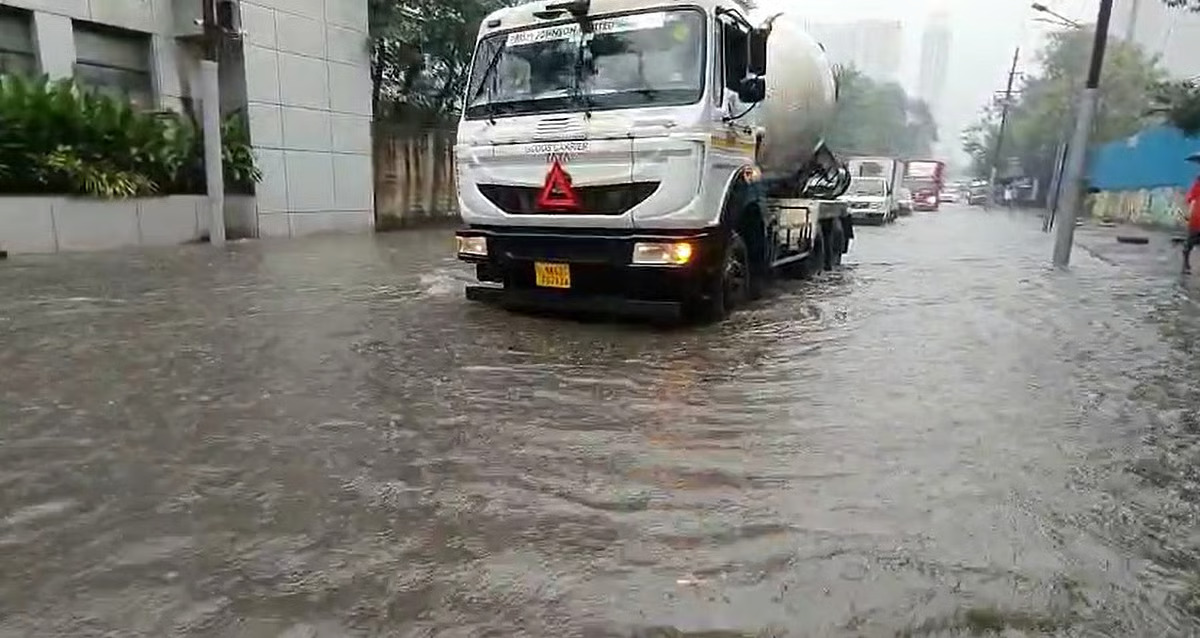
Navi Mumbai witnessed significant waterlogging in several low-lying areas on Friday afternoon after continuous rainfall disrupted traffic and daily operations across the city. Key transport arteries, including the Sanpada underpass and stretches along Turbhe MIDC Road, were inundated, causing extended delays for commuters. Meanwhile, the APMC vegetable market, a major commercial hub, experienced submerged walkways, compelling traders and visitors to navigate waterlogged paths while continuing business activities.
According to municipal officials, the flooding highlights persistent drainage challenges in the rapidly urbanising zones of Navi Mumbai, which have seen growing population density and infrastructure strain over the years. Authorities are monitoring the situation closely and have advised motorists to exercise caution while commuting through low-lying areas prone to flooding. Weather data from the India Meteorological Department (IMD) indicates that the city will experience overcast skies with moderate rainfall over the next 24 hours. Rainfall measurements from the Brihanmumbai Municipal Corporation (BMC) show that Mumbai’s island city recorded 20.36 mm of rain in the 24 hours ending at 8 am Friday, while the western suburbs logged 17.55 mm, and the eastern suburbs received 14.68 mm during the same period.
Experts in urban planning note that these episodes underscore the need for climate-resilient infrastructure in Navi Mumbai. “With increasingly erratic monsoon patterns, cities must invest in robust stormwater management systems, permeable surfaces, and sustainable urban drainage to reduce flooding and minimise disruption,” said a senior municipal consultant. Looking ahead, the IMD forecasts generally cloudy conditions with intermittent moderate showers from August 30 to September 1. The rainfall is not expected to reach severe levels, and no official warnings have been issued. This suggests that while minor disruptions may persist, the city is unlikely to face major emergencies during the ongoing monsoon spell.
For residents and businesses, officials advise strategic planning for commuting and daily operations. Early-morning travel may remain relatively smoother, but late-afternoon journeys could be affected by standing water in underpasses and road stretches, particularly in low-lying zones. Traders at markets like APMC are encouraged to adopt precautionary measures to protect inventory and maintain smooth operations. The recurring flooding in Navi Mumbai illustrates the broader challenge of integrating sustainable urban planning with climate adaptation strategies. As cities expand, balancing rapid development with eco-friendly drainage, flood mitigation, and equitable urban access becomes increasingly critical for ensuring resilience during extreme weather events.
Navi Mumbai’s municipal authorities continue to prioritise infrastructure upgrades and drainage improvements to address waterlogging, reduce commuter inconvenience, and enhance overall urban livability in line with sustainable city planning objectives.
Also Read : Mumbai BMC Launches Bids For World Class Exotic Bird Park At Nahur
