


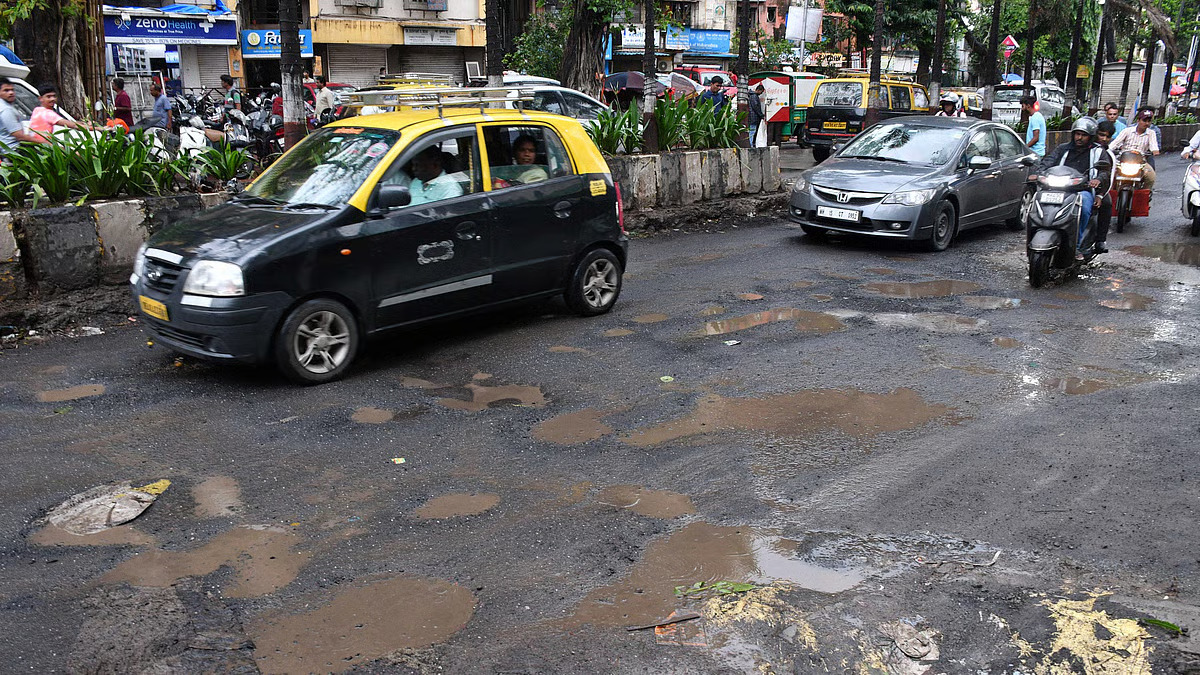
Navi Mumbai residents have raised sharp concerns over the worsening condition of roads in Kharghar, particularly on the crucial stretch between Tawa Hotel and Tata Hospital via Central Park. Motorists and pedestrians complain of potholes, uneven surfaces and waterlogging that make commuting hazardous, sparking renewed debate over accountability and the quality of urban infrastructure in one of the city’s fastest-growing nodes.
The four-kilometre arterial corridor, connecting sectors 2 to 36 and linking residential colonies, security force camps, places of worship and Central Park, witnesses some of the highest vehicular movement in Kharghar. Locals allege that despite frequent repairs, the surface deteriorates within months, forcing road users to navigate potholes of varying sizes. Joggers, cyclists and everyday commuters alike report persistent risks of skidding and accidents, especially during the monsoon season. Motorists point out that the problems extend beyond poor construction quality. Inadequate drainage has resulted in prolonged waterlogging, further weakening the surface and compounding safety risks. According to residents, several two-wheeler riders have suffered falls, while cars and buses slow to a crawl, creating congestion and longer travel times. The frustration has been heightened by reminders from the civic body about pending property tax payments, even as basic civic infrastructure remains substandard.
Local infrastructure experts stress that the situation reflects systemic gaps in planning and oversight. They argue that while Navi Mumbai is positioned as a model satellite city, the rapid pace of urbanisation has not been matched by durable investments in road engineering and stormwater management. Sustainable urban mobility, they insist, cannot be achieved without resilient infrastructure that withstands both heavy traffic and extreme weather. The Panvel City Municipal Corporation has stated that concreting work has begun at key junctions along the affected stretch, with asphalting scheduled to follow in the coming weeks. Civic officials maintain that improvements will be visible shortly, but citizens remain sceptical given previous instances where repairs failed within a short span. Urban planners argue that stricter quality testing of contractors’ work is vital, along with prioritising eco-friendly road technologies that reduce maintenance cycles and costs in the long term.
The pothole crisis in Kharghar is not merely an issue of inconvenience. It symbolises the larger challenge Indian cities face in balancing rapid growth with the provision of safe, sustainable and equitable infrastructure. As Navi Mumbai positions itself as a hub of planned urban living, the demand for durable roads, reliable drainage and transparent accountability is likely to grow louder. Citizens contend that taxes must translate into tangible improvements, and that the right to safe mobility is central to building a resilient and liveable city.
Also Read: Mumbai To Connect With Solapur As Direct Flights Begin Four Days A Week
