Navi Mumbai Attracts Large Corporations With New Park
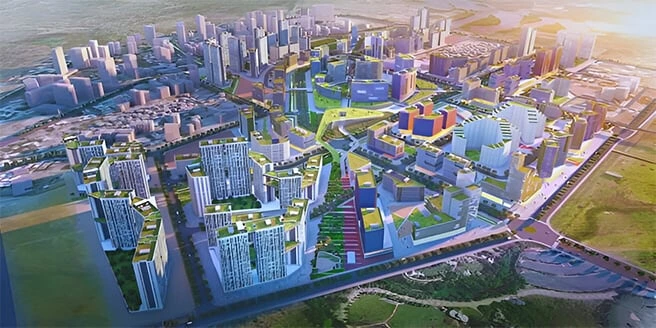
Navi Mumbai is poised to emerge as a new corporate centre, as the City and Industrial Development Corporation (CIDCO) announces plans for a sprawling International Corporate Park in Kharghar. Spread across more than 100 acres and strategically located roughly 14 kilometres from the new Navi Mumbai International Airport, the park aims to replicate the commercial prominence of Mumbai’s Bandra Kurla Complex. Analysts suggest the project could reshape Navi Mumbai’s office market while supporting sustainable urban growth.
The International Corporate Park (ICP) is envisioned as a phased, two-decade development that will combine office towers, commercial complexes, and mixed-use facilities. Urban planners note that situating the park near transport hubs and integrating green-certified construction could enhance both economic productivity and environmental sustainability. CIDCO’s prior investments in the area, including a dedicated ₹11.3 crore tender for perimeter infrastructure, indicate the long-term commitment to establishing Kharghar as a high-value business node.
Industry observers highlight Navi Mumbai’s competitive office market as a key advantage. Office rents here are estimated to be around ₹70 per square foot per month, roughly 21 per cent lower than rates in Tier-1 Indian cities. This affordability has already attracted multinational corporations and global capability centres, and the ICP is expected to accelerate that trend by offering modern facilities designed to international standards. A senior real estate analyst emphasised that the combination of cost competitiveness and proximity to a major airport positions Navi Mumbai favourably for both domestic and foreign investment. The development is also seen as a test case for sustainable, inclusive urban growth. Approximately 72 per cent of Navi Mumbai’s prime office stock is green-certified, a figure that CIDCO aims to improve within the ICP framework. Urban planners point out that integrating renewable energy, rainwater harvesting, and pedestrian-friendly design into corporate infrastructure can significantly reduce the carbon footprint of large-scale commercial zones, a growing priority for Indian cities seeking climate resilience.
Economically, the project is expected to catalyse ancillary sectors, including retail, hospitality, and transport. Local planners caution, however, that balancing high-rise corporate expansion with civic infrastructure and residential needs will be critical to avoiding congestion and ensuring equitable benefits for the surrounding population. With the formal bid process underway, CIDCO’s initiative marks a significant step in Navi Mumbai’s evolution from a satellite city into a self-sustaining economic hub. Over the next two decades, the ICP could set new benchmarks for integrated, climate-conscious corporate development, reinforcing Navi Mumbai’s appeal to businesses seeking modern, cost-effective, and sustainable office space.