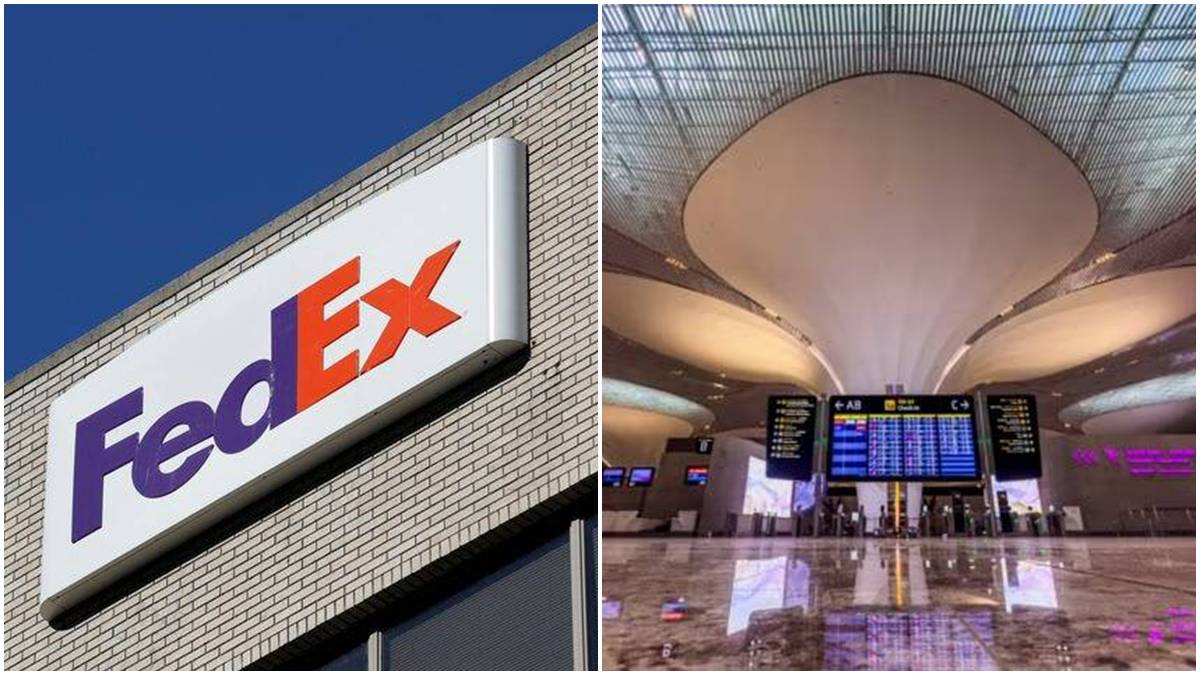
Navi Mumbai International Airport is set to emerge as a key logistics and trade gateway for western India following FedEx’s announcement of a 2,500 crore investment in a fully automated cargo hub. The proposed 300,000 sq ft facility will function as a regional consolidation and redistribution centre, leveraging the airport’s multimodal infrastructure to optimise freight flows and bolster export-import connectivity. Analysts highlight the move as a strategic alignment of private logistics expansion with national trade corridors.
The hub is designed to integrate advanced automation, including high-speed sorting systems, dimensional scanning, and dedicated aircraft bays, enabling efficient handling of time-sensitive and high-value cargo. A senior airport planning official noted that such automation can significantly improve turnaround times, reduce operational bottlenecks, and enhance reliability for businesses dependent on just-in-time supply chains. Urban planners and logistics experts emphasise that the project’s impact extends beyond freight efficiency. The hub is projected to generate over 6,000 direct and indirect jobs in warehousing, transportation, and allied services, contributing to local economic growth and supporting inclusive employment opportunities. By aligning with the airport’s phased cargo expansion plan—from an initial 0.5 million metric tonnes to a projected 3.25 million metric tonnes annually—the facility is expected to relieve pressure on existing air freight networks and strengthen Mumbai’s position in global trade.
The location of the airport, with proximity to Jawaharlal Nehru Port and key industrial corridors, enhances the strategic value of the investment. Industry analysts suggest that integrating automated cargo operations at such nodes can lower logistics costs, improve predictability for exporters, and facilitate smoother flows of goods to Southeast Asia, West Asia, Europe, and North America. Small and medium enterprises stand to benefit from more efficient handling and quicker turnaround of shipments, reinforcing western India’s competitiveness in global markets. From a sustainability perspective, experts note that consolidating cargo handling at centralised, automated hubs can optimise energy use, reduce transport emissions from repeated truck movements, and support climate-resilient infrastructure planning. Officials overseeing the project emphasise that the hub will adhere to environmental and safety standards, integrating advanced technology to balance operational efficiency with responsible development.
The FedEx investment at Navi Mumbai International Airport signals a broader trend of private sector participation in India’s aviation and logistics ecosystem, demonstrating how modern infrastructure, automation, and strategic location can converge to elevate regional trade competitiveness. With the airport poised to serve as a multimodal hub, stakeholders anticipate long-term gains in efficiency, economic activity, and sustainable urban logistics.
Navi Mumbai Airport Welcomes FedEx Automated Hub