


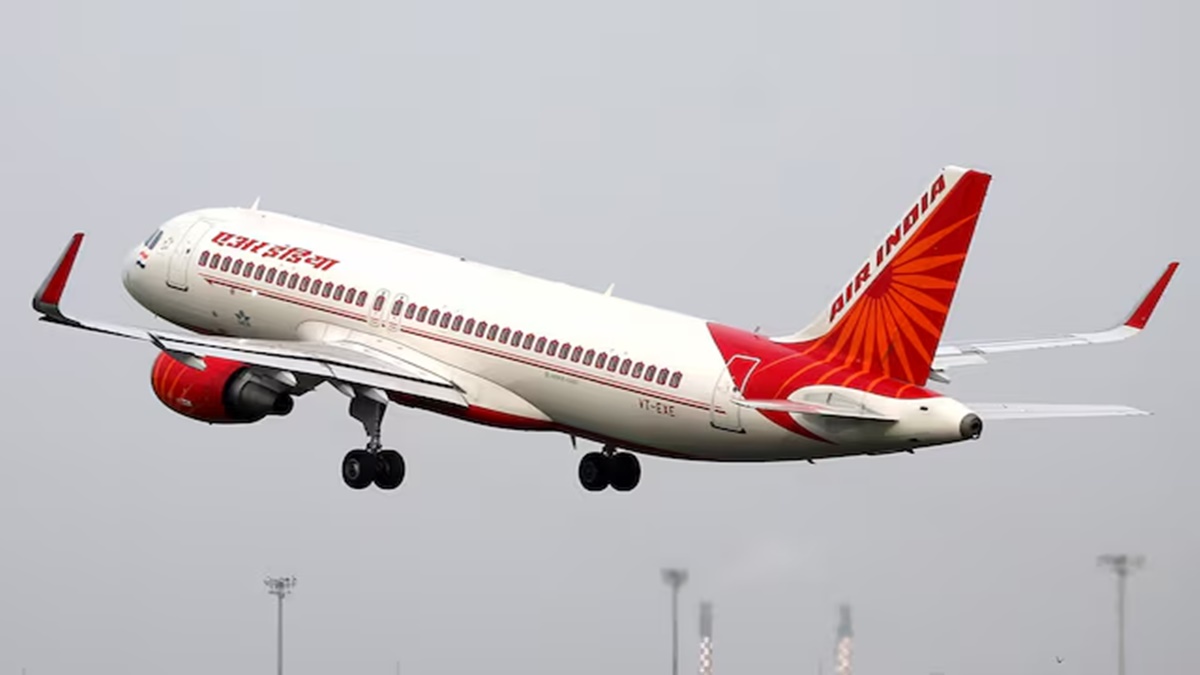
Navi Mumbai is poised to emerge as a key node in India’s global aviation network as Air India advances plans to base its international hub at the soon-to-be-operational Navi Mumbai International Airport (NMIA). The facility, scheduled to open for commercial services by mid-November, is expected to play a transformative role in easing pressure on Mumbai’s overburdened primary airport and enhancing long-haul connectivity.
Industry insiders confirm that the airport’s Terminal 2 is being designed with hub operations in mind, with inputs from the airline to ensure seamless passenger transfers and optimised scheduling. With Mumbai’s existing Chhatrapati Shivaji Maharaj International Airport operating at near-saturation levels, the shift to NMIA will provide the carrier with modern infrastructure and room to scale up. The Tata Group-owned airline, which has been reworking its global expansion strategy, is expected to begin with select Air India Express operations at NMIA. This phased transition will enable the airline to test operational systems before a larger move. Officials from the airport operator have projected that Terminal 1 alone, with a capacity for 20–23 million passengers annually, will reach its limit within six months of opening. Construction on Terminal 2, which will lift overall capacity to 60 million passengers per year, is already underway and targeted for completion by 2029. The airport will operate with two parallel runways to handle both domestic and international growth.
NMIA’s strategic location and scale are set to position the Mumbai Metropolitan Region as India’s first urban cluster with two major airports. Aviation planners see this as a turning point, offering new east–west transit opportunities and placing India on par with established hub cities such as Dubai, Singapore, and Amsterdam. Plans also include direct regional connectivity to underserved airports like Kolhapur and Solapur, enabling greater air access to rural and industrial areas, while boosting passenger flows from Tier-2 and Tier-3 cities. Beyond passengers, NMIA is designed with cargo operations in mind. With a planned annual freight capacity of 3.2 million metric tonnes, the airport will strengthen India’s logistics network and serve as a crucial link in global supply chains.
The airline’s move towards a dual-hub strategy, including Bengaluru in the south, comes amid constraints on fleet availability. While six Airbus A350s have been introduced for long-haul services, refurbishment delays on Boeing 777-300ER aircraft and ongoing retrofits on its Boeing 787-8 fleet have slowed expansion. Operational adjustments, such as suspending certain long-haul routes, underline the urgency of modernising infrastructure and optimising resources. Aviation experts argue that NMIA offers a rare chance to create a zero-carbon-ready, future-proof aviation hub. They note that sustainability measures, such as energy-efficient terminal design, public transport integration, and green cargo handling, could make NMIA a model for next-generation airports in India.
Also Read : Mumbai Coastal Road to Open 24 Hours from Friday
