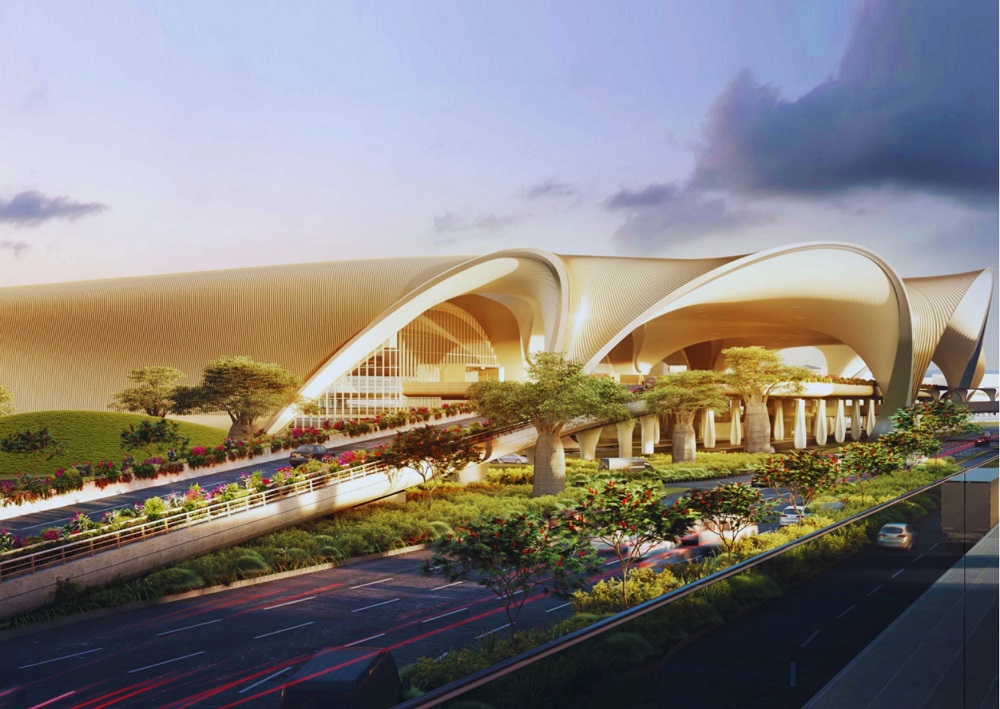
In a decision that blends infrastructure ambition with regional identity, Navi Mumbai’s new international airport is set to honour the legacy of late Dinkar Balu Patil, a grassroots leader associated with farmers’ rights and local communities, as its official name. The announcement, made by Maharashtra’s chief minister during a public address, underscores how major transport investments are increasingly being positioned as engines of equitable urban growth and socio‑economic opportunity in the Mumbai Metropolitan Region (MMR).
The naming marks a symbolic shift in how large‑scale infrastructure is connected to citizens, not just commerce. Positioned strategically in Ulwe, Navi Mumbai, the airport aims to alleviate passenger overload at Mumbai’s primary airport while catalysing growth in sectors such as pharmaceuticals, services, and innovation‑driven industries. Urban economic analysts say that linking the airport to a local people’s leader reinforces a narrative of inclusive development, leveraging connectivity to benefit broader communities rather than purely serve corporate or elite interests. Traffic bottlenecks and congestion have long been a restraint on mobility in the MMR. To address these, the state government is concurrently pushing key auxiliary infrastructure — including a new junction at Kalamboli, the Kharghar–Turbhe tunnel and an expanded CIDCO‑led metro network — designed to knit the airport into the region’s transport matrix. These efforts aim to reduce reliance on road transport and enhance access for daily commuters and global visitors alike.
Critically, the airport naming also reflects ongoing civic negotiations around local aspiration and urban identity. For years, community associations representing project‑affected people have campaigned for recognition of Patil’s role in safeguarding land rights during earlier phases of Navi Mumbai’s development, including spirited protests and legal petitions to state and central authorities. Public expectations around the naming underscore the broader civic desire for infrastructure that reflects historical narratives and community contributions. Environmental and sustainability experts highlight that the airport’s integration with green and active mobility networks will be pivotal to realising its inclusive potential. Without complementary investments in last‑mile connectivity, affordable transit options, and ecosystem‑sensitive planning, there is a risk of uneven benefits that favour private vehicles and high‑end commercial interests over everyday users. Such gaps could counteract the social equity promise embedded in the airport’s naming.
From an urban development perspective, the airport’s evolving role — in naming and function — illustrates a broader shift in Indian city‑region planning: infrastructure must not only resolve capacity constraints but also embody people‑first values that honour local histories and distribute economic dividends across social strata.
As operations ramp up and related transport networks materialise, policymakers and planners will need to ensure that the airport’s connectivity and service ecosystem support sustainable access, climate resilience, and inclusive growth for the MMR’s diverse communities.