


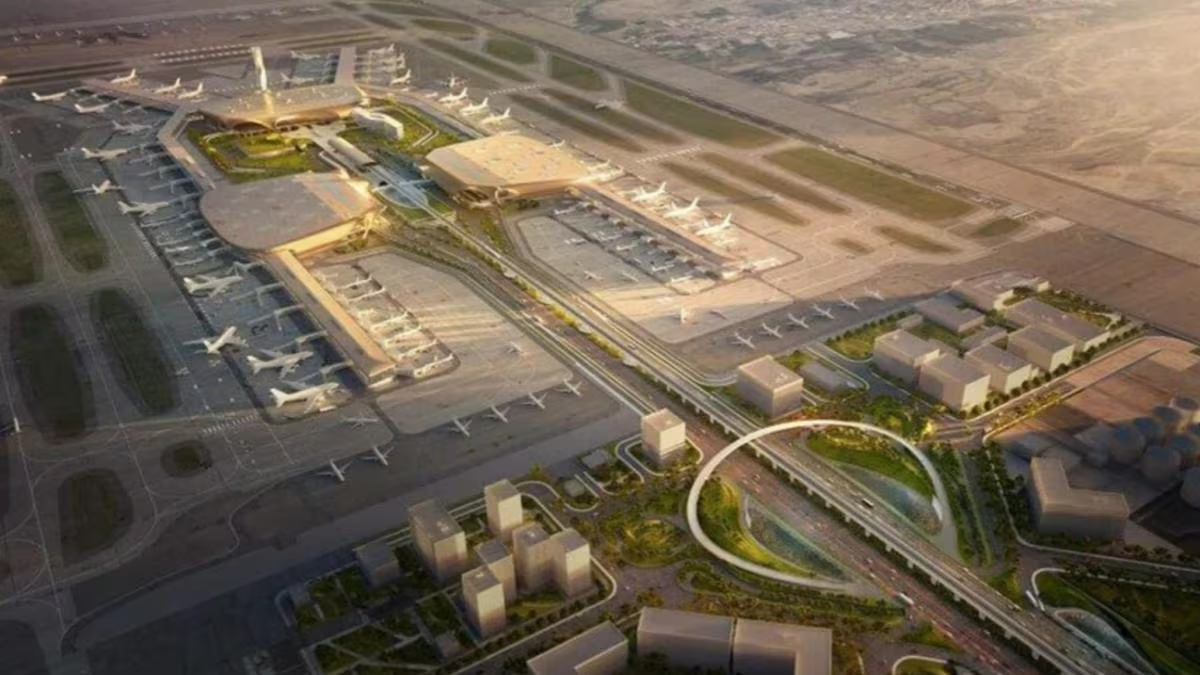
Navi Mumbai Airport Successful Launch Hinges on Improved Infrastructure and Traffic Flow
In just a few months, Mumbai will be home to a second city airport in Navi Mumbai, a rare feat for Indian cities. However, the success of this new airport hinges on more than just its construction—it depends on the city’s infrastructure, particularly road connectivity, and the growth of air traffic.
The Navi Mumbai Airport has been a long time coming, with plans for its development dating back decades. As we approach its official launch, it’s clear that while progress has been made, significant challenges still remain. The change in ownership from the GVK Reddy group to the Adani group may have accelerated the process, but much still needs to be done for the airport to function seamlessly. While the airport’s opening promises some positive changes, such as shifting no-frills carriers from Mumbai’s Santacruz Terminal 1 to Navi Mumbai, the logistics of getting there present a significant challenge. Residents of Mumbai will have to factor in anywhere from three to four hours of travel time to reach the new airport. This could mean that passengers will spend half a day just on the commute—before even accounting for the two-hour check-in time.
The Atal Setu expressway, which connects the new airport to the eastern part of Mumbai, is a start, but it doesn’t solve the problem for the entire city. The western and eastern parts of Mumbai are divided by geography, with long travel times between them. Although a 4.5 km bridge to connect the two sides has been promised, progress on this vital infrastructure component has been painfully slow. Initially conceptualized in 2013, the bridge’s construction has stalled multiple times, with work now expected to resume on a critical section across the north-south railway lines. Even if work progresses quickly, the delays could take years to resolve. The situation is made more complicated by Mumbai’s political landscape and bureaucratic delays. The “double-engine government” approach, with both state and center under the same party, was supposed to speed up projects, but that has not been the case here. A promise to complete the new bridge in 12 months remains to be seen, and local issues between the Railways and the municipal corporation have further delayed the project.
In the meantime, Mumbai’s urban landscape is shifting. The city’s focus is moving towards new areas like the Bandra Kurla Complex (BKC), which is becoming increasingly difficult to navigate. Meanwhile, older districts like Worli are seeing a revival in interest. Although new infrastructure projects like the underground metro rail promise to ease travel across south Mumbai, they too are experiencing delays, with the metro rail project taking far longer than expected. Despite the promise of a sleek new coastal road that drastically reduces travel time from north to south Mumbai, the city still grapples with crumbling roads in other areas. Potholes, uneven surfaces, and poor road quality slow down traffic, adding unnecessary delays and frustration for commuters.
As the Navi Mumbai airport prepares to open, the strain on passengers will be unfair if the roads to the airport remain clogged and inefficient. While air traffic in India continues to grow, with 161 million domestic passengers flying last year, there are still many hurdles to overcome. The growth of air traffic must be supported by infrastructure improvements to ensure a smooth experience for passengers and help the new airport thrive.
