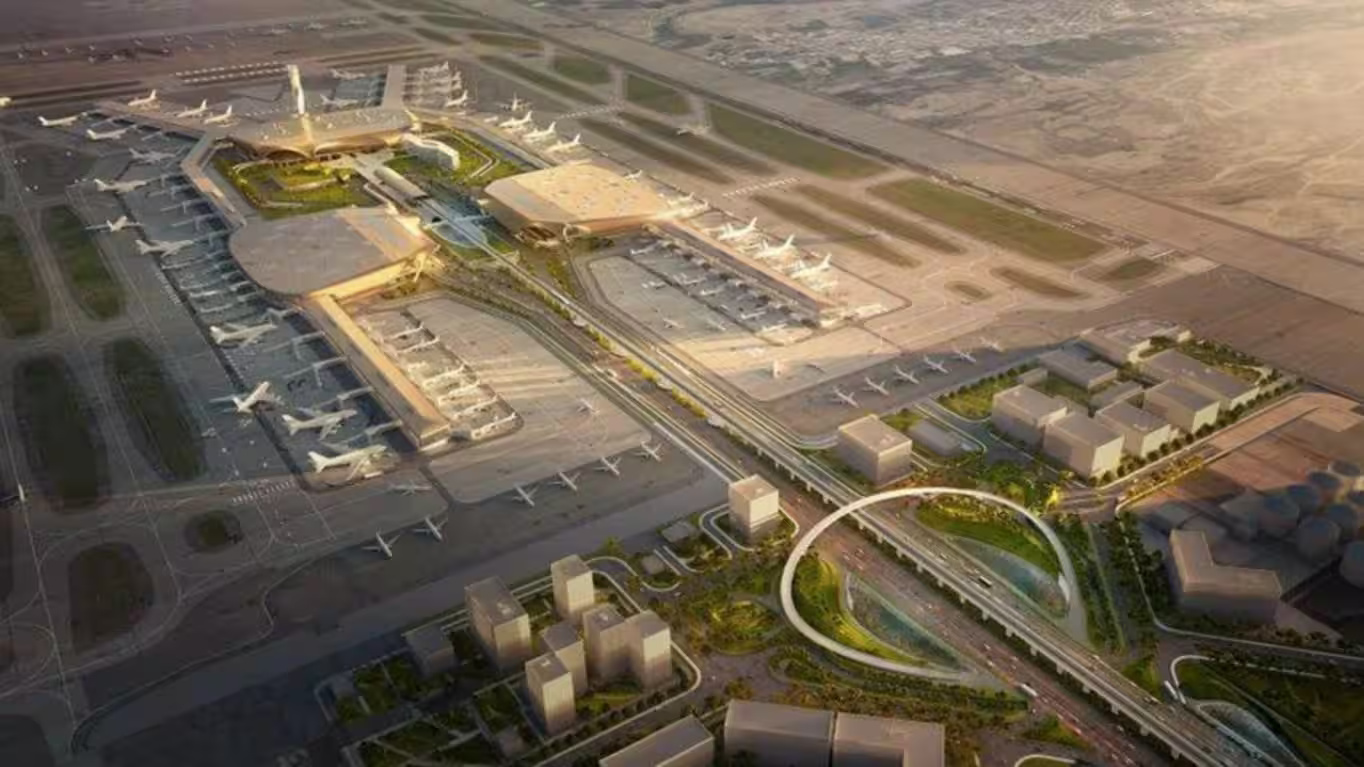
Navi Mumbai International Airport, designed as a greenfield gateway for the city’s growing air traffic, impresses with operational efficiency but faces early challenges in delivering a truly passenger-centric experience. While entry and security processes are fast, gaps in wayfinding, amenities, and staff engagement highlight the need for a more holistic approach to user experience—a critical factor for airports serving as civic gateways.
Access to the airport remains functional but not intuitive. Observers note that approach roads would benefit from clearer signage, with current confusion leading to misdirected traffic and safety risks. Despite corporate claims of sustainability, the absence of meaningful greenery along the approach and within terminal precincts underscores a disconnect between design intent and passenger perception. Urban planners emphasise that green cover and open spaces are essential not only for environmental outcomes but also for shaping the experience of a city’s first impression. Inside the terminal, operational efficiency is apparent. Passengers using digital identification systems such as DigiYatra can clear security in under five minutes—a performance benchmark for Indian airports. However, early observations suggest that as passenger volumes increase, congestion points may emerge at arrival baggage belts and car pickup zones, indicating that procedural fine-tuning is needed before the airport can scale effectively.
Connectivity and passenger services also present challenges. Spotty mobile network coverage, caused by disputes over telecom infrastructure access, limits communication for travellers. While free Wi-Fi partially mitigates this, digital boarding passes, payments, and verification processes depend on uninterrupted connectivity, making infrastructure gaps a potential bottleneck. Similarly, essential facilities like restrooms and charging stations are currently insufficient for a modern airport, highlighting areas where attention to operational detail remains incomplete. Retail and pricing show early promise, with competitively priced offerings signalling a willingness to break away from traditional airport premium pricing. Yet, human interaction remains an area for improvement. Staff engagement at passenger touchpoints is described as inconsistent, with limited attentiveness and minimal customer warmth—elements that globally influence how operational efficiency is experienced.
Industry experts note that airports are not just transit nodes but civic environments that communicate a city’s identity. Operational resilience, from monsoon readiness to inclusive services for passengers with special needs, must complement speed and process efficiency to define a fully functional modern airport. Observers suggest that addressing these “soft infrastructure” elements will be critical for Navi Mumbai airport to achieve both technical and experiential excellence. Looking ahead, if the airport operator integrates passenger-first policies and urban design principles, Navi Mumbai International Airport could emerge as a benchmark for efficiency and human-centred design. For now, it functions effectively as a practical gateway, yet it remains a facility still searching for character, warmth, and a truly memorable passenger experience.
Navi Mumbai Airport Shows Efficient Operations Gap