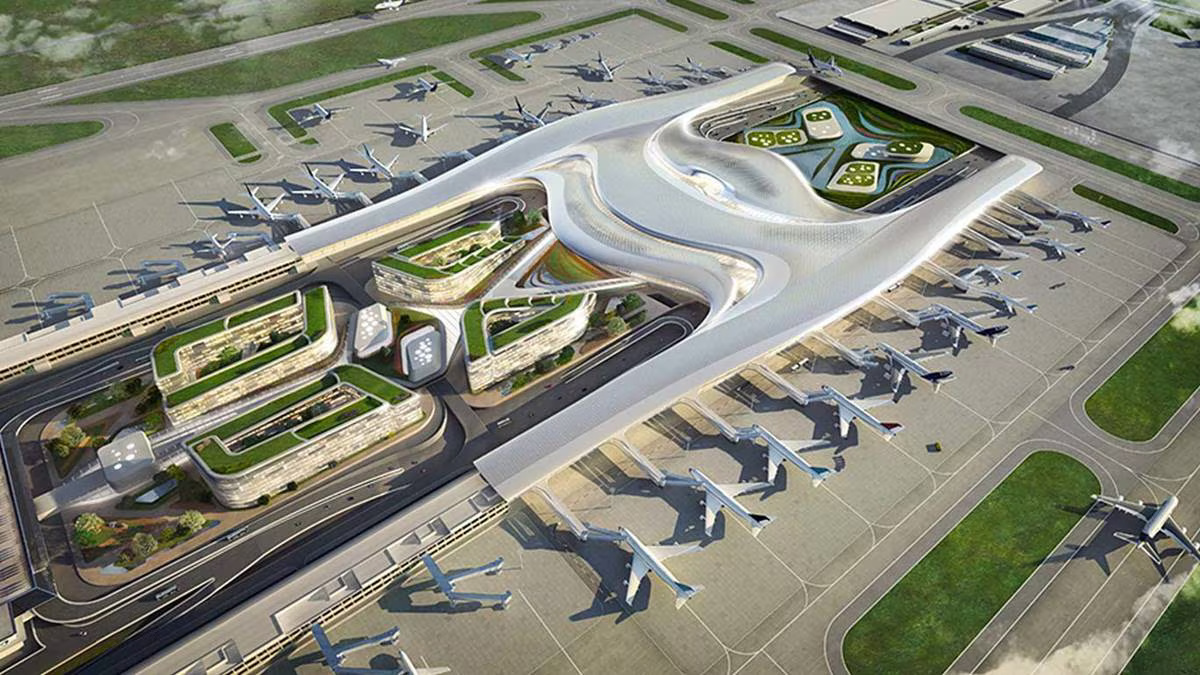
Navi Mumbai’s long-awaited international airport has recorded a robust operational opening, with passenger volumes crossing the one-lakh mark within weeks of launching commercial flights. The early uptake highlights pent-up travel demand across the Mumbai Metropolitan Region (MMR) and signals a gradual rebalancing of air traffic away from the city’s saturated primary airport.
Since commencing scheduled operations in late December, the new airport has handled over one lakh travellers, reflecting a steady daily flow rather than a one-off surge. Aviation planners say this early performance matters not just for passenger numbers but for what it indicates about regional mobility patterns, capacity relief for Mumbai, and the future of decentralised urban infrastructure in the region. Operational data shows that passenger movement has been evenly split between arrivals and departures, suggesting the airport is already functioning as a two-way transit hub rather than a limited origin point. The busiest day so far recorded more than 7,000 travellers, offering early insight into peak-handling capability and passenger behaviour during high-demand periods. Over 700 aircraft movements have been recorded, alongside a growing volume of baggage and general aviation activity.
Industry experts point out that early stabilisation is critical for new airports, particularly in megacity regions where connectivity choices are shaped by travel time, surface access and reliability. Navi Mumbai airport’s catchment spans fast-growing residential and commercial clusters across Navi Mumbai, Panvel, Raigad and parts of Pune district, many of which previously relied on long road journeys to Mumbai’s older airport. Cargo operations have also begun in parallel with passenger services, with initial freight volumes indicating readiness for integrated logistics. This dual focus is seen as important for reducing pressure on road-based freight movement and supporting cleaner, more efficient supply chains—an increasingly significant consideration in climate-conscious infrastructure planning.
The airport has launched with an initial annual capacity of around 20 million passengers, but authorities have indicated that services will be scaled in phases. Urban transport analysts say this calibrated approach reduces operational stress while allowing surrounding road, rail and metro links to mature alongside aviation demand. Seamless last-mile connectivity will remain a decisive factor in how quickly passenger volumes grow. From an urban development perspective, the airport is expected to act as a catalyst for employment, real estate and commercial activity in the eastern and southern edges of the MMR. However, planners caution that growth must be managed carefully to avoid speculative sprawl, emphasising the need for transit-oriented development, mixed-use zoning and resilient public infrastructure.
As flight frequencies expand and new routes are added, the real test will be whether Navi Mumbai airport can consistently offer time savings, predictable operations and lower congestion impacts. Its early passenger figures suggest a strong foundation—but long-term success will depend on integration with the region’s wider mobility and sustainability goals.
Navi Mumbai Airport Sees Rapid Passenger Uptake