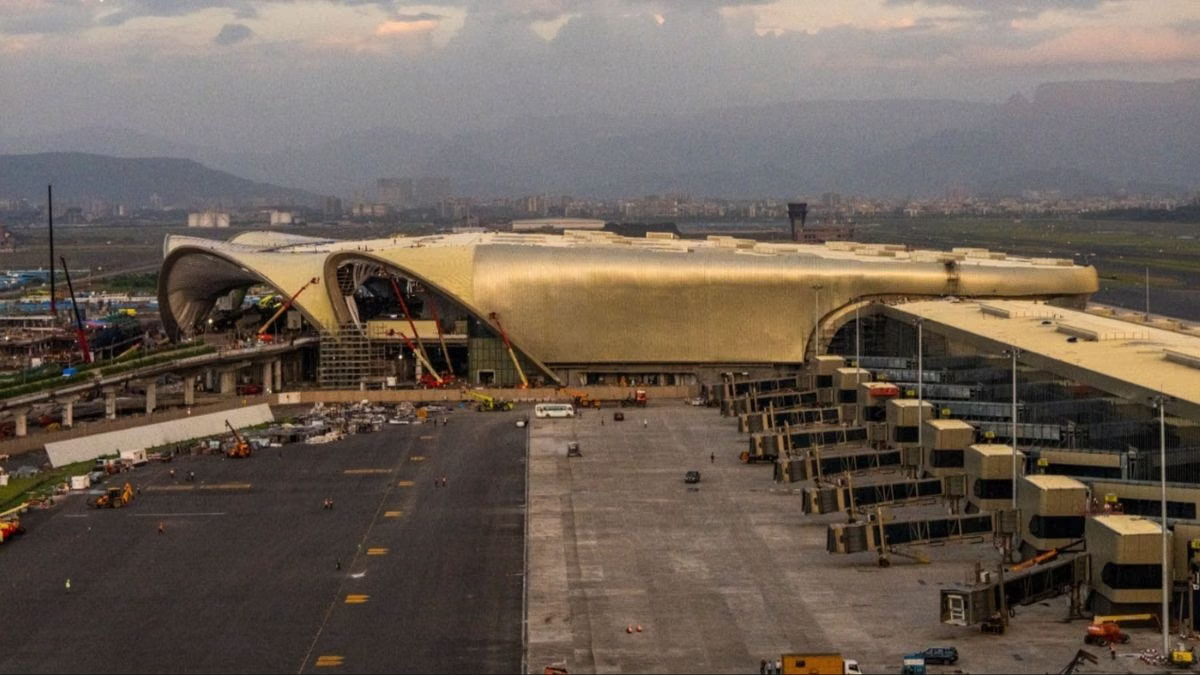
Navi Mumbai International Airport has moved to recalibrate its telecom infrastructure pricing, proposing charges for in-building mobile networks that mirror those levied at Mumbai’s primary airport. The decision follows weeks of friction with mobile service providers over access rights and cost structures, raising larger questions about how new urban infrastructure balances commercial recovery with universal digital access.
The airport operator has indicated that telecom companies seeking to provide indoor mobile coverage would be billed at rates broadly benchmarked to those at Mumbai’s older international hub. Officials involved in the process describe the approach as part of a phased strategy to standardise infrastructure pricing while ensuring uninterrupted connectivity for passengers in a large, technology-dependent terminal environment. At the heart of the dispute lies the “right of way” required for installing telecom equipment inside the terminal. Telecom operators argue that the airport’s current framework limits their ability to deploy independent infrastructure and compels them to rely on a centrally managed network. Industry representatives maintain that such arrangements inflate operating costs and restrict competition, particularly in a greenfield airport designed to serve one of India’s fastest-growing metropolitan regions.
According to estimates shared by infrastructure experts, the proposed monthly outgo per operator at Navi Mumbai would be higher than what a simple area-based comparison might suggest. While the new airport covers less than half the indoor area of Mumbai’s existing international terminal, the operator has cited higher installation and maintenance costs associated with newer construction standards, sustainability systems, and future-ready digital architecture. The pricing is also expected to rise further as fifth-generation mobile services expand, given their denser network requirements. Urban planners tracking the development say the disagreement highlights a recurring challenge in modern city-building: integrating digital infrastructure as an essential public utility rather than a premium service. Airports, they note, are no longer standalone transport assets but complex urban nodes supporting workers, logistics networks, and surrounding real estate development. Affordable and competitive telecom access is therefore closely tied to economic productivity and passenger experience.
In the interim, the airport has expanded public Wi-Fi access across terminals and common areas, including for visitors and ground transport workers. Physical guidance systems and assisted access points have been added to help users connect, a move officials describe as a temporary mobility support measure rather than a substitute for full cellular coverage. The standoff has now drawn the attention of national regulators, with industry bodies urging clarity on how telecom rules apply within large public infrastructure projects. As Navi Mumbai prepares for higher passenger volumes and future expansion, the outcome could set a precedent for how digital connectivity is priced and governed across India’s next generation of airports shaping not just travel, but the digital equity of emerging urban centres.
Navi Mumbai Airport Rethinks Telecom Access Pricing