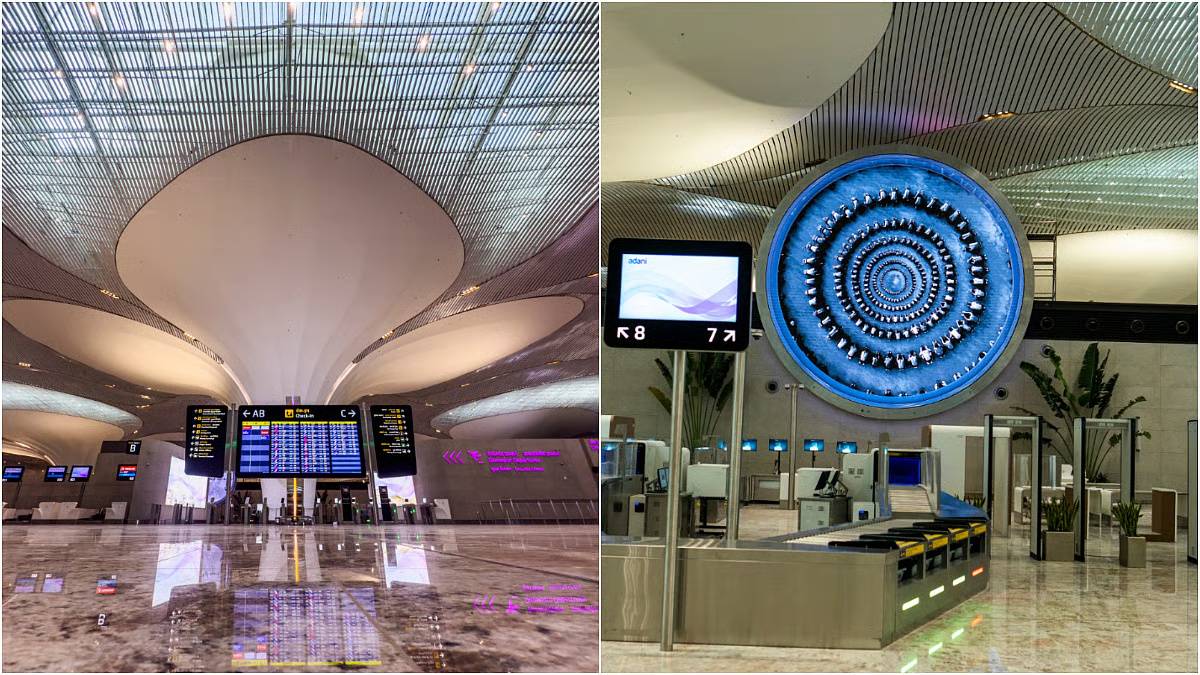
Navi Mumbai International Airport has recorded a steady and encouraging start to operations, handling more than 26,000 passengers within its first five days of commercial activity. The early traffic performance signals growing acceptance among travellers and airlines, positioning the airport as a critical new mobility asset for the Mumbai Metropolitan Region and easing pressure on the saturated primary airport.
According to airport operations data, the greenfield facility managed over 26,000 passenger movements between December 25 and December 29, with departures marginally outnumbering arrivals. Aviation analysts note that such balanced flows are typically seen at airports with strong origin-and-destination demand rather than purely transit traffic, indicating healthy local uptake from Navi Mumbai and neighbouring nodes. Passenger volumes rose sharply over the first weekend of operations, reflecting holiday travel demand and curiosity-driven travel. Industry experts suggest this pattern mirrors global trends seen at newly commissioned airports, where weekend leisure traffic often accelerates early adoption. While weekday volumes showed a marginal dip, officials described this as a normal stabilisation phase as flight schedules gradually mature.
In operational terms, the airport handled 162 scheduled aircraft movements over five days, evenly split between arrivals and departures. Aviation planners highlighted that the smooth management of these movements during the initial phase is significant, as early operational reliability plays a decisive role in airline confidence and future route planning. At present, the airport connects Navi Mumbai to 13 major domestic cities, spanning business hubs, state capitals and regional tourism centres. Officials overseeing airport development indicated that additional domestic routes are expected to be announced in the coming weeks, based on passenger response and airline interest. Over time, the airport is also expected to support international services, strengthening Mumbai’s position as a global aviation gateway.
Urban development experts view the airport’s early performance as closely linked to broader city-building objectives. “A second airport is not just about aviation capacity, but about reshaping urban growth patterns,” said an infrastructure analyst tracking large transport projects in western India. “If integrated well with rail and metro systems, it can support decentralised economic activity and reduce long-term congestion and emissions.” From a sustainability perspective, the airport’s gradual ramp-up strategy is seen as prudent. Phased growth allows authorities to align air traffic expansion with surface transport readiness, energy efficiency measures and inclusive employment planning. Planners argue that such coordination is essential if large infrastructure projects are to support low-carbon, equitable urbanisation rather than intensify existing pressures.
As Navi Mumbai International Airport moves beyond its launch phase, its early passenger numbers offer a glimpse into the region’s evolving travel demand. The coming months will test how effectively the airport integrates with the wider metropolitan ecosystem, shaping not just mobility outcomes but the future spatial and economic balance of India’s financial capital region.
Navi Mumbai Airport Records Over 26000 Passengers In First Five Days