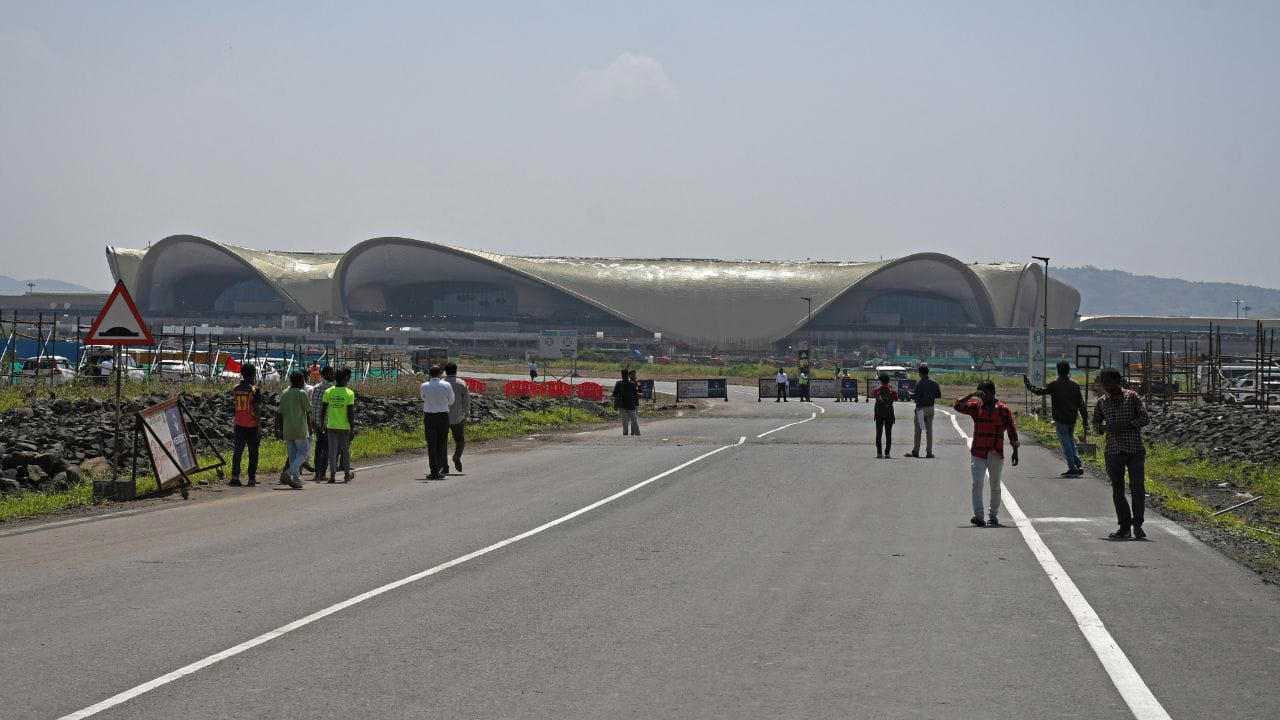
Navi Mumbai International Airport has recorded an encouraging opening, handling close to 10,000 passengers within the first 48 hours of its commercial launch. The early figures underline strong public acceptance of the long-awaited facility and signal a potential redistribution of air traffic within India’s busiest aviation corridor.
Aviation officials said the initial traffic included a balanced mix of business travellers, leisure passengers, and routine commuters, reflecting broad-based demand rather than a limited trial phase. Industry experts view the numbers as significant for a greenfield airport, particularly one positioned to complement rather than compete directly with an established metropolitan hub. The new airport has been planned as a critical infrastructure intervention for the Mumbai Metropolitan Region, where capacity constraints at the existing airport have long affected operational efficiency and passenger experience. By offering an alternative departure and arrival point, Navi Mumbai Airport is expected to ease congestion, improve schedule reliability, and reduce surface travel stress for flyers from satellite cities and emerging economic zones.
Passengers in the opening days reported smooth terminal operations, supported by intuitive layouts, efficient check-in processes, and responsive on-ground staff. According to airport officials, operational systems were designed to prioritise seamless passenger movement while incorporating energy-efficient design features and scalable infrastructure. These elements are intended to support long-term growth without proportionately increasing environmental or resource burdens. Urban planners note that the airport’s significance extends beyond aviation. Its location is expected to catalyse transit-oriented development, encourage decentralised employment clusters, and strengthen multimodal connectivity across the region. Over time, this could help reduce long-distance daily commuting and support more balanced urban growth patterns — a key objective for sustainable metropolitan planning.
Cargo handling capabilities at the airport are also expected to play a role in boosting regional logistics and trade. Experts suggest that improved air cargo access can strengthen supply chains for high-value goods while reducing turnaround times for businesses operating in western India. From a policy perspective, the strong opening response suggests alignment between airline deployment strategies and passenger preferences. Analysts believe this early momentum will influence route expansion decisions, including future international services, while reinforcing investor confidence in large-scale transport infrastructure projects.
As passenger volumes rise, the challenge will be to maintain service quality, affordability, and environmental performance. If managed well, Navi Mumbai International Airport could become a model for inclusive, efficient, and climate-conscious aviation infrastructure — supporting economic growth while responding to the evolving needs of a rapidly urbanising region.
Navi Mumbai Airport Records 10000 Flyers In First Two Days Of Operations