


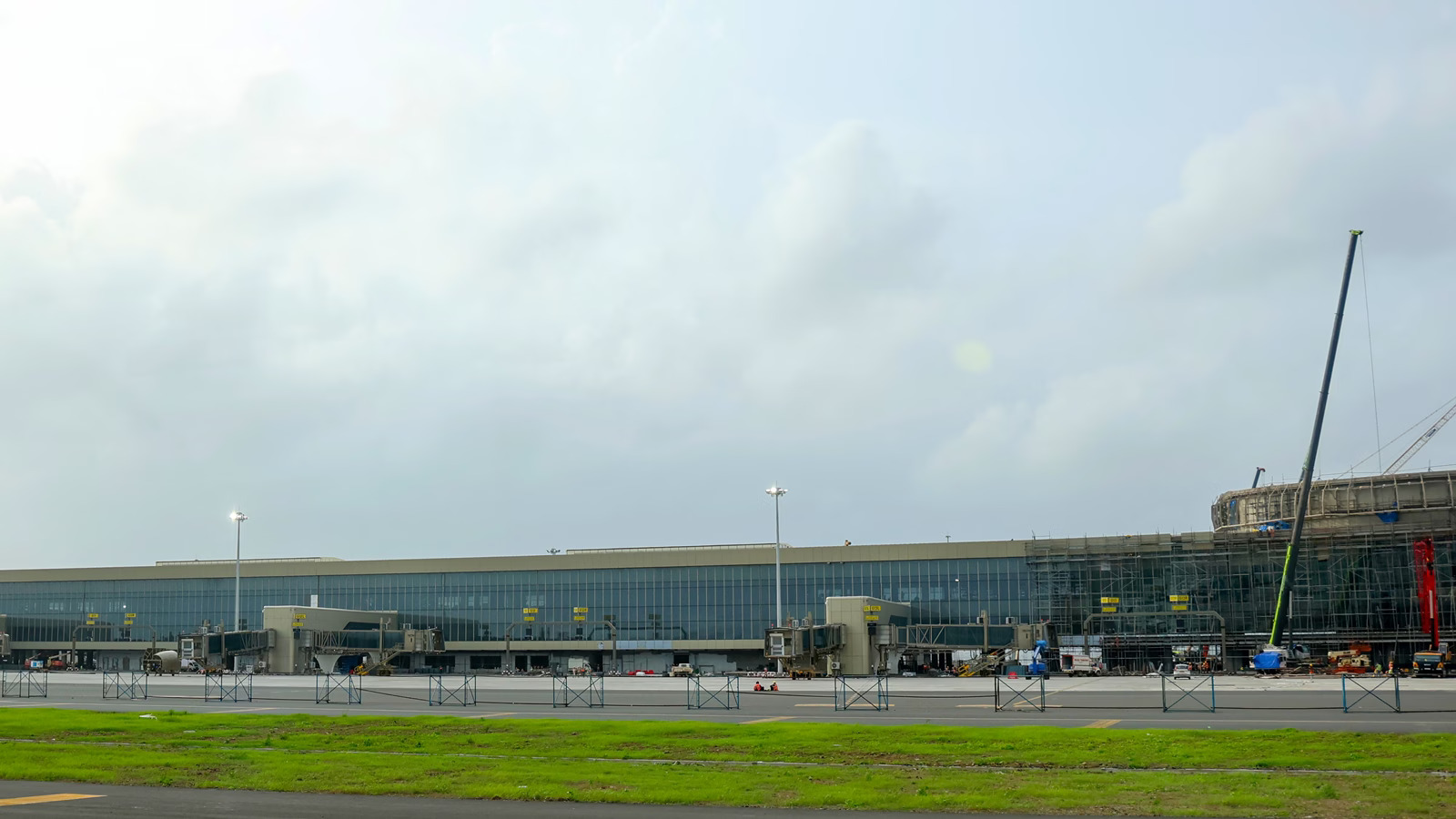
The Navi Mumbai International Airport (NMIA), scheduled for inauguration by September-end, is set to transform air travel for the Mumbai Metropolitan Region by introducing advanced Instrument Landing System (ILS) technology. The airport, expected to commence operations 45 days post inauguration, will allow aircraft to land and take off safely even in poor visibility, minimising the disruptions and diversions that currently affect the city’s primary aviation hub.
At the core of this upgrade is the installation of a Category II Instrument Landing System, a navigational aid widely used at major international airports. This system provides both lateral and vertical guidance to aircraft during final approach, enabling landings at visibility levels as low as 300 metres. Such precision is critical during monsoon months, when heavy rain and fog often lead to delays and diversions at Chhatrapati Shivaji Maharaj International Airport (CSMIA), where a higher runway visual range of 550 metres is required. To complement the ILS, the NMIA has also integrated a Category II certified Precision Approach Lighting System, designed to guide pilots with enhanced visibility cues during adverse weather. The lighting setup ensures aircraft remain aligned with the runway’s three-degree glide angle, a global standard for safe and predictable approaches.
Airport authorities have re-engineered the runway threshold by nearly 600 metres to align with these requirements, making the facility fully compliant with international aviation safety norms. According to senior officials, the displaced threshold was a strategic choice to ensure maximum compatibility with modern aircraft design and global pilot training modules. Industry experts highlight that this development marks a significant leap for Mumbai’s aviation ecosystem. Unlike CSMIA, where low visibility operations often lead to diversions to Pune, Ahmedabad or Hyderabad, NMIA’s enhanced infrastructure is expected to allow seamless operations regardless of challenging weather. This will not only reduce costs for airlines but also bring considerable relief to passengers who face inconvenience due to rerouting.
Beyond its immediate operational benefits, the use of advanced ILS and lighting systems reflects NMIA’s positioning as a next-generation greenfield airport, built with future-ready technology. By reducing delays and diversions, the airport indirectly contributes to lower carbon emissions—avoiding fuel wastage associated with holding patterns or diversions. As Mumbai prepares to expand its aviation capacity, the integration of such systems underscores a wider vision of building sustainable, efficient, and globally competitive infrastructure. The airport’s operational readiness will be a key milestone not only for the city’s economy but also for India’s aspiration to build aviation hubs that rival global benchmarks.
Also Read : MSRDC Launches Renewable Energy Project Along Samruddhi Expressway To Cut Carbon Emissions
