Navi Mumbai Airport Opening On October 8 After DGCA Clearance
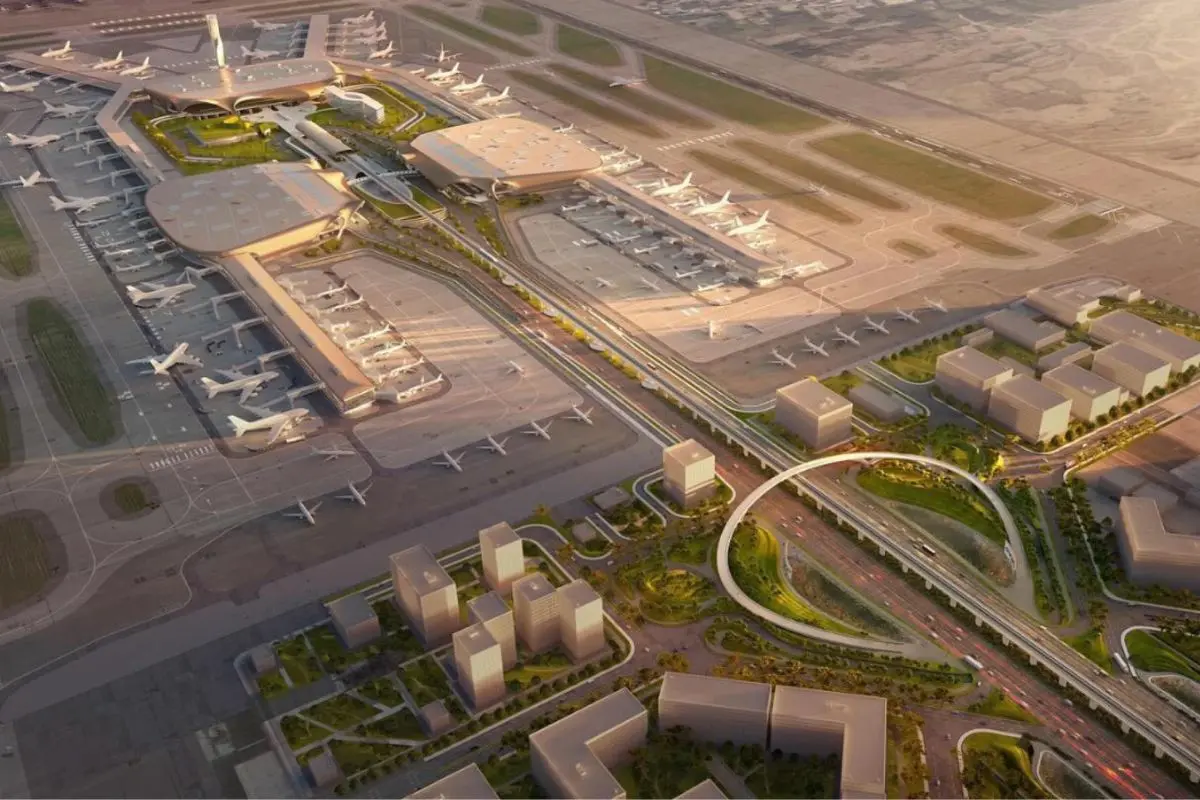
Navi Mumbai is preparing to open its long-awaited international airport on 8 October, marking a milestone in India’s aviation expansion. The Navi Mumbai International Airport (NMIA), developed through a joint venture between a private operator holding 74 per cent stake and the City and Industrial Development Corporation of Maharashtra (CIDCO) with 26 per cent, has secured final clearance from the Directorate General of Civil Aviation (DGCA).
The approval affirms the facility’s readiness for commercial operations after years of anticipation and delays.The airport, designed as a world-class aviation hub, will be developed in five phases and has already been assigned the international code ‘NMI’. When fully operational, NMIA is projected to handle up to 90 million passengers annually and 3.2 million metric tonnes of cargo. Aviation experts highlight that this scale positions the project as one of Asia’s most significant airports, reinforcing India’s reputation as a rapidly expanding aviation market.
Officials associated with the project describe the airport as a monument shaped by the contribution of thousands of workers, engineers, women staff, differently abled colleagues, artisans and security personnel. Their involvement underscores the human element in the creation of large-scale infrastructure and reflects India’s growing emphasis on inclusive and gender-neutral workplaces. Urban experts note that recognising these contributions signals a shift towards more equitable narratives in infrastructure development.
Beyond capacity, NMIA is being positioned as a future-ready, sustainable transport hub. Authorities confirm that the airport incorporates eco-friendly construction principles, energy-efficient systems, and commitments to responsible waste management. The project has been closely tied to the larger ambition of developing net-carbon-neutral airports, an approach increasingly emphasised by policymakers in light of the climate crisis. Urban planners view NMIA as a model for sustainable airport design, aiming to balance scale and speed with accountability towards the environment.
The opening of NMIA is also expected to unlock broader urban and economic growth for the Navi Mumbai region. Industry analysts suggest that the airport will create thousands of direct and indirect jobs, encourage new businesses in logistics, hospitality and services, and attract domestic and global investors. For the Mumbai Metropolitan Region, which currently depends on one of the busiest airports in the world, NMIA will provide much-needed relief, reducing congestion and delays that have long challenged passengers and airlines alike.
According to the Ministry of Civil Aviation, India now has 162 operational airports. With passenger numbers growing exponentially, the addition of NMIA reflects the country’s focus on strengthening connectivity while keeping pace with global standards. Experts caution, however, that the airport’s success will depend on effective integration with rail and road networks, affordable access for passengers, and sustained focus on green aviation practices.As the countdown to inauguration begins, Navi Mumbai finds itself at the cusp of a transformation. The new airport is not merely a terminal for flights—it is set to redefine how cities can design infrastructure that is inclusive, sustainable and globally competitive, while serving as a gateway to future growth.