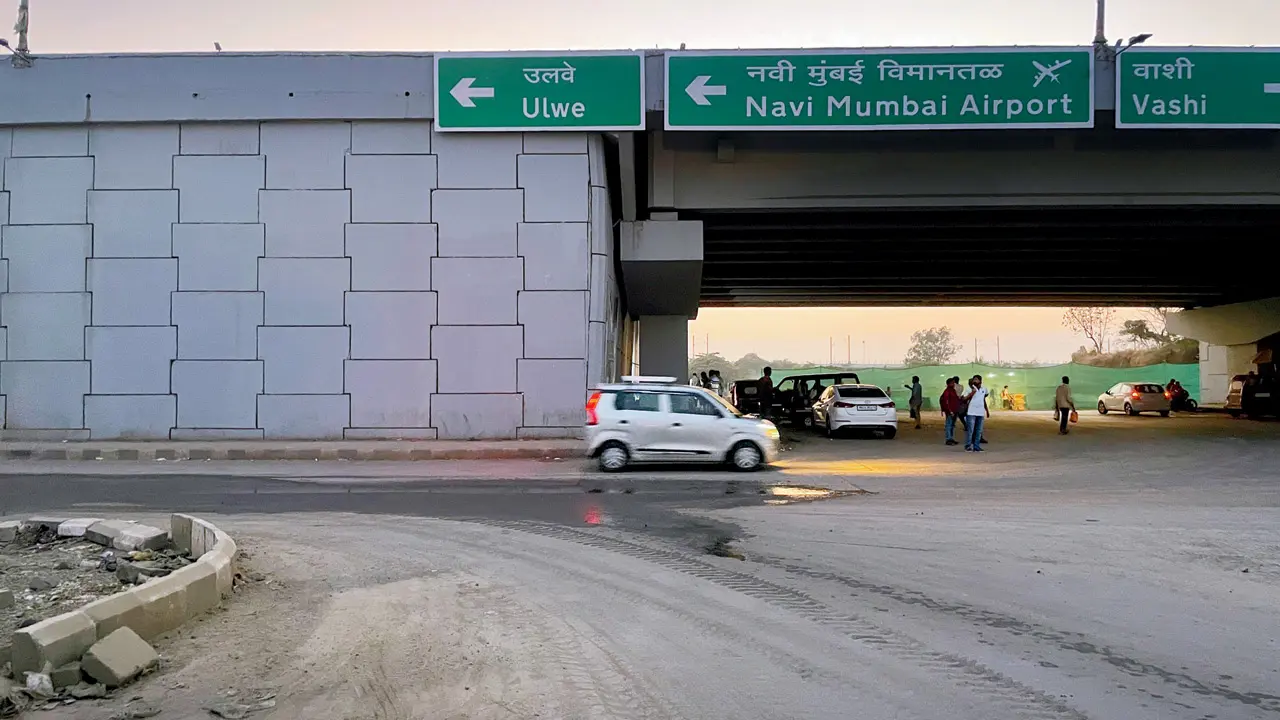
The Navi Mumbai International Airport (NMIA) is scheduled to commence commercial operations on December 25, marking a significant milestone for the Mumbai Metropolitan Region’s aviation and urban growth ambitions. Conceived as a future-ready, multi-modal transport hub, the airport promises long-term gains in regional connectivity. However, in its initial phase, access to NMIA will rely heavily on road transport, limited suburban rail services and a nascent bus network, raising questions about commuter readiness during the launch period.
At present, road travel remains the most reliable option for passengers. Travellers from Mumbai can reach the airport via the Mumbai Trans Harbour Link, popularly known as Atal Setu, or the older Vashi Bridge. While Atal Setu offers a shorter travel time under light traffic conditions, it comes with higher toll charges compared to the Vashi route. Transport officials indicated that toll structures may be revisited as airport traffic stabilises and passenger volumes rise. Rail access, while improving, is still constrained. The recently opened Targhar suburban station has emerged as the closest railhead to NMIA, replacing CBD Belapur as the nearest option. Located around 10 to 15 minutes from the airport by road, Targhar currently sees limited train frequency, with long gaps between services on key routes. Railway personnel said demand is expected to rise once airport operations begin, particularly from staff working at the site, prompting a review of service frequency in the coming weeks.
For daily commuters and occasional flyers alike, the lack of synchronised schedules and visibility on popular travel applications adds another layer of complexity. Urban transport experts note that seamless integration between aviation and suburban rail is critical if public transport is to become the preferred choice for airport access in the long run. Bus-based connectivity is expected to play a growing role. The city’s transport undertaking is in the final stages of deploying electric buses to connect NMIA with residential and commercial nodes across Navi Mumbai. An initial fleet is planned, with a phased expansion linked to passenger demand. Officials said this approach aligns with broader sustainability objectives by encouraging low-emission, shared mobility from the outset.
Taxi, auto-rickshaw and bus bays have been earmarked within the airport precinct, though drivers say operational clarity will only emerge once passenger movement begins. Clear signage, efficient circulation and last-mile coordination will be crucial to prevent congestion during peak travel hours. Beyond transport availability, basic urban infrastructure is also under scrutiny. Street lighting along key approach roads remains incomplete, prompting safety concerns from local workers and vendors.
City planners acknowledge that addressing such gaps is essential to ensure inclusive and secure access, particularly for shift workers and late-night travellers.
As NMIA opens its doors, the early weeks will serve as a real-time stress test of Navi Mumbai’s mobility ecosystem. While long-term plans promise a well-integrated, low-carbon transport hub, authorities face the immediate task of ensuring that accessibility, safety and public transport reliability keep pace with the airport’s operational ambitions.
Navi Mumbai Airport Begins December Twenty Five Operations With Limited Road Rail Bus Connectivity