


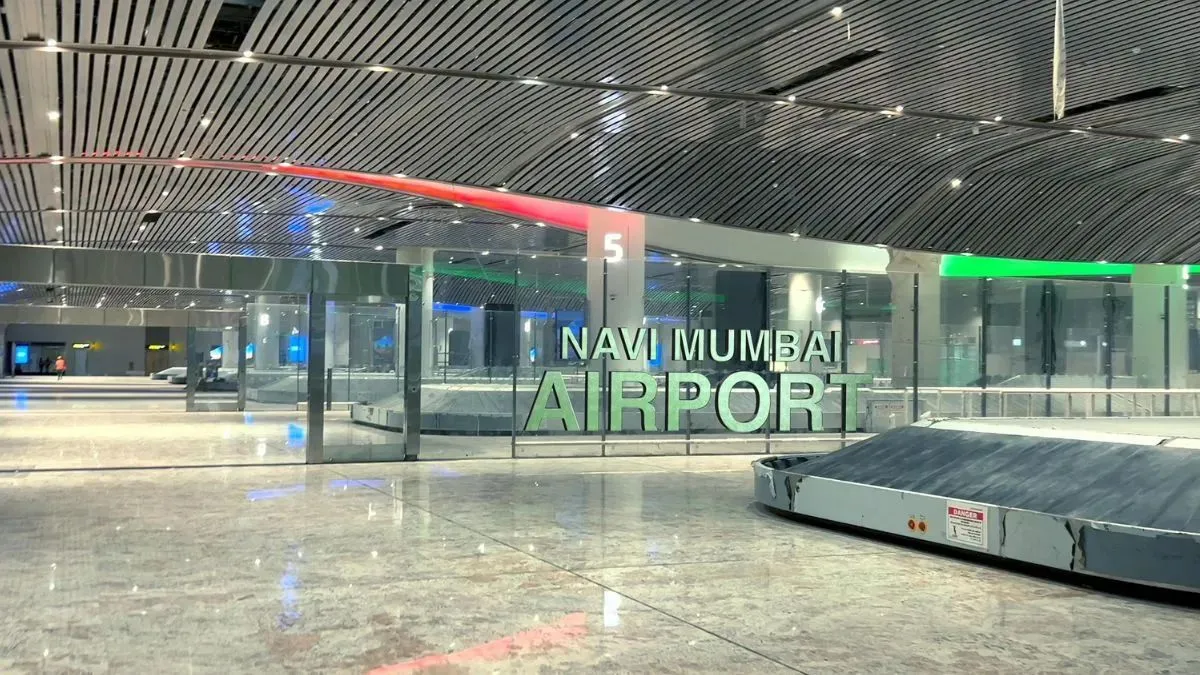
The much-awaited inauguration of Navi Mumbai International Airport (NMIA) and the final stretch of Mumbai Metro Line 3 has been rescheduled to October due to heavy rainfall and related logistical challenges. Officials confirmed that the airport will now open on October 30, while Metro Line 3 will be operational from October 8, providing critical urban mobility solutions for the city.
Originally planned for September 30, the delay comes after persistent rainfall affected access roads leading to the airport in Ulwe, making it challenging to ensure smooth and safe transit for dignitaries and visitors. Authorities emphasised that the rescheduling prioritises safety and operational readiness over ceremonial timelines. Developed under a public-private partnership led by Adani Airports, NMIA is projected to alleviate congestion at Mumbai’s existing international airport. The airport is expected to initially handle 20 million passengers annually, with long-term plans to scale up capacity to 90 million. Experts note that the facility’s design incorporates eco-friendly technologies and sustainability-focused operations, aligning with zero-net carbon objectives for urban aviation infrastructure. Major domestic and international carriers are expected to commence operations shortly after the launch, boosting connectivity for the Mumbai Metropolitan Region.
Meanwhile, Mumbai Metro Line 3, the city’s first fully underground metro corridor, spans 27 stations connecting Worli to Cuffe Parade. Officials have highlighted that the completion of this corridor will significantly reduce travel times and decongest major suburban transport hubs. The line also promises improved integration with other modes of public transport, advancing Mumbai’s goal of sustainable and gender-neutral urban mobility. Urban planning experts emphasise the strategic importance of these projects. By combining advanced metro systems with a new international airport, the city can promote transit-oriented development, free up urban land for commercial and green spaces, and enhance equitable access to public infrastructure. Analysts note that careful monitoring of soil stability and drainage around both sites has been critical in determining the revised opening dates.
The rescheduling has also prompted discussions about airport nomenclature, awaiting formal approval for the proposed dedication of NMIA to a local social activist. Officials underline that such deliberations will not affect operational timelines, which remain the primary focus. As Mumbai prepares for these landmark inaugurations, experts say that the combined impact of NMIA and Metro Line 3 will extend beyond urban transport, potentially accelerating economic activity, attracting investment, and supporting sustainable city growth in the coming decades.
Also Read: Mumbai Western Railway To Run Festival Special Trains From October 1 To November 30
