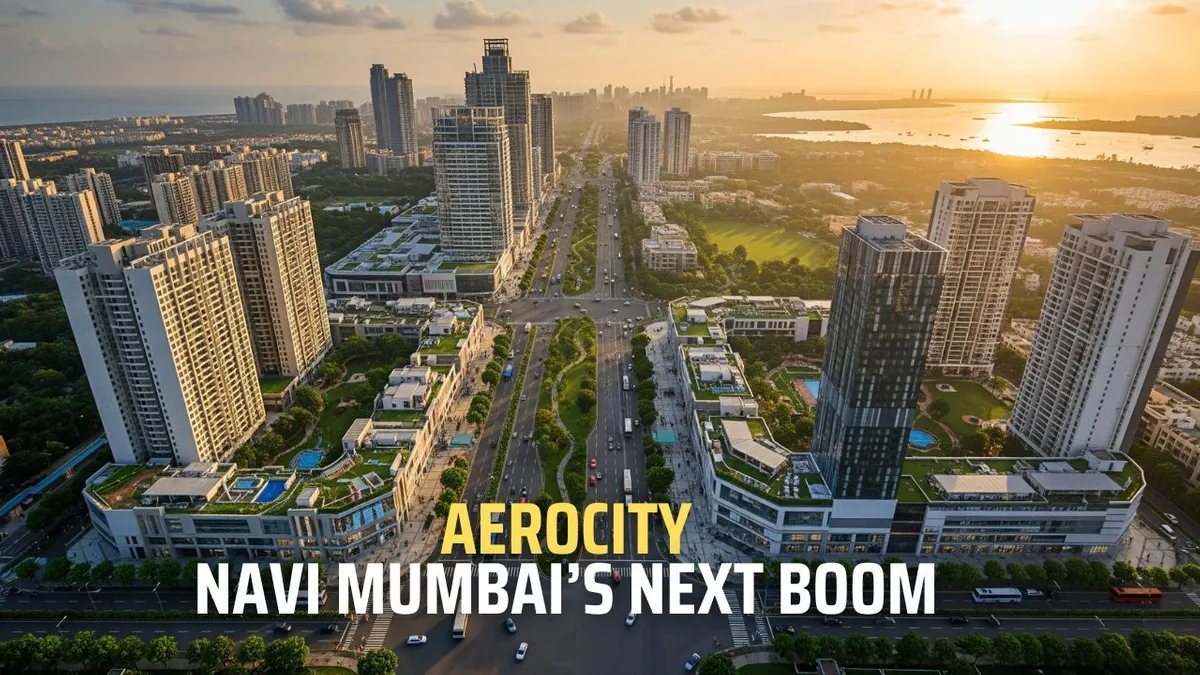
Navi Mumbai Aerocity plan speeds up as airport launch nears
As Navi Mumbai International Airport nears its September inauguration, the state is racing to unlock the potential of a 667-acre Aerocity planned alongside the new aviation hub. The City and Industrial Development Corporation (CIDCO) has initiated the process of hiring a consultant to frame the Master Plan that will shape the Aerocity’s future across residential, commercial, retail, and mixed-use developments.
According to officials, the blueprint will designate more than 120 acres each for housing, offices, and retail projects. The larger plan will integrate financial services, export-oriented facilities, logistics hubs, aero-centric warehousing, hotels, hospitals, schools, and entertainment spaces, creating a comprehensive urban ecosystem centred on the airport.Experts note that the Aerocity’s strategic timing aligns with Navi Mumbai’s transformation into one of India’s best-planned satellite cities. The proposed development is expected to absorb the economic momentum from the new airport, estimated to be one of the country’s busiest once fully operational. Officials emphasise that the masterplan will not only assess financial feasibility and infrastructure requirements but also benchmark against global aerocity models.The appointment of a consultant marks the next stage of planning, with emphasis on surrounding mega projects such as the Mumbai Trans Harbour Link, Navi Mumbai Metro corridors, suburban railway upgrades, port expansions, and highway connectivity. Authorities have underscored the importance of aligning Aerocity’s growth with these ongoing projects to ensure seamless integration into the Mumbai Metropolitan Region.
Significantly, the land earmarked for the Aerocity was secured during the airport’s construction phase, enabling CIDCO to move ahead without acquisition hurdles. The agency, which has played a pivotal role in Navi Mumbai’s urban planning since the 1970s, is positioning the Aerocity as a model for sustainable and climate-resilient urban growth.Industry analysts believe that unlike Mumbai’s historically unplanned growth around its airport in Santacruz, Navi Mumbai now has an opportunity to deliver a globally benchmarked aerocity. Developers argue that well-laid drainage systems and integrated transport networks already distinguish Navi Mumbai from the flooding challenges faced in Mumbai, pointing to the potential of planned development in reducing future vulnerabilities.
The Aerocity also promises to influence real estate dynamics. With the airport strategically located between Mumbai and Pune, demand for land and housing is expected to rise from both regions. Real estate experts have already noted heightened interest from aviation professionals and investors anticipating long-term value appreciation around the airport.While the Aerocity remains at the master planning stage, the alignment of its vision with sustainability, resilience, and equitable access will be critical. As Mumbai grapples with the consequences of unplanned growth, Navi Mumbai now faces the chance to set a new benchmark in green and people-centric infrastructure.