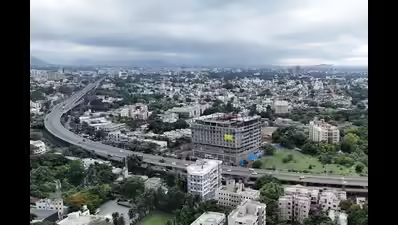
As one of Maharashtra’s rapidly evolving metropolitan areas nears a pivotal phase in its growth trajectory, urban planners and development advocates are pressing for a structured, sustainable blueprint to guide the city over the next decade. With redevelopment accelerating and strategic infrastructure projects underway, a renewed focus on green spaces, comprehensive transport planning and environmental management is gaining prominence in Nashik’s civic dialogue. This conversation comes at a time when the city’s cultural heritage, economic expansion and quality of life are all in a delicate balance.
For decades, Nashik’s urban expansion has been shaped by industrial hubs in Satpur and Ambad, the formalisation of municipal governance in the 1980s, and successive iterations of development plans. Today, the current structure of redevelopment — with older residential clusters being replaced by higher-density apartment blocks — is placing renewed pressure on core infrastructure such as roads, water supply and parking facilities. Local observers caution that without holistic strategies, these incremental changes could compound existing urban stressors rather than ameliorate them. A key tension in Nashik’s transformation lies in balancing densification with environmental stewardship. Civic commentators emphasise that rapid building redevelopment should not occur at the expense of green cover or ecosystem health. Concerns over unchecked tree felling in the name of construction have sparked debate on the need for stronger tree conservation and reforestation policies, especially as Nashik prepares for large-scale events and infrastructure projects tied to the 2027 Simhastha Kumbh Mela. Experts argue that expanding canopy cover and protecting riverfront ecosystems like the Godavari watershed are essential to long-term climate resilience, heat mitigation and air quality improvement.
Transport infrastructure — another pillar of urban vitality — is also under scrutiny. While redevelopment intensifies population density in many wards, city arteries and junctions remain constrained or underutilised in ways that could limit mobility. Urban planning specialists recommend a mix of underpasses and flyovers at major intersections rather than isolated upgrades to address systemic congestion. Additionally, integrated traffic planning ahead of large public events offers an opportunity to embed smarter, data-driven mobility solutions that can serve residents beyond episodic demands. Environmental advocacy groups and residents alike stress the importance of an inclusive vision that incorporates community feedback into the development agenda. This includes addressing unauthorised encroachments, strengthening sports and recreational grounds, and formalising budgetary allocations for seasonal and long-term citywide greening efforts. There is also a growing chorus for measures that confront urban pollution holistically — from industrial emissions to river contamination — to ensure that Nashik’s expansion enhances public health and ecological integrity.
Equity in growth remains a parallel concern. As Nashik’s peripheries attract industrial investment and logistics hubs, planners underscore that rising economic opportunity should be matched by affordable housing strategies, accessible public transport and community-centric public spaces. Multi-decade perspectives on these priorities could anchor Nashik’s development in sustainability, social inclusion and quality of life, balancing economic aspirations with the lived realities of its residents.