k Plans Shiv Jayanti Festivities And Traffic Management
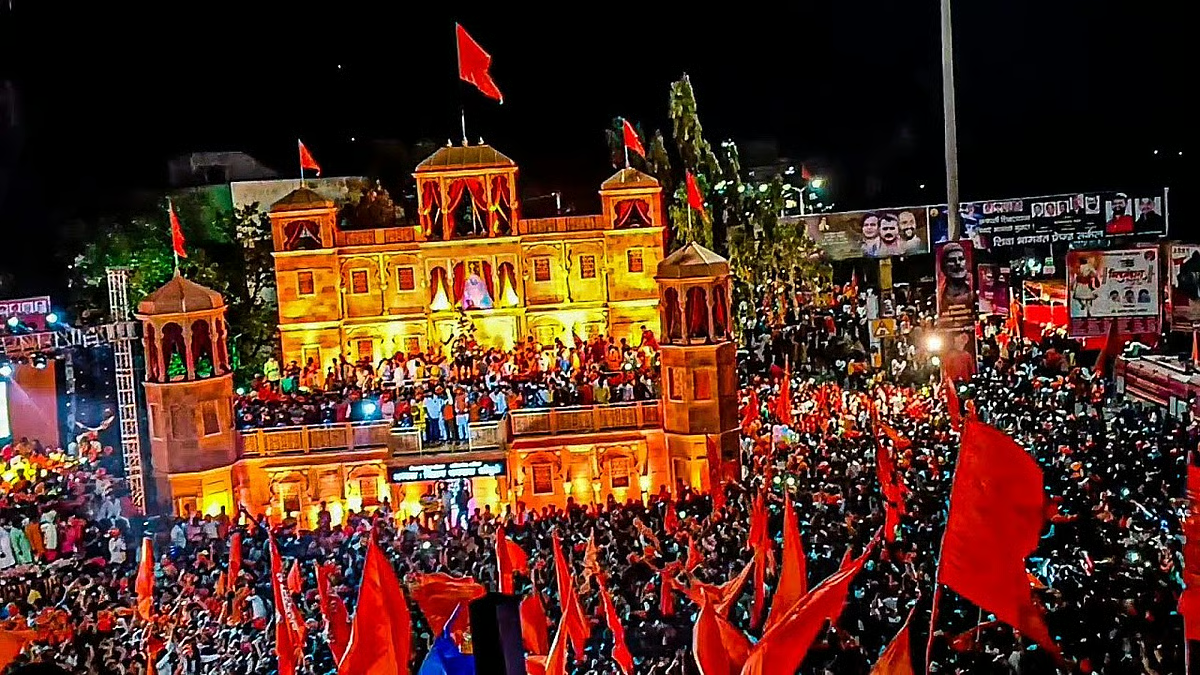
As Maharashtra marks Shiv Jayanti on February 19, the historical birth anniversary of Chhatrapati Shivaji Maharaj, Nashik city is gearing up for large-scale processions and cultural celebrations that intersect with urban mobility and public safety planning. The anticipated festivities — which include traditional marches through the old city and widespread participation by community groups — have prompted significant traffic management measures and heightened police deployment, reflecting the challenges of managing vibrant public events in dense urban environments.
Shiv Jayanti, widely observed across the state as a symbol of cultural pride and historical remembrance, sees Nashik transform its streets into a canvas of saffron flags, musical processions and civic celebration. In 2026, city authorities have drawn up a comprehensive traffic diversion plan to accommodate processions that will weave through central arteries such as Wakdi Barav, Panchavati and Nashik Road while aiming to minimise disruption to daily commuters.To ensure public safety, more than 2,000 police personnel — supported by home guards and Quick Response Teams — are being mobilised across the city and its outskirts. Police have also issued specific instructions for participants, including an appeal to use traditional instruments instead of loud DJs, aiming to respect noise norms and preserve a balanced urban atmosphere conducive to all ages.
The scale of these festivities underlines how public rituals shape urban life in regional cities like Nashik. With historical heritage at the core of civic identity, celebrations such as Shiv Jayanti do more than honour a historical figure; they activate public space, drive small business activity around vendor stalls and stimulate cultural tourism — especially in older parts of the city where narrow lanes and heritage sites present planning challenges.City planners and traffic authorities face the dual task of maintaining smooth daily flows while facilitating large gatherings. Traffic closures announced for procession routes — including sections of Nashik Road and Gangapur Road — reflect proactive measures to reduce congestion and risk. For residents and local businesses, this means adjusted commutes but also opportunities to engage with a spectacle that resonates strongly with local identity.
Public safety officials have emphasised the importance of peaceful conduct and adherence to laws governing noise pollution and crowd control. Robust CCTV monitoring and coordinated police presence aim to prevent untoward incidents, especially in areas where crowds are expected to swell.Cultural observers note that such festivals play a significant role in urban cohesion, strengthening collective memory and community bonds. Yet they also spotlight the infrastructure demands of mass participation in built environments not originally designed for such large public gatherings. Research across Indian cities shows that well-managed public processions and cultural events can enhance urban vibrancy while maintaining safety and mobility when backed by effective planning and citizen cooperation.
As Nashik transitions from preparation to celebration, residents and authorities alike are navigating how best to balance heritage-driven festivities with the realities of traffic, safety and urban management — a challenge familiar to cities across India that host major cultural commemorations.